AQA · GCSE · Business
Course version: 8132 · Version from Sept 2017
The role of procurement: quality
Quality in procurement means the extent to which a procured resource meets the specification, performance and reliability standards required by the business.
Checked against the AQA 8132 specification (opens in a new tab) on .
- Point 10 of 21
- 3 key terms
Study notes
From the checked teaching notes for this specification point.
The idea
Quality in procurement means the extent to which a procured resource meets the specification, performance and reliability standards required by the business. It affects customer satisfaction, waste levels, production efficiency and brand reputation. For example, a bakery that buys low-quality flour may produce inconsistent bread, leading to returns and lost customers. Procurement managers assess quality through supplier samples, quality assurance certifications, inspection of deliveries and past performance records. Higher quality may cost more per unit, so businesses must balance quality against price and delivery reliability. Poor quality can increase total costs through rework, scrap and warranty claims, even if the unit price is low. Consistent quality supports efficient production and protects the business's reputation.
What earns the marks
- Defines quality as how well a procured resource meets the required specification and performance standards.
- Explains how quality affects customer satisfaction, waste, production efficiency and brand reputation.
- Describes methods used to assess supplier quality, such as samples, certifications, inspection and past performance.
- Analyses the trade-off between higher quality and higher unit price in procurement decisions.
- Evaluates how poor quality can increase total costs through rework, scrap, returns or warranty claims.
- Applies quality considerations to a specific business context, showing consequences for operations and reputation.
Common mistakes and how to put them right
Treating quality as only about the final product.
Put it right: Link input quality to output quality and customer satisfaction.
Assuming higher quality always means higher price.
Put it right: Compare total value, not just unit price.
Ignoring the cost of poor quality.
Put it right: Include rework, scrap, returns and reputational damage in the analysis.
Exam tips
- Use a specific example, such as a clothing retailer buying fabric, to show how quality affects the final product.
- When discussing quality, refer to both the benefits and the potential extra cost.
- In evaluation, consider how quality interacts with price and delivery reliability before making a recommendation.
Try the lesson
The start of the The role of procurement: quality lesson, made from checked teaching notes for this specification point.
Have a go first
In the role of procurement, what does quality mean when a business chooses a supplier?
Listen
Quality in procurement means the extent to which a procured resource meets the specification, performance and reliability standards required by the business. It affects customer satisfaction, waste levels, production efficiency and brand reputation. For example, a bakery that buys low-quality flour may produce inconsistent bread, leading to returns and lost customers. Procurement managers assess quality through supplier samples, quality assurance certifications, inspection of deliveries and past performance records. Higher quality may cost more per unit, so businesses must balance quality against price and delivery reliability. Poor quality can increase total costs through rework, scrap and warranty claims, even if the unit price is low. Consistent quality supports efficient production and protects the business's reputation. A strong answer earns marks for these points. Defines quality as how well a procured resource meets the required specification and performance standards. Explains how quality affects customer satisfaction, waste, production efficiency and brand reputation. Describes methods used to assess supplier quality, such as samples, certifications, inspection and past performance. Analyses the trade-off between higher quality and higher unit price in procurement decisions. A common slip: Treating quality as only about the final product: the error is ignoring that procured inputs determine final product quality. Instead, link input quality to output quality and customer satisfaction. Exam tip: Use a specific example, such as a clothing retailer buying fabric, to show how quality affects the final product.
See it
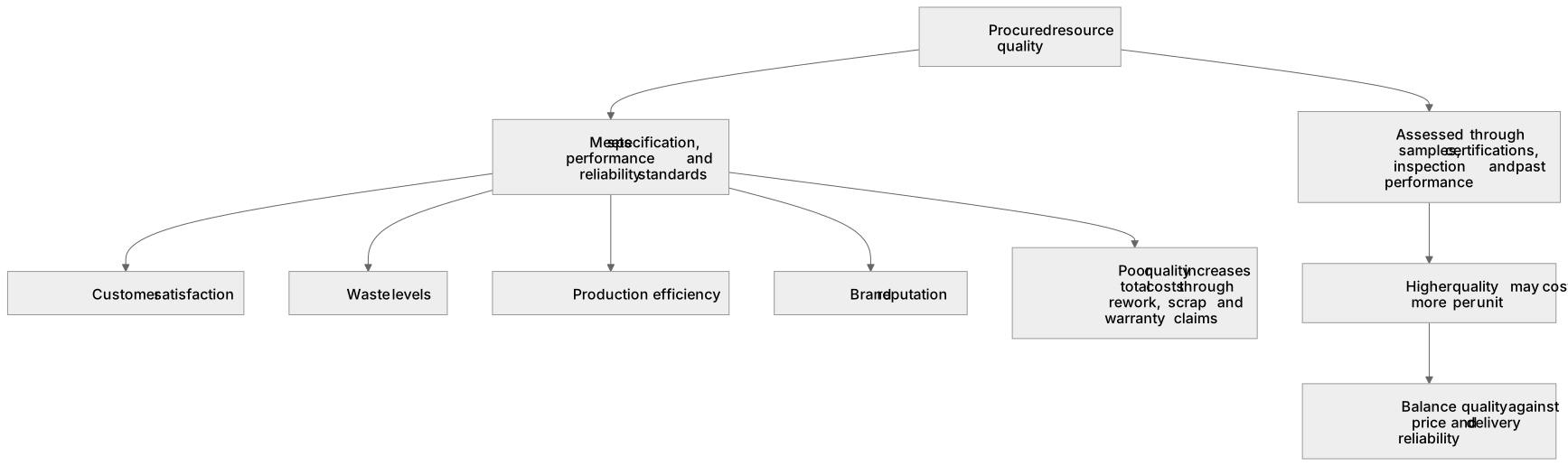
Key words
Say what each word means before you turn the card.
Quality
Try answering aloud or in your head before turning the card.
Customer satisfaction
Try answering aloud or in your head before turning the card.
Brand reputation
Try answering aloud or in your head before turning the card.
See every definition
- Quality
- The extent to which a procured resource meets the specification, performance and reliability standards required by the business.
- Customer satisfaction
- Affected by quality in procurement, alongside waste levels, production efficiency and brand reputation.
- Brand reputation
- Protected by consistent quality and affected by quality in procurement alongside customer satisfaction, waste levels and production efficiency.
Label the diagram
Some boxes have lost their names. Pick the right name for each number.
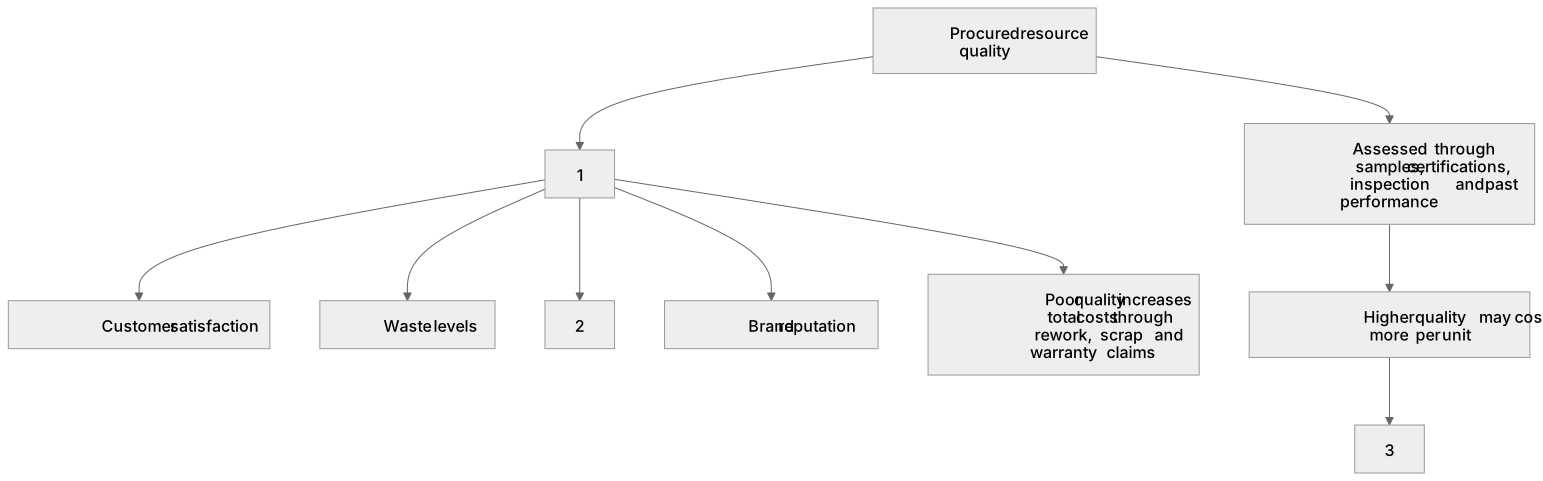
1Box 1
2Box 2
3Box 3
There is more to this lesson
The full lesson goes on to check your understanding and help you earn the marks. Create a free account to carry on, with your progress saved.
A week of Premium from your first lesson · Then the free plan continues · No card, no charge
Test your understanding of The role of procurement: quality
Active recall beats re-reading. Take an instant quiz now to test what you’ve learned and lock it into long-term memory.
A week of Premium from your first lesson · Then the free plan continues · No card, no charge