Study Notes

Overview
Extended writing questions in Edexcel GCSE Business (1BS0) are designed to test your ability to think like a business analyst. They require you to move beyond simple definitions and apply your knowledge to a specific business scenario, constructing well-reasoned arguments and making supported judgements. These questions, typically worth 9 or 12 marks, are a significant portion of your final grade and are where candidates can truly differentiate themselves. Examiners are looking for developed chains of reasoning (AO3a), sustained application to the given context (AO2), and a well-supported final judgement (AO3b). This guide will equip you with the structures, techniques, and insider knowledge to confidently tackle these questions and achieve Level 3 marks.
Key Concepts for Extended Writing
The Three Assessment Objectives (AOs)
AO1: Knowledge: This is your understanding of business terms, concepts, and theories. While important, it's the foundation, not the whole building. Marks are awarded for using this knowledge accurately within your arguments.
AO2: Application: This is about linking your knowledge to the specific business in the case study. Generic answers that could apply to any business will not score well. You must use the details provided – the business name, its products, its market, its financial data – to make your answer relevant.
AO3: Analysis and Evaluation: This is the engine of your answer. Analysis (AO3a) involves creating chains of reasoning to show the cause and effect of business decisions. Evaluation (AO3b) is about weighing up the arguments and making a justified decision or judgement.
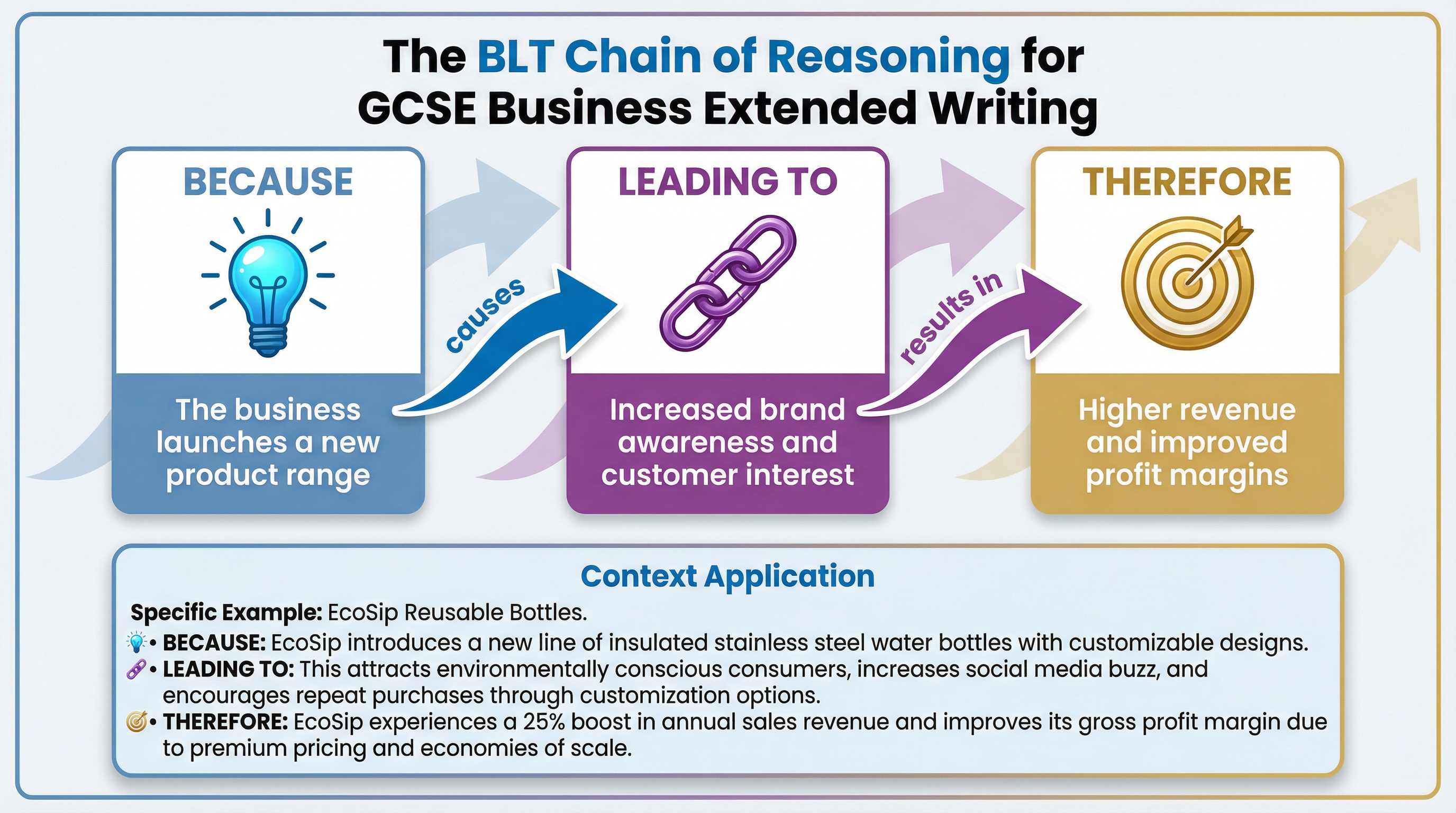
The BLT Chain of Reasoning
To build a strong analytical argument, use the 'Because, Leading to, Therefore' (BLT) structure. This forces you to explain the how and why behind a statement, creating a developed chain of reasoning that examiners love.
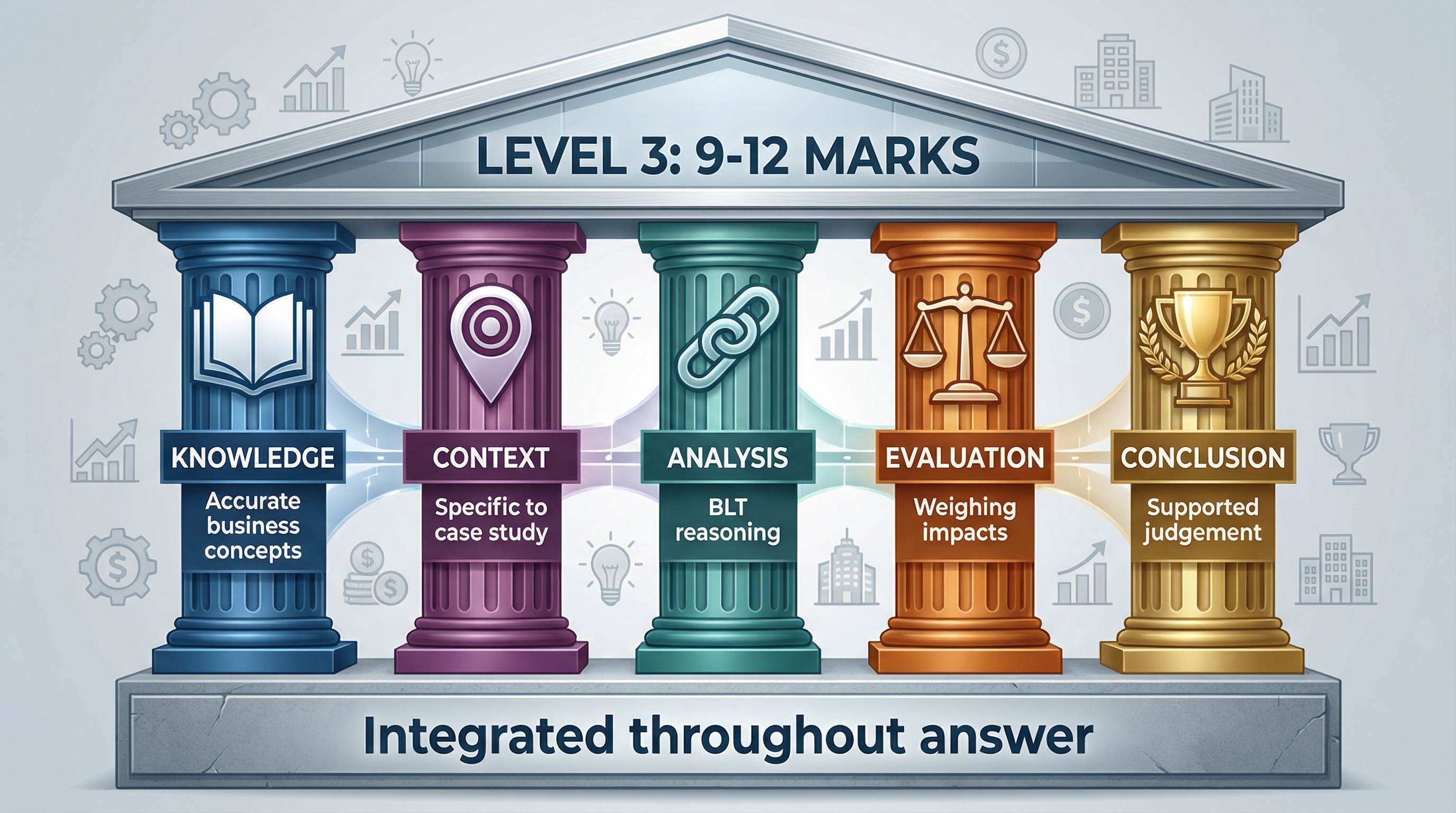
The Five Strands of a Level 3 Answer
To reach the top mark band (Level 3), your answer must demonstrate five key characteristics woven throughout your response. It's not a checklist to be ticked off, but a holistic approach to writing.
Question Structures
9-Mark 'Justify' Questions
These questions present you with two options and ask you to recommend one. A balanced approach is crucial.
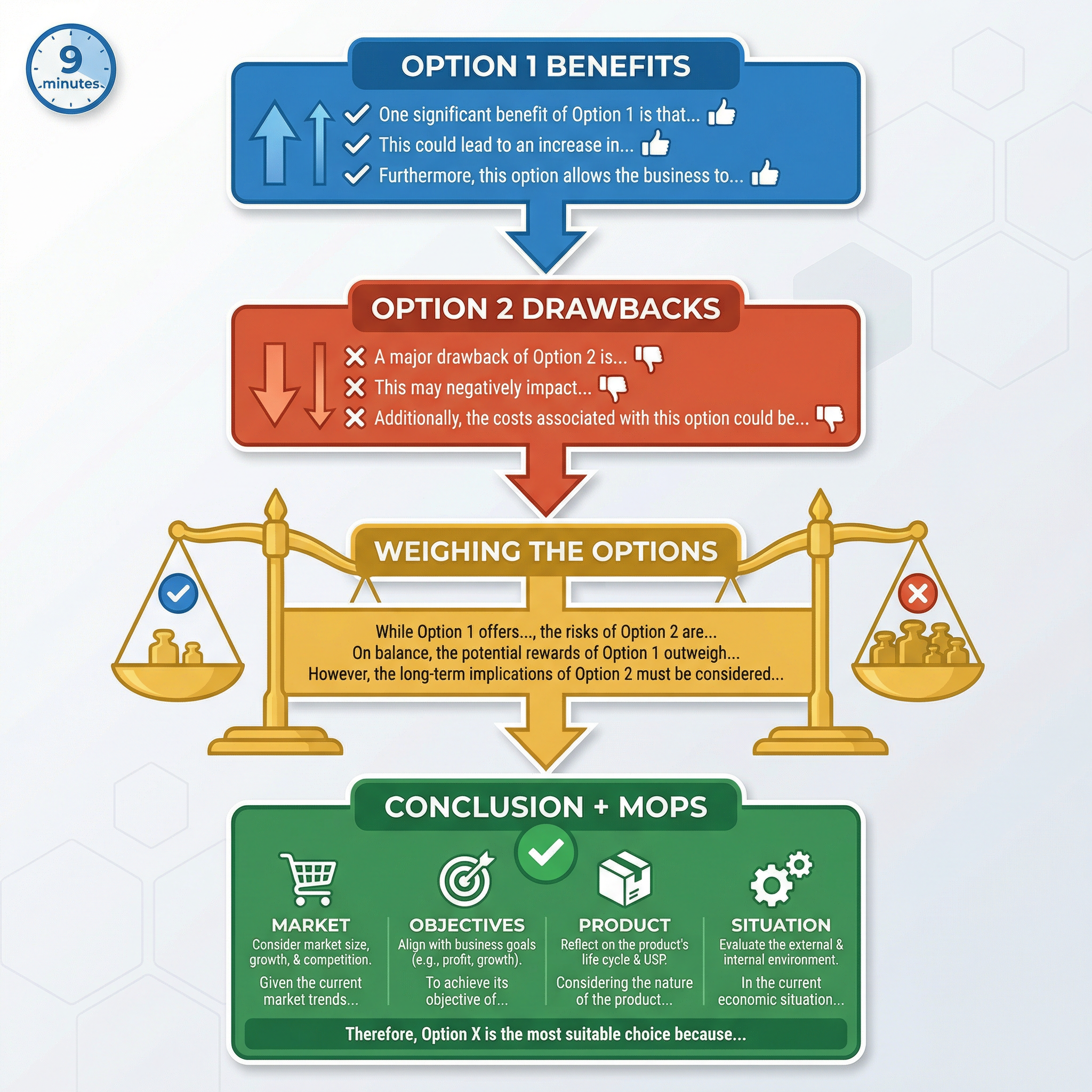
12-Mark 'Evaluate' Questions
These questions ask you to weigh up the pros and cons of a particular business decision or statement. The structure is similar to a 'Justify' question, but with more depth and a focus on balancing arguments on both sides before reaching a final, supported judgement.