Study Notes
Overview
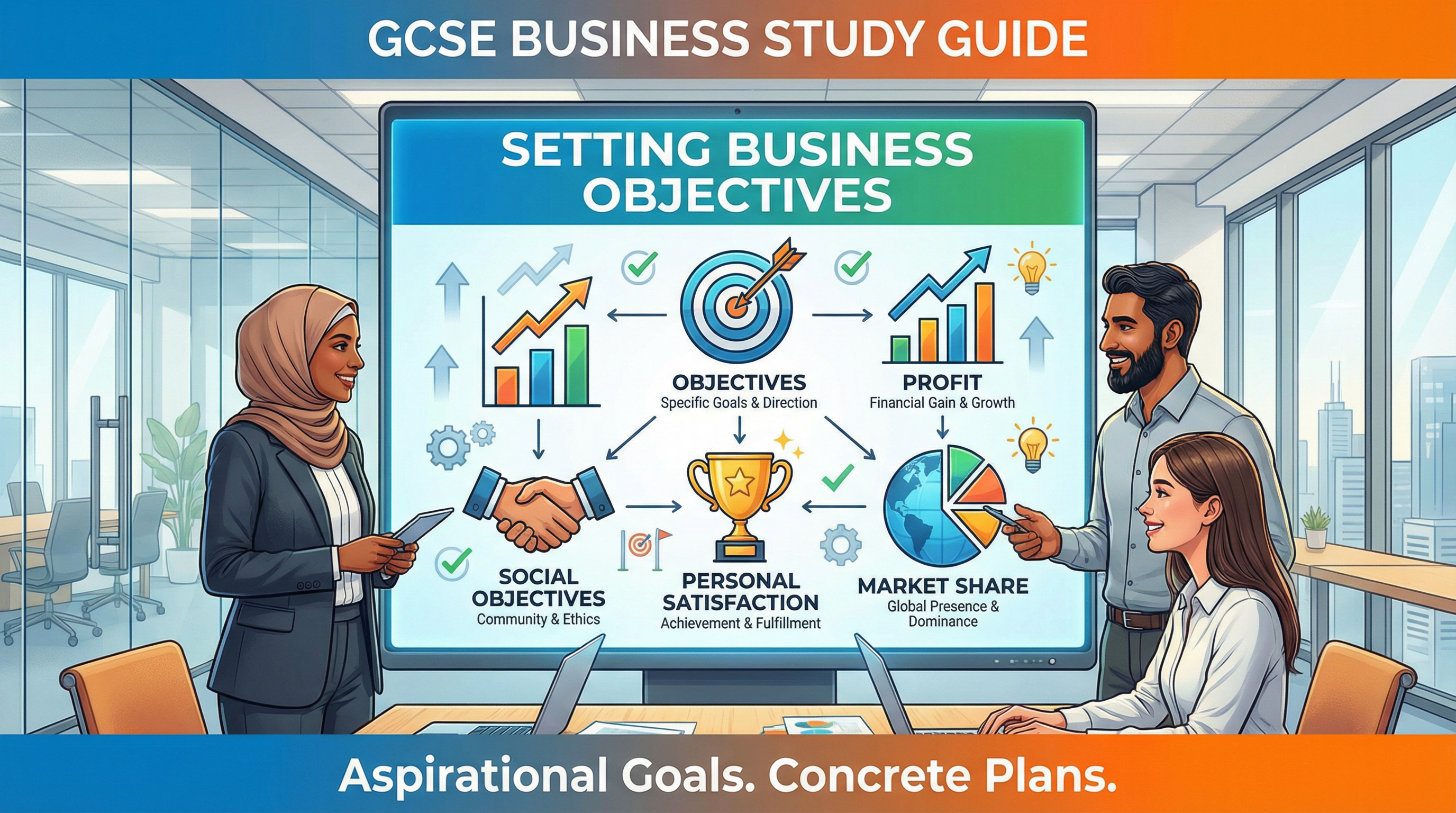
Welcome to the essential guide for Edexcel GCSE Business, Theme 1.3.1: Setting Business Objectives. This topic is the bedrock of business strategy. Examiners expect candidates to not just list objectives, but to understand why a specific objective is appropriate for a given business at a particular time. This guide will equip you with the knowledge to distinguish between financial and non-financial aims, apply them to any case study, and construct the high-level analysis needed to earn top marks. We will explore how a business's goals evolve from simple survival to complex strategies involving market share and social responsibility, ensuring you can explain these dynamic shifts with confidence.
Financial vs. Non-Financial Objectives
Examiners award significant credit for clearly distinguishing between these two categories. A business will usually pursue a mix of both, but their priorities will shift depending on their circumstances.
Financial Objectives
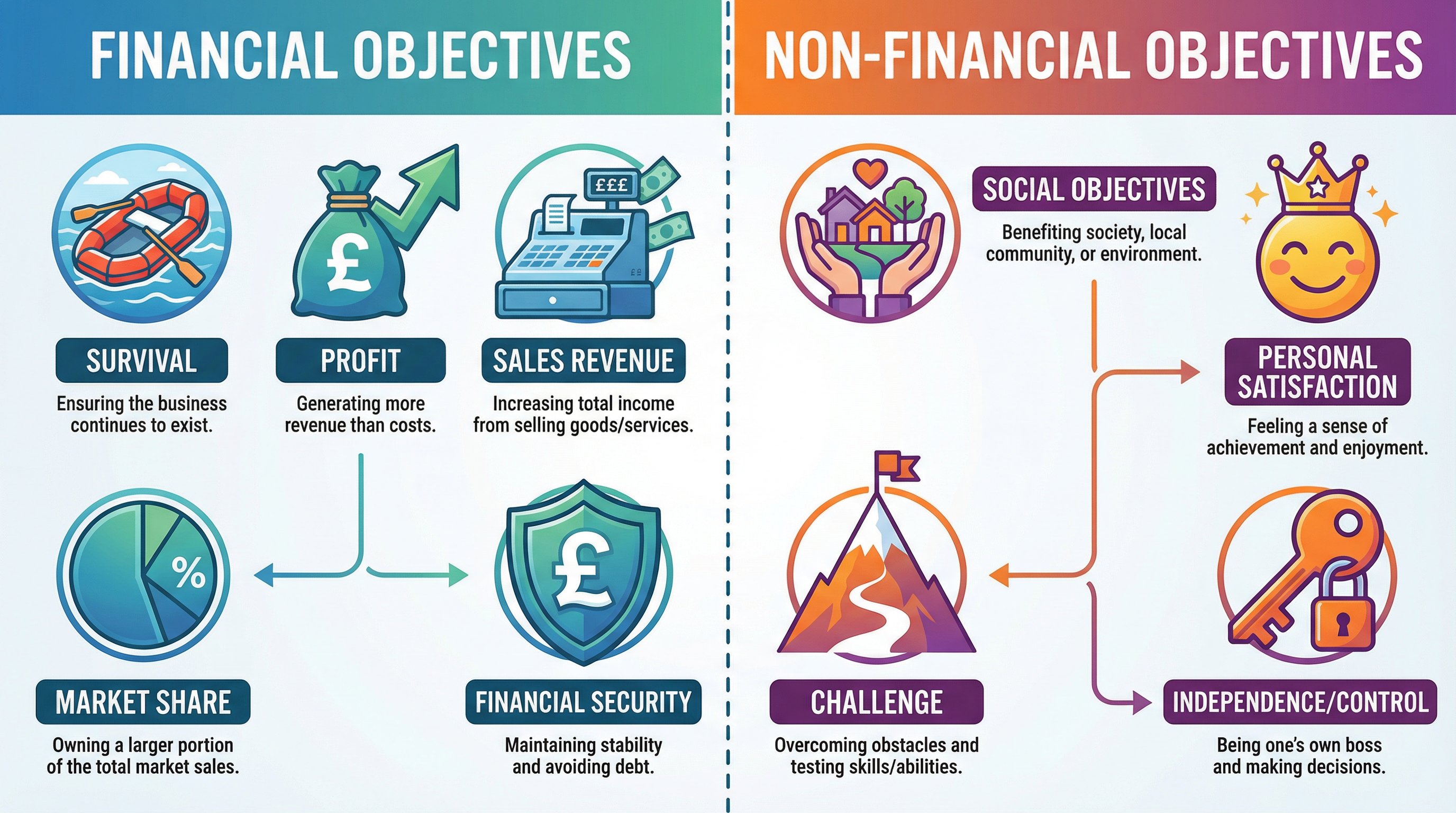
These are goals directly related to the financial performance and position of the business. They are typically quantifiable and measurable.
Key Financial Objectives Table
| Objective | Description | Context & Exam Application |
|---|---|---|
| Survival | To continue trading and avoid closure, by ensuring revenues cover costs. | Crucial for new businesses in their first year, or any business during a crisis (e.g., recession, new competitor). Credit is given for applying this to established firms in trouble. |
| Profit Maximisation | To make the largest possible profit, where total revenue is furthest above total costs. | Often the primary goal for established, secure businesses. It provides funds for reinvestment and rewards for owners (dividends). |
| Sales Maximisation | To generate the highest possible sales revenue (Price x Quantity Sold). | May be used to increase market share or deter new entrants, even if it means lower profit margins in the short term. |
| Market Share | To increase the business's percentage of total sales in a market. | A key objective for growth-focused businesses aiming for market dominance. It can lead to economies of scale and brand recognition. |
| Financial Security | To maintain a stable financial position by managing debt and building cash reserves. | Important for long-term stability. A business with good financial security can better withstand unexpected shocks. |
Non-Financial Objectives
These are goals that are not primarily expressed in monetary terms. They often relate to personal values, ethics, and brand image.
Key Non-Financial Objectives Table
| Objective | Description | Context & Exam Application |
|---|---|---|
| Social Objectives | To behave in a way that benefits society, the environment, or the local community. | Common for social enterprises, but also adopted by larger firms to build a positive brand image (Corporate Social Responsibility). |
| Personal Satisfaction | The owner enjoys their work and gets a sense of fulfilment from it. | A primary driver for many sole traders and small business owners. It's about passion, not just profit. |
| Challenge | The owner is motivated by overcoming obstacles and testing their own abilities. | Often linked to innovation and entering competitive markets. The goal is the achievement itself. |
| Independence & Control | The owner wants to be their own boss and make their own decisions. | A core reason why many people start their own business, leaving employment to gain autonomy. |
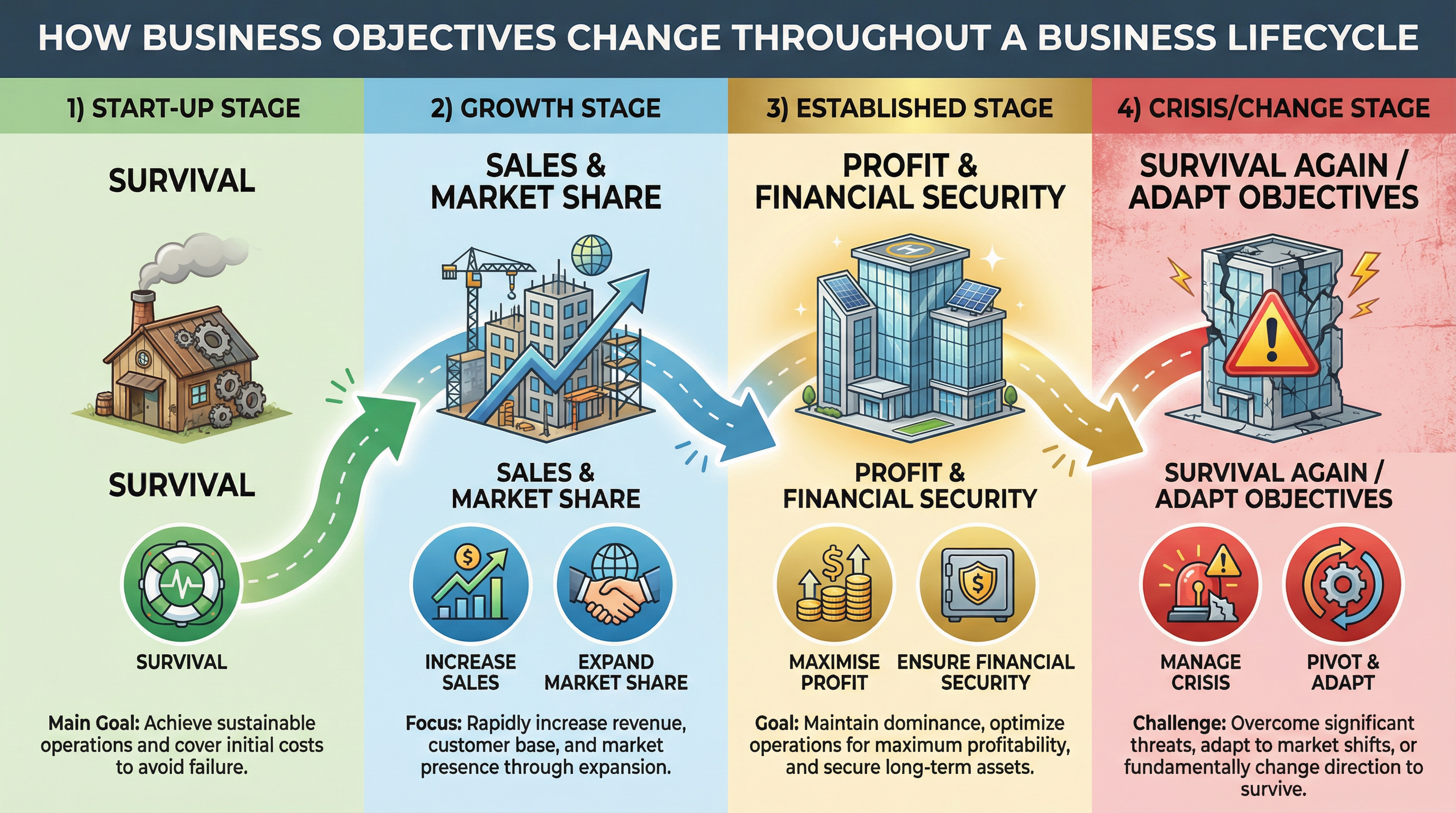
The Dynamic Nature of Objectives
Objectives are not set in stone. They evolve as a business moves through its lifecycle. A common mistake is to treat objectives as static. Examiners reward candidates who can explain why they change.