OCR · GCSE · Business
Business Aims and Objectives
This study guide for OCR GCSE Business (J204) provides a comprehensive breakdown of Business Aims and Objectives. It is designed to help candidates master the core concepts, apply them effectively to case studies, and develop the evaluation skills needed to achieve top marks.
- 6 min read
- 3 worked examples
- 5 practice questions
- 7 key terms
Study Notes
Overview
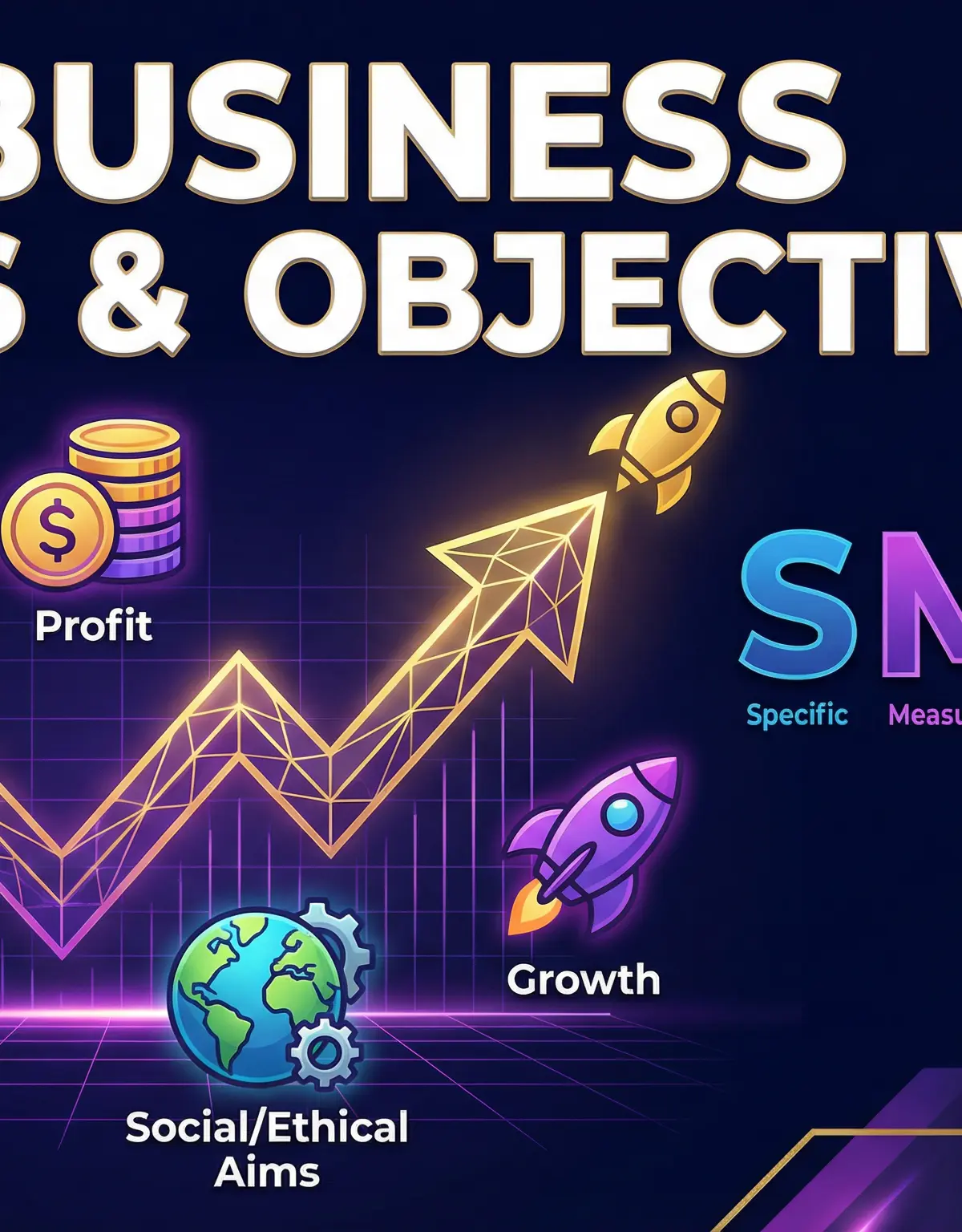
This topic introduces the fundamental reasons why businesses exist and the goals they set to guide their actions. For the OCR J204 specification, candidates must be able to distinguish clearly between broad, long-term 'aims' and the specific, measurable 'objectives' used to achieve them. Examiners place a heavy emphasis on Assessment Objective 2 (AO2), requiring candidates to apply these concepts to the specific business context provided in a case study. Aims are not static; they evolve as a business grows or as the external environment changes. A start-up's primary aim might be survival, whereas a multinational corporation may focus on maximising shareholder value or pursuing ambitious ethical goals. A strong response will not only define the key terms but will also analyse the trade-offs between conflicting objectives (e.g., profit vs. ethics) and evaluate how the choice of objectives impacts different functional areas of a business, demonstrating strong AO3 skills.

Key Aims in Business
Survival
What it is: The most basic aim for any business, particularly new ones or those facing difficult trading conditions like a recession. It means generating enough cash to pay all costs and continue trading.
Why it matters: Without survival, no other aims can be achieved. Examiners expect candidates to recognise that for a start-up, survival is the primary focus, taking precedence over profit or growth.
Specific Knowledge: A business is breaking even when its total revenue equals its total costs. This is a key milestone on the path to survival.
Profit
What it is: The financial surplus left after total costs have been deducted from total revenue. This can be expressed as 'profit maximisation' (making as much profit as possible) or 'profit satisficing' (making enough profit to satisfy the owners).
Why it matters: Profit is the reward for risk-taking and a key source of funds for future growth. Candidates must be able to distinguish profit from revenue and cash flow to gain credit.
Specific Knowledge: Profit = Total Revenue - Total Costs. This is a fundamental formula.
Growth
What it is: The expansion of a business. This can be measured in several ways, such as by an increase in sales revenue, number of employees, or number of outlets.
Why it matters: Growth can lead to economies of scale, increased market power, and higher profits. However, it can also lead to challenges like overtrading and cash flow problems.
Specific Knowledge: Internal (organic) growth involves expanding from within, e.g., opening new stores. External (inorganic) growth involves takeovers or mergers.
Market Share
What it is: The proportion of total sales in a market that a single business controls. It is calculated as: (Business Sales / Total Market Sales) x 100.
Why it matters: A higher market share can give a business a competitive advantage, brand recognition, and greater influence over suppliers and prices.
Specific Knowledge: A business with a high market share is known as a 'market leader'.
Social & Ethical Aims
What it is: Objectives that go beyond profit and focus on the business's impact on society and the environment. This can include sourcing materials sustainably, reducing pollution, paying fair wages, or donating to charity.
Why it matters: Increasingly, customers and employees expect businesses to act responsibly. Ethical behaviour can improve a brand's reputation and create a unique selling proposition (USP).
Specific Knowledge: A 'social enterprise' is a business that has social or environmental objectives as its primary purpose.
Setting SMART Objectives
To be effective, objectives must be SMART. This framework is crucial for exam success.
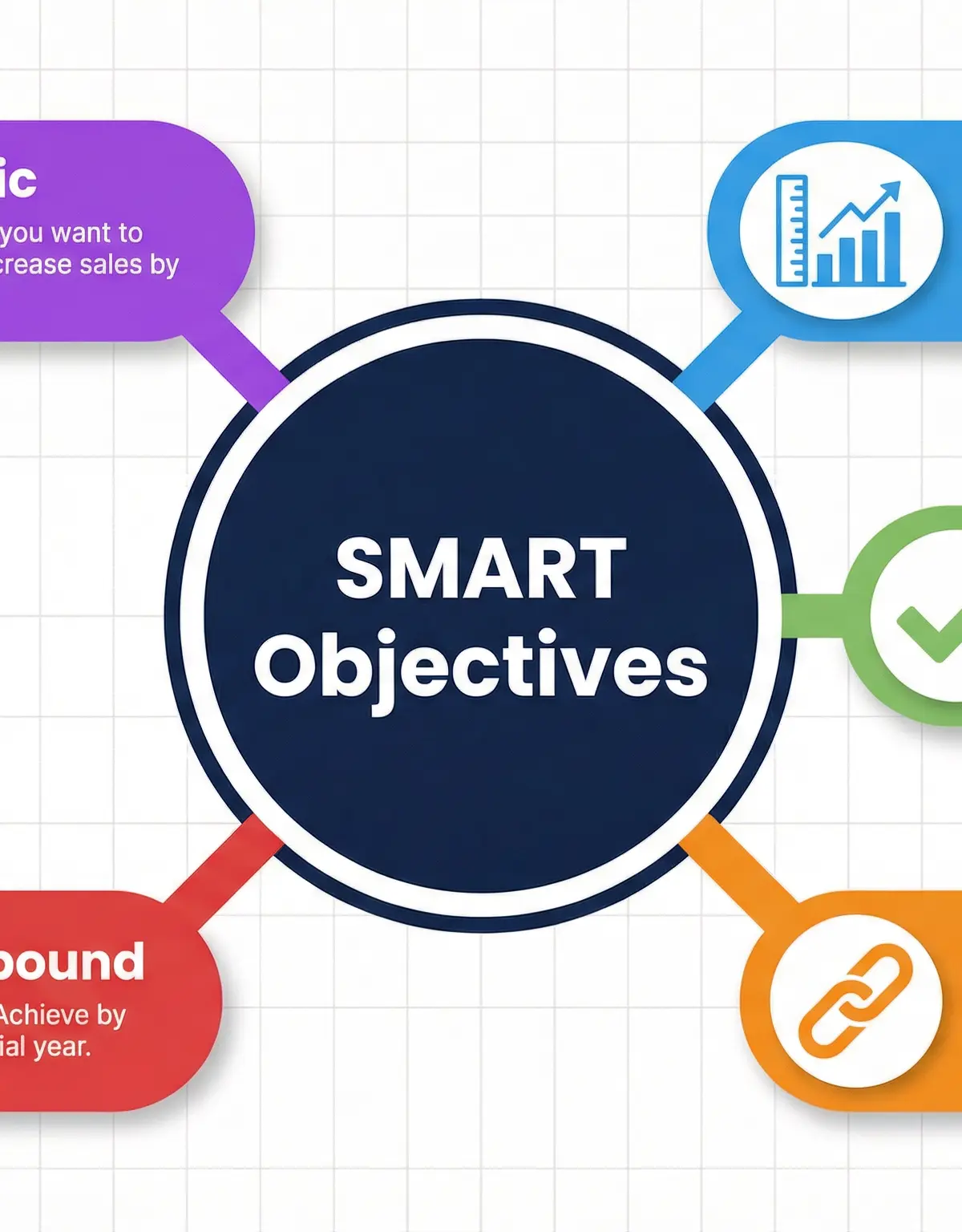
Specific
Objectives must be clear and unambiguous. 'Increase sales' is too vague. 'Increase sales of Product X in the London area' is specific.
Measurable
Objectives must be quantifiable so that progress can be tracked. 'Increase sales by 10%' is measurable.
Achievable
Objectives must be realistic given the resources of the business. Setting a target to become the market leader in six months is unlikely to be achievable for a small start-up.
Relevant
Objectives must be relevant to the overall aims of the business. An objective to reduce staff turnover is relevant to an aim of improving customer service.
Time-bound
Objectives must have a clear deadline. 'Increase sales by 10% within the next 12 months' is time-bound.
How Aims Evolve
Business aims are not static. They change over time, influenced by both internal and external factors.
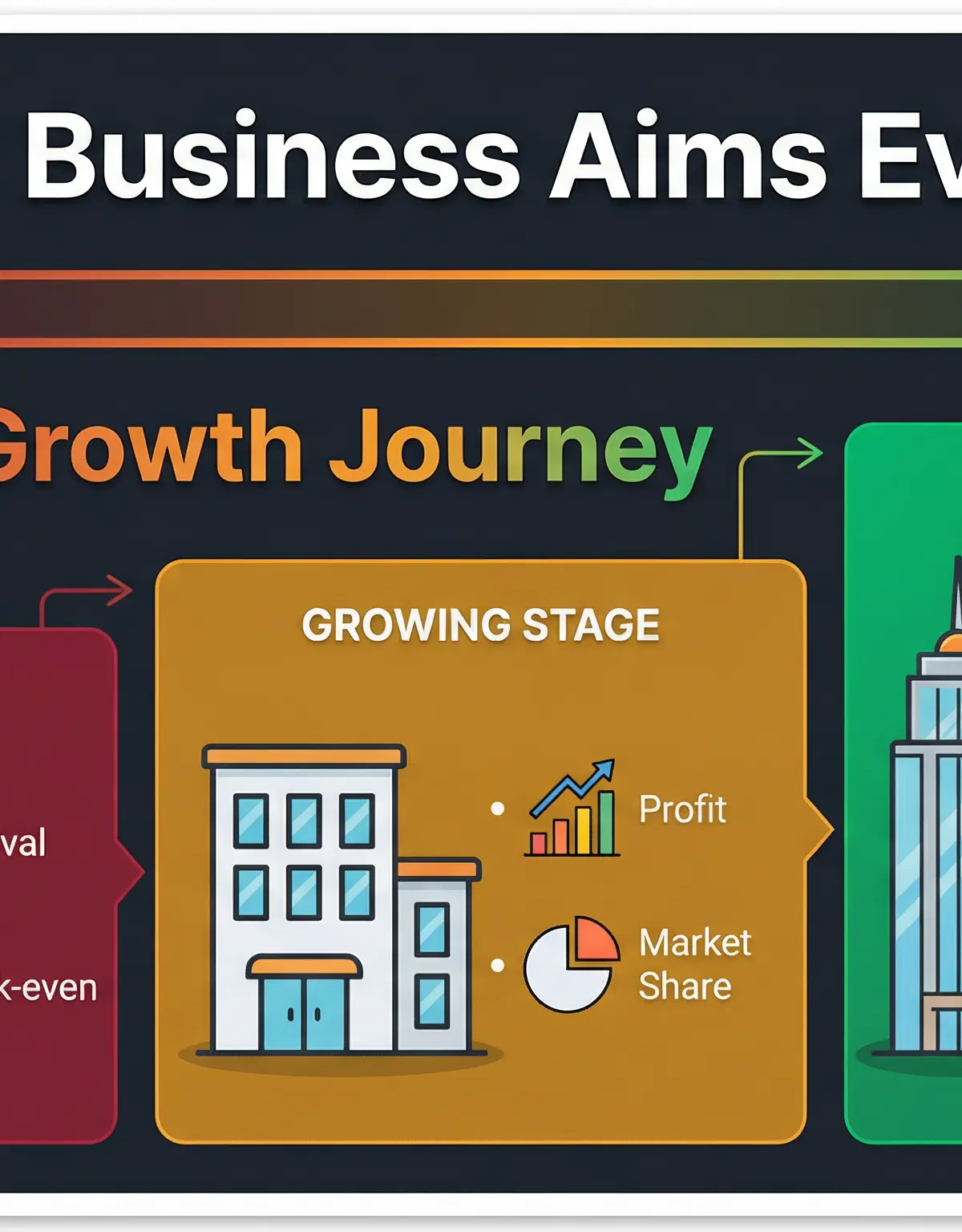
Internal Factors: As a business grows and becomes more established, its aims will naturally shift from survival towards profit and growth. The personal ambitions of the owner(s) also play a huge role.
External Factors: The state of the economy, actions of competitors, changes in legislation, and shifts in consumer tastes can all force a business to re-evaluate its aims. For example, an economic recession might force a large, profitable business to refocus on survival.
Visual Resources
2 diagrams and illustrations
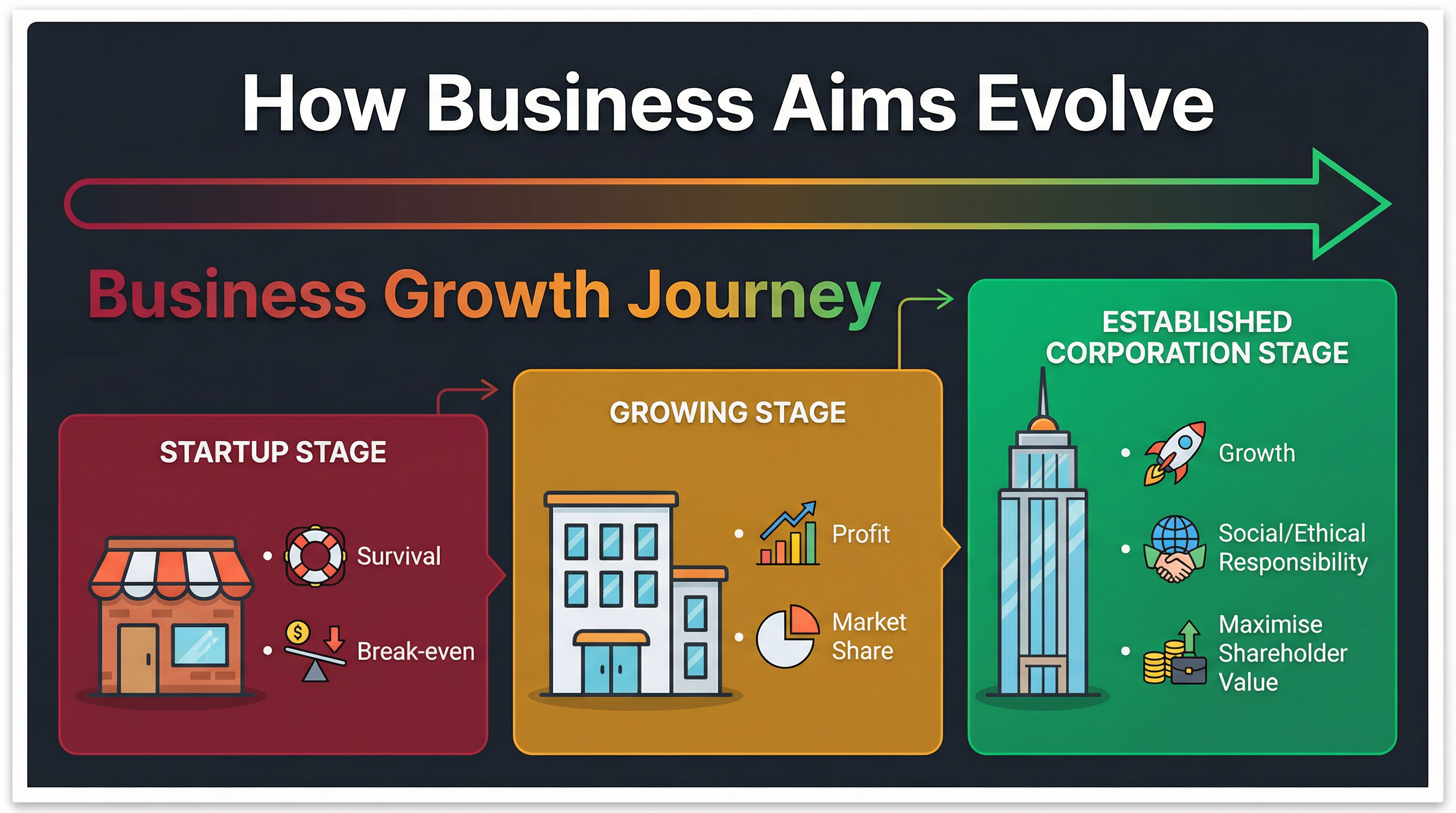
Interactive Diagrams
1 interactive diagram to visualise key concepts
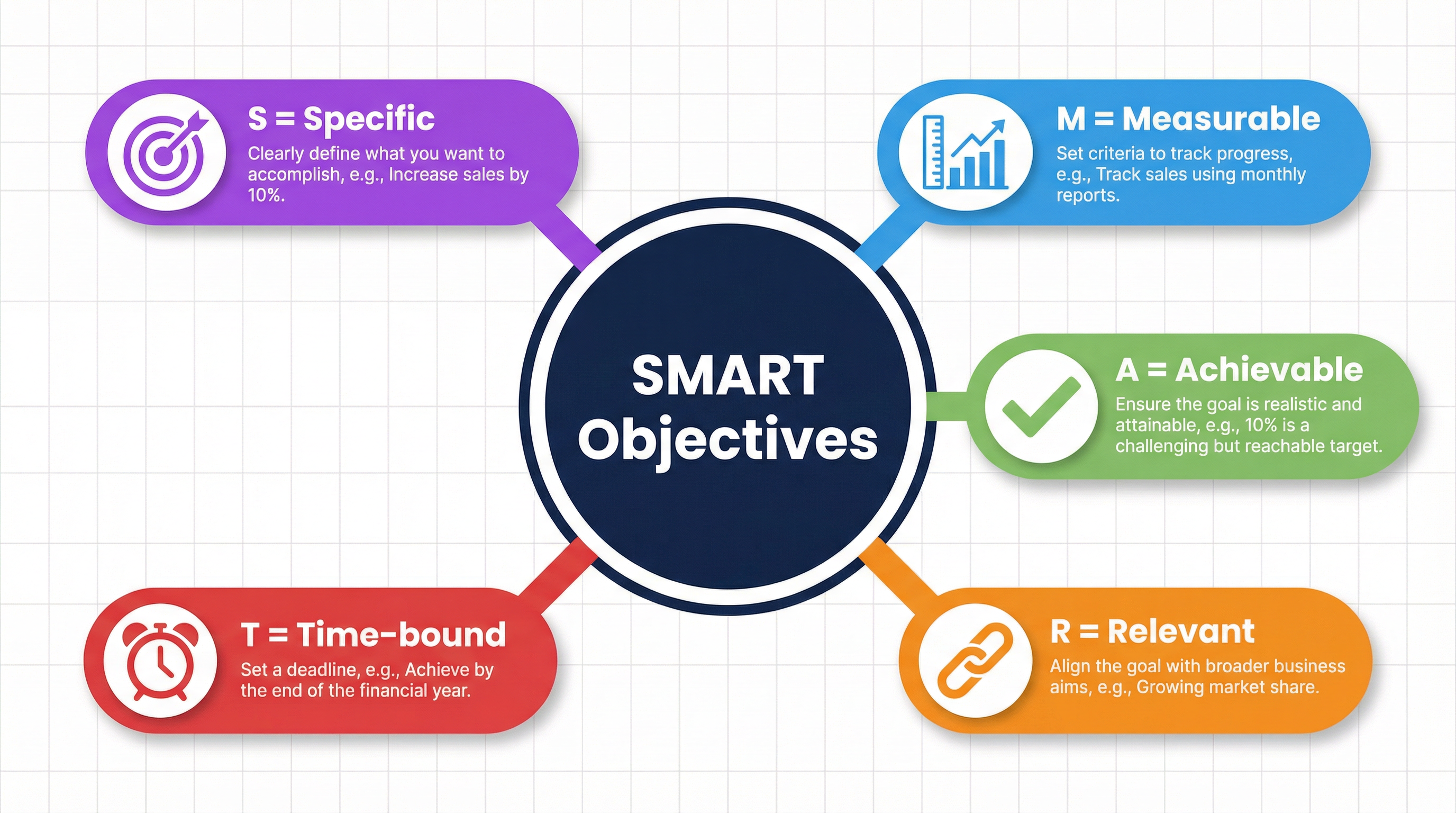
Conceptual Flow Outline
The evolution of business aims from a startup to an established business.
Worked Examples
3 worked examples — open one to explore the question and available guidance.
Practice Questions
Test your understanding — click to reveal model answers
Identify two non-financial aims a business might have. (2 marks)
Hint: Think about aims that aren't directly about money.
Explain one reason why a business might have ethical aims. (3 marks)
Hint: Think about how customers react to businesses that do good.
A private limited company that manufactures furniture has an aim of growth. Recommend a suitable SMART objective for this business. (4 marks)
Hint: Apply all five parts of the SMART framework to the furniture company.
Explain the difference between an aim and an objective. Use an example in your answer. (4 marks)
Hint: Define both terms and show how they link together.
Evaluate the importance of survival as a business aim. (9 marks)
Hint: Consider when survival is most important, and when other aims might be more important. Use business examples.