OCR · GCSE · Business
The Role of Marketing
Master the core of business success with this guide to OCR GCSE Marketing. Discover how businesses win customers and beat rivals, using the powerful tools of the Marketing Mix, smart research, and targeted strategies. This is your key to unlocking top marks in Section 2.
- 5 min read
- 3 worked examples
- 5 practice questions
- 6 key terms
Check what you remember
Read the wording for your board, then hide it and explain Marketing in your own words. Rough notes are fine. This is a self-check, with no mark or grade.
Reference: OCR
The action or business of promoting and selling products or services, including market research and advertising.
Study Notes
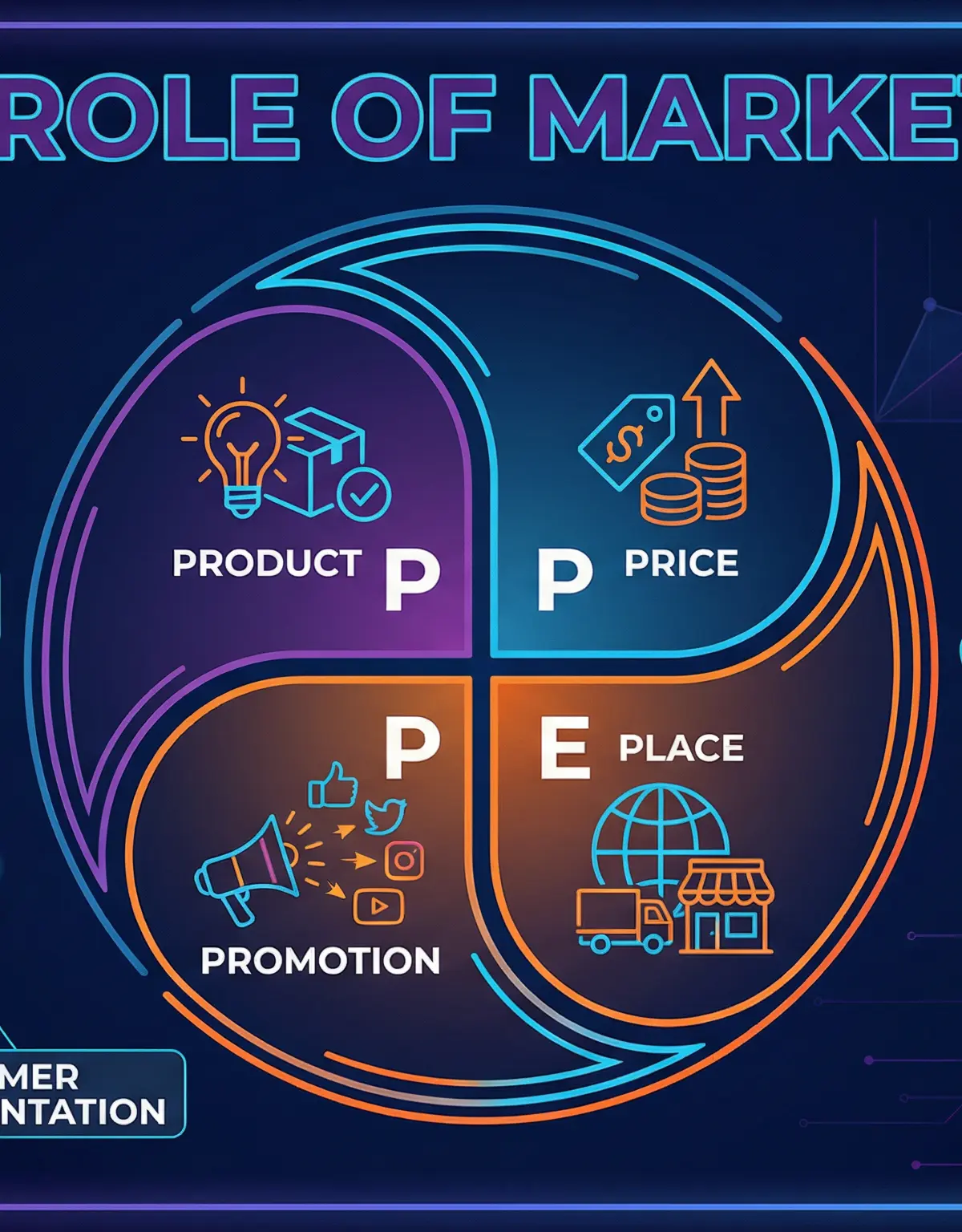
Overview
Welcome to the essential guide for OCR GCSE Business (J204), Section 2: The Role of Marketing. This topic is fundamental to understanding how any business operates, from a local coffee shop to a global giant like Apple. Marketing is the bridge between a business and its customers. Examiners are looking for candidates who can move beyond simple definitions and analyse how marketing decisions impact a business's success. You will need to master the Marketing Mix (the 4 Ps), understand the difference between primary and secondary research, and explain how businesses use market segmentation to target customers effectively. This guide will equip you with the precise knowledge and analytical skills needed to explain marketing strategies and evaluate their effectiveness, ensuring you can construct the developed chains of reasoning required for the highest marks.
The Purpose of Marketing
Marketing is formally defined as identifying, anticipating, and satisfying customer needs profitably. It is a strategic function that involves understanding the customer and the market to make informed decisions. Its primary goals are to increase revenue and market share, build a strong brand image, and foster customer loyalty.
Identifying and Anticipating Customer Needs
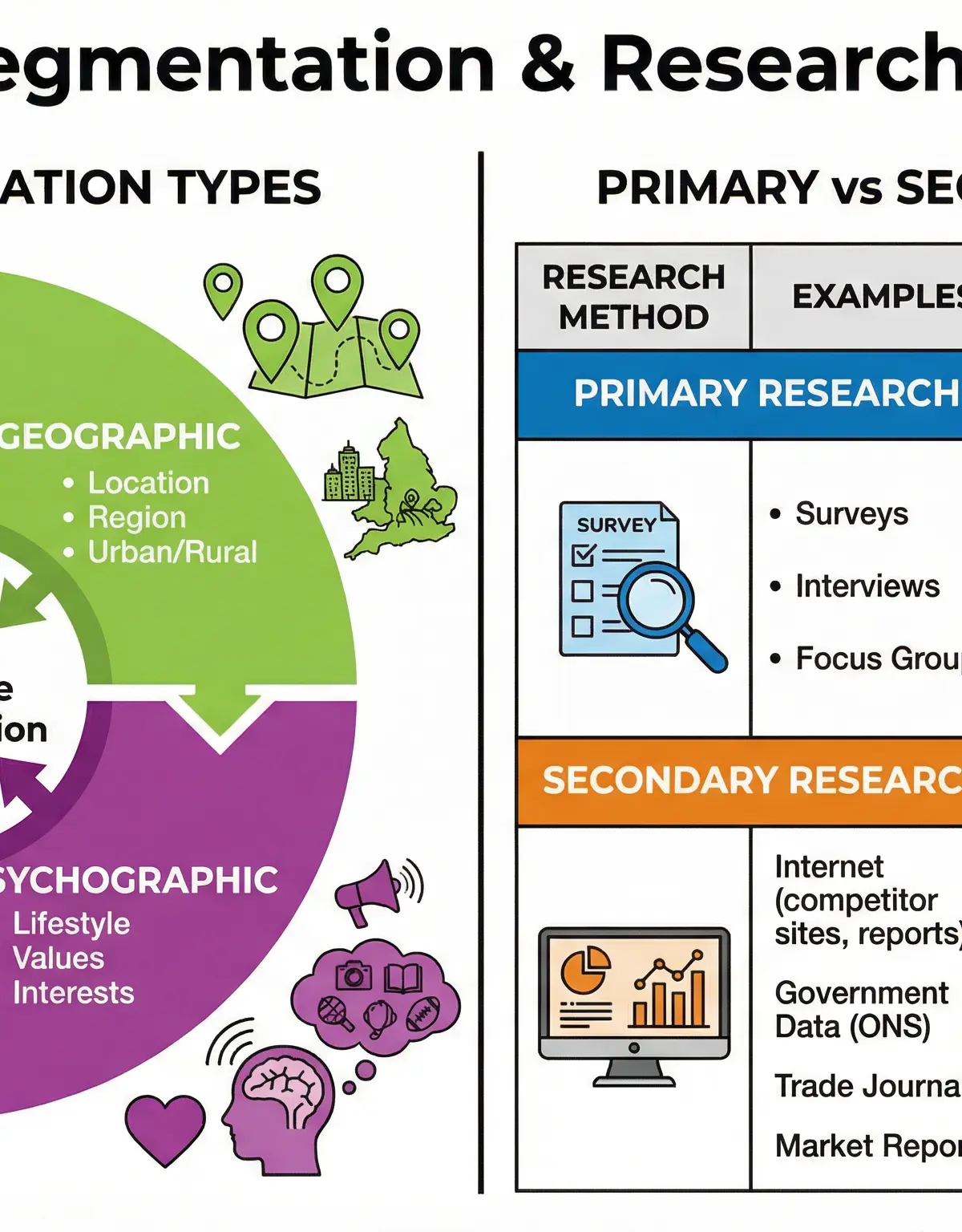
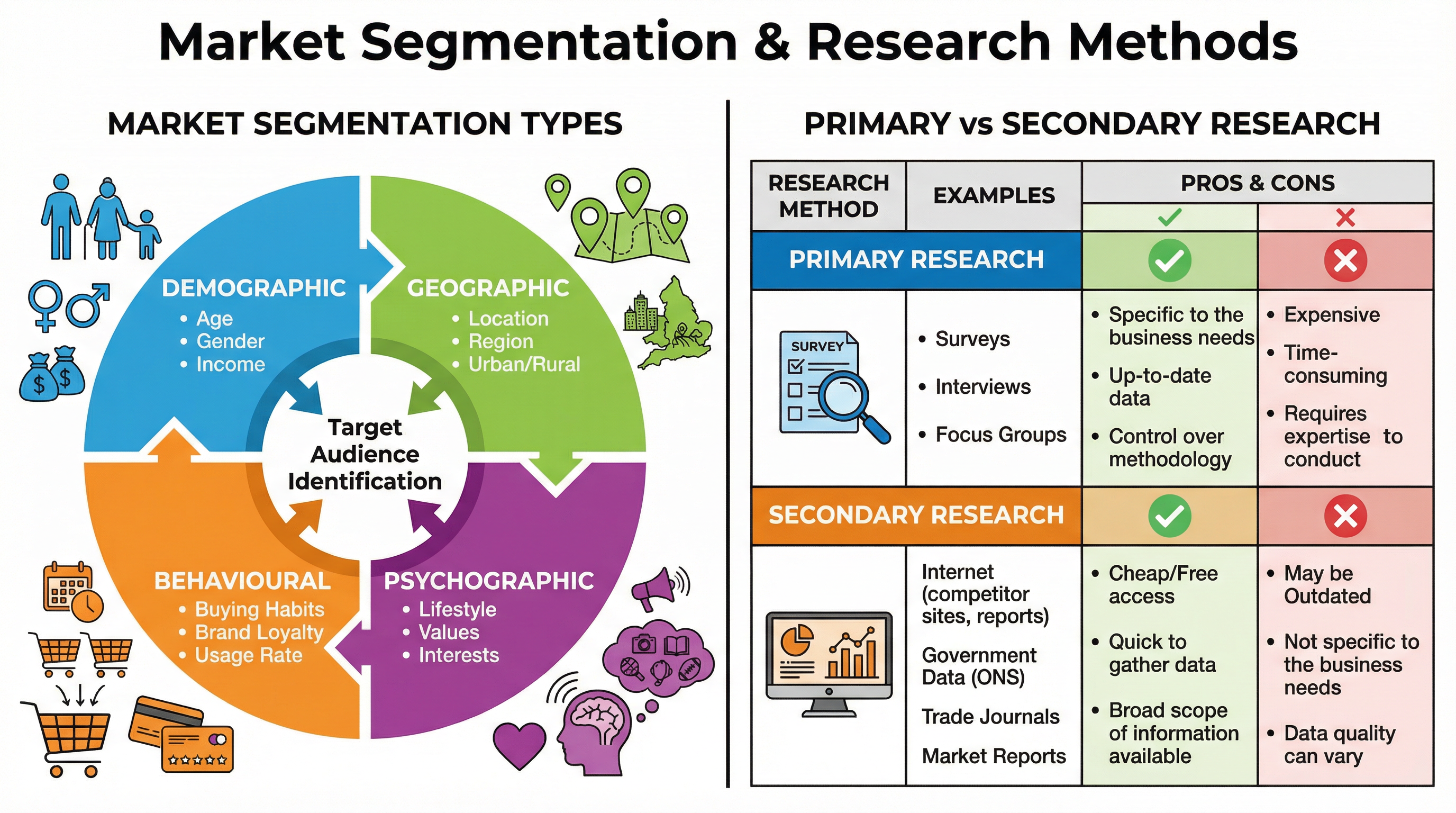
This is achieved through Market Research. Businesses must listen to customers to discover what they want, what problems they have, and what they think of competitors. This can be done through two main methods:
- Primary (Field) Research: Gathering new, first-hand data for a specific purpose. It is up-to-date and directly relevant. However, it is often expensive and time-consuming.
- Secondary (Desk) Research: Using existing data that has been collected by someone else. It is cheap and quick to access but may be outdated or not specific enough.
Satisfying Customer Needs: The Marketing Mix (4 Ps)
Once a business understands its customers, it uses the Marketing Mix to meet their needs. This is a set of tactical marketing tools that a business blends to produce the response it wants in the target market. All four elements must be integrated and work together.
1. Product
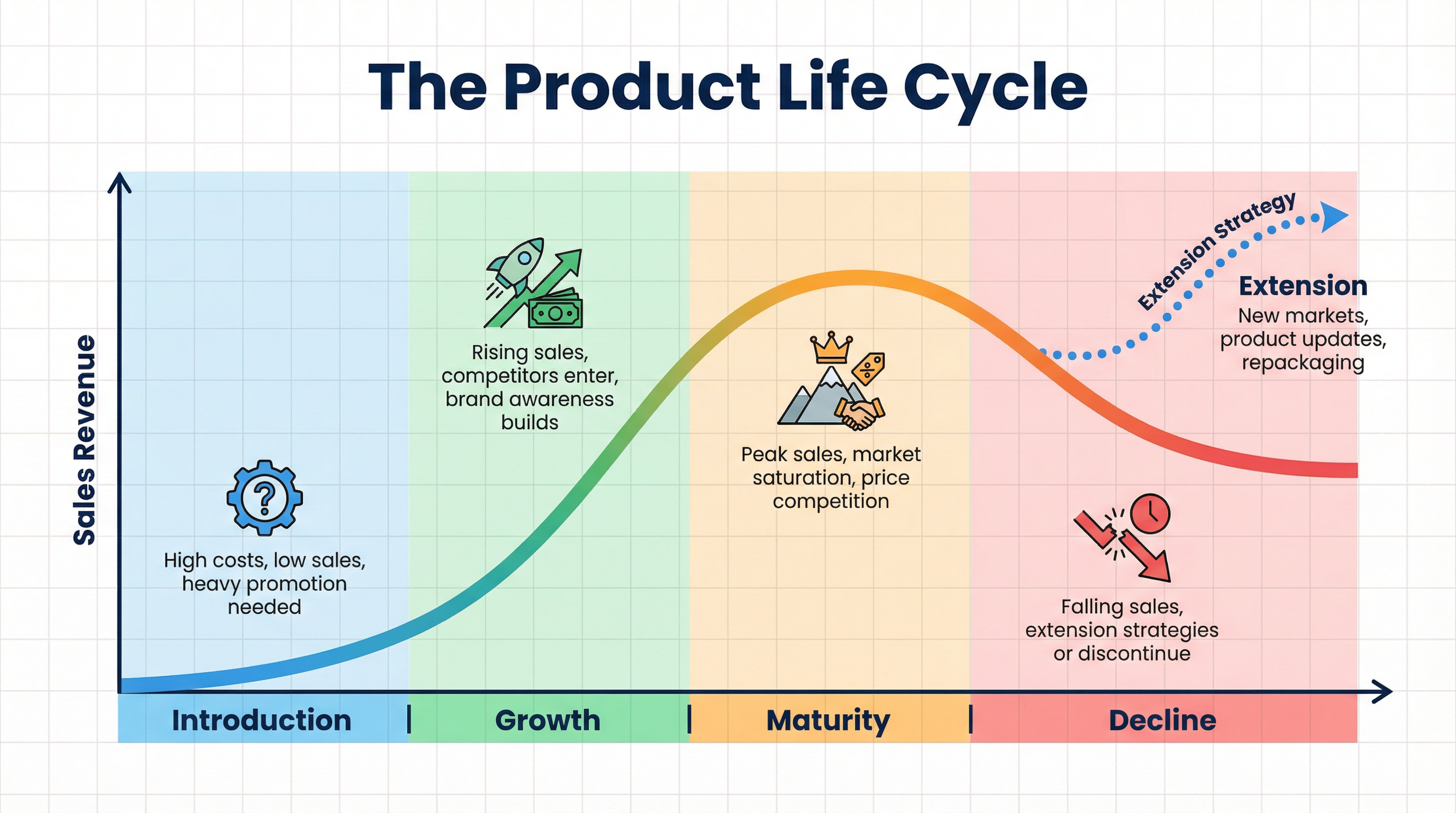
This refers to the physical good or intangible service. Key decisions relate to its features, design, quality, branding, and packaging. A crucial concept is the Product Life Cycle, which tracks a product's sales over time.
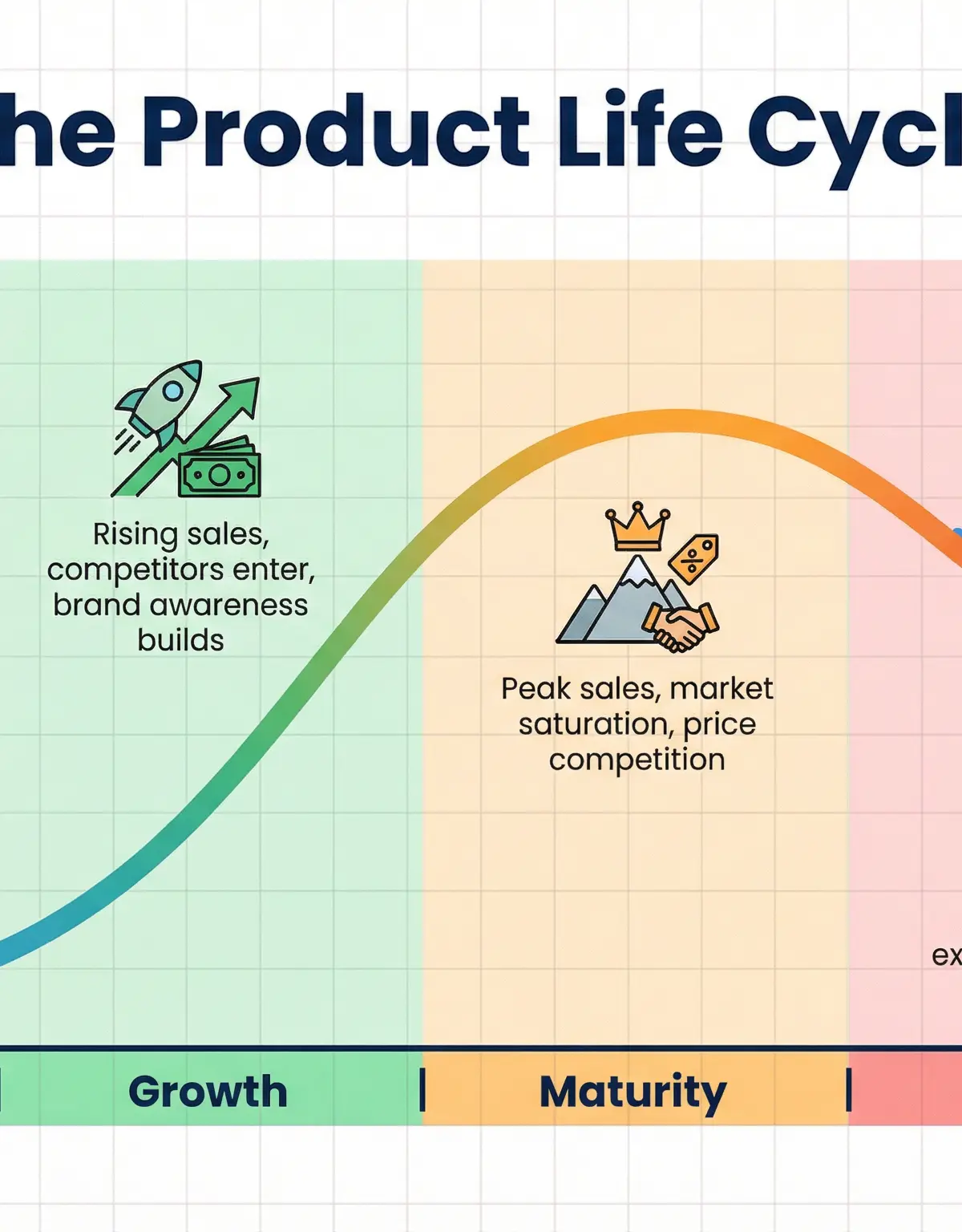
- Introduction: Low sales, high costs, heavy promotion needed.
- Growth: Sales rise rapidly, competitors may enter.
- Maturity: Sales peak, the market is saturated.
- Decline: Sales fall. Businesses may use extension strategies (e.g., new features, new markets) to prolong the cycle.
2. Price
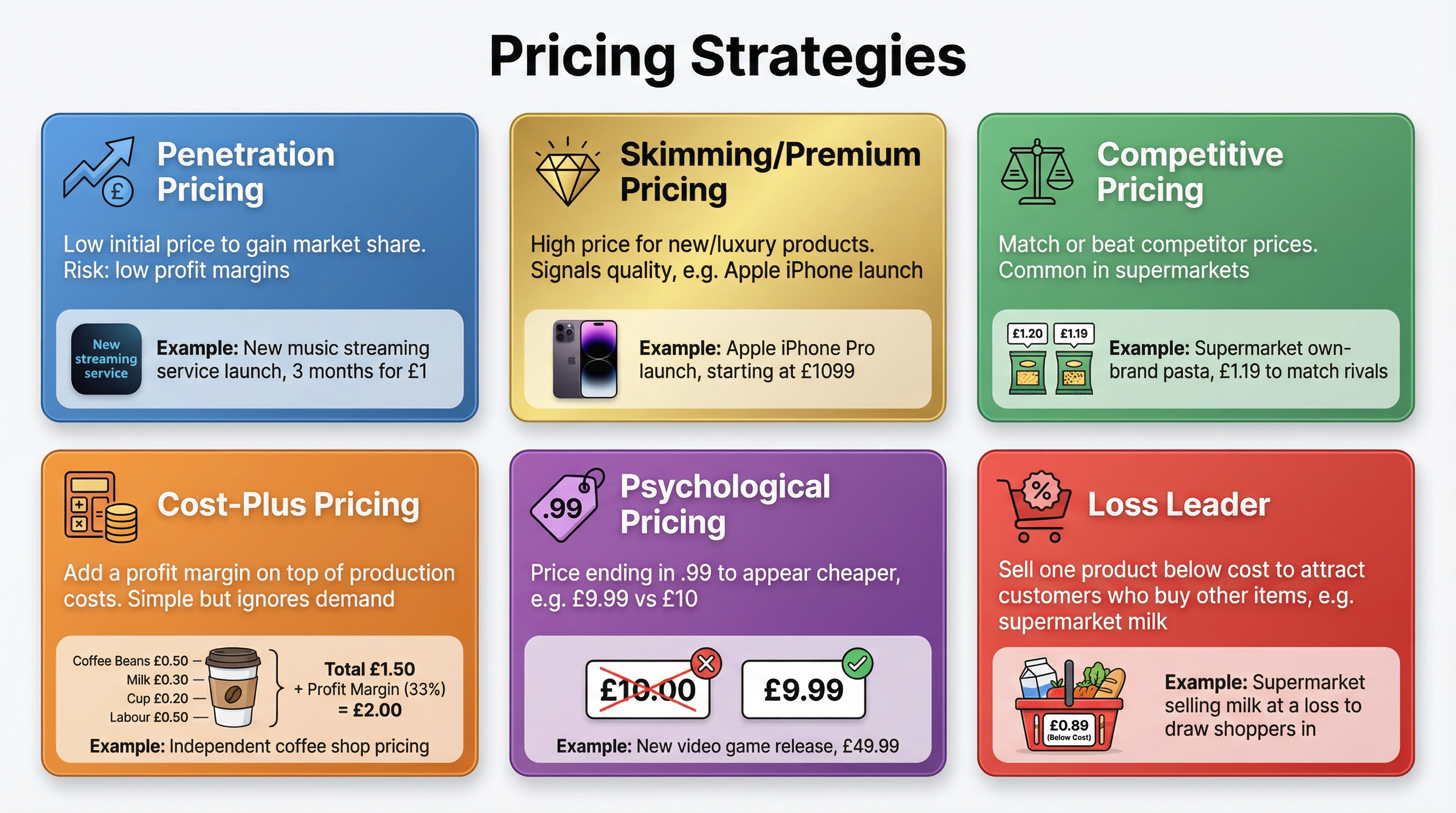
This is the amount a customer pays for the product. The pricing strategy must reflect the product's value, the target market, and the competitive landscape.
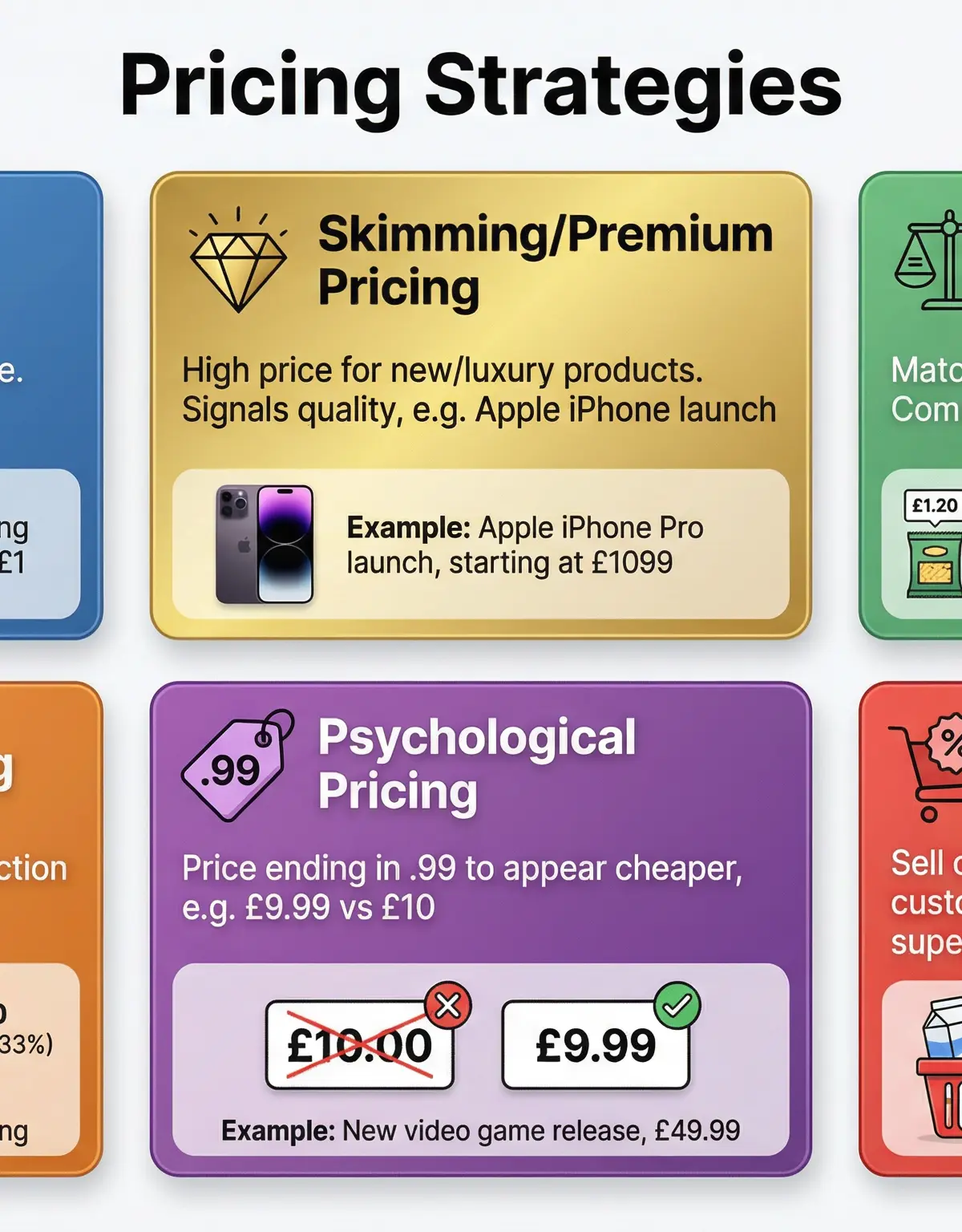
- Penetration Pricing: A low initial price to gain market share quickly.
- Price Skimming: A high initial price to maximise revenue from early adopters (often for tech or luxury goods).
- Competitive Pricing: Setting prices in line with rivals.
- Cost-Plus Pricing: Calculating the production cost and adding a percentage mark-up.
- Psychological Pricing: E.g., £9.99 instead of £10.00 to appear cheaper.
3. Place
This refers to how the product gets to the customer (the distribution channel). The choice of place affects a product's accessibility and its brand image.
- Direct Distribution: Selling straight to the consumer (e.g., via a brand's own website or store).
- Indirect Distribution: Selling through intermediaries like retailers or wholesalers.
- E-commerce: Selling online has revolutionised distribution, allowing businesses to reach a global audience 24/7.
4. Promotion
This involves all the ways a business communicates with its customers, from advertising to public relations. The goal is to inform, persuade, and remind customers about the product.
- Above-the-line: Mass media advertising (e.g., TV, radio, billboards).
- Below-the-line: More targeted methods (e.g., social media marketing, sales promotions, email marketing, sponsorship).
Market Segmentation
Few businesses can appeal to all customers in a market. Market Segmentation is the process of dividing a market into smaller groups of consumers with similar characteristics. This allows a business to create a more focused and effective marketing strategy.
- Demographic: Age, gender, income, social class, family size.
- Geographic: Country, region, urban/rural.
- Psychographic: Lifestyle, personality, values, interests.
- Behavioural: Buying habits, brand loyalty, usage rate.
Visual Resources
3 diagrams and illustrations
Interactive Diagrams
1 interactive diagram to visualise key concepts
Conceptual Flow Outline
A simplified flowchart showing the marketing process from research to review.
Worked Examples
3 worked examples — open one to explore the question and available guidance.
Practice Questions
Try the question, then reveal an answer plan or example response
Explain two ways a business could segment the market for a new brand of energy drink. (4 marks)
Hint: Think about who the typical customer for an energy drink is. Use the main segmentation categories.
Analyse one advantage and one disadvantage for a business of using primary market research before launching a new product. (6 marks)
Hint: For the advantage, think about the quality of the information. For the disadvantage, think about the resources required.
A bicycle manufacturer is launching a new, high-performance electric bike that costs £3,000. Justify which pricing strategy would be most appropriate. (9 marks)
Hint: Consider the nature of the product (high-performance, expensive). Evaluate at least two pricing strategies and conclude with the most suitable one.
Explain two promotional methods a local restaurant could use to attract more customers. (4 marks)
Hint: Think about low-cost, targeted methods suitable for a local business.
Analyse how the 'Place' element of the marketing mix has been affected by e-commerce. (6 marks)
Hint: Think about how selling online changes where and how customers can buy products.
Exam technique
How to turn what you know into marks
How to approach the question
Use the PCI method for 'Explain' questions: Point, Context, Impact. For 'Evaluate' questions, build a balanced argument (for and against) before giving a justified conclusion.
How to structure your answer
- Analyse questions
- Build a chain of reasoning. Show how one point leads to another, which leads to a final impact on the business.
- Explain questions
- Point + Context + Impact. Make a point, apply it to the business in the case study, then explain the consequence.
- Evaluate questions
- Introduction -> Argument For -> Argument Against -> Justified Conclusion. Your conclusion must be a decision, not a summary.
Timing
Approximately 1.25 minutes per mark. For a 9-mark question, this means around 11-12 minutes.
Common pitfalls
- Generic answers that don't reference the case study.
- Confusing primary and secondary research.
- Stating a point without explaining its impact (e.g., 'it increases profit' - HOW?).
- In evaluation questions, not making a final, justified judgement.
What the command words want
- Define
- Provide a clear, textbook-style definition. 1-2 marks.
- Analyse
- Develop a detailed chain of reasoning showing cause and effect. 6 marks.
- Explain
- Give a reason and explain the impact, always linking to the case study. 3-6 marks.
- Evaluate/Assess/Justify
- Build a balanced argument with a final, supported judgement. 9 marks.
Watch or listen (optional)
Test your understanding of The Role of Marketing
Active recall beats re-reading. Take an instant quiz now to test what you’ve learned and lock it into long-term memory.
7 days Premium · Then the free plan continues · No card, no charge