AQA · A-Level · Chemistry
Course version: 7405 · Version from Sept 2016
Addition polymers: IUPAC rules for naming addition polymers.
The IUPAC name of an addition polymer is poly followed by the monomer name in brackets: poly(ethene), poly(propene), poly(chloroethene), poly(phenylethene).
Checked against the AQA 7405 specification (opens in a new tab) on .
- Point 3 of 6
- 4 key terms
Study notes
From the checked teaching notes for this specification point.
The idea
The IUPAC name of an addition polymer is poly followed by the monomer name in brackets: poly(ethene), poly(propene), poly(chloroethene), poly(phenylethene). The brackets matter because they show where the monomer name begins and ends, and they are essential when the name contains more than one word or a locant, as in poly(methyl 2-methylpropenoate). Common trade names are not accepted in place of the IUPAC form, so polythene, PVC and polystyrene should be converted before you write them. To name a polymer from a drawn structure, work back to the monomer first, name that alkene correctly with the lowest locants, and only then wrap it in poly and brackets.
What earns the marks
- The form poly followed by brackets around the monomer name.
- The correct IUPAC name of the monomer inside the brackets.
- Deducing the monomer first when the polymer is given as a structure.
- Correct locants in the monomer name where the substituent position matters.
Common mistakes and how to put them right
Writing polyethylene, PVC or polystyrene when the IUPAC name is required.
Dropping the brackets, giving polychloroethene.
Naming the monomer as an alkane, for example chloroethane rather than chloroethene.
Keeping the double bond in mind but numbering the chain from the wrong end, giving the wrong locant.
Exam tips
- AQA credits phonetic spelling generally but not where correct IUPAC nomenclature is required, so spell polymer names carefully.
- Name the monomer on paper first; most lost marks here are monomer naming errors, not polymer ones.
- Keep the brackets even when the monomer name is a single word.
Try the lesson
The start of the Addition polymers: IUPAC rules for naming addition polymers. lesson, made from checked teaching notes for this specification point.
Have a go first
What is the IUPAC name of the addition polymer formed from the monomer chloroethene?
Listen
The IUPAC name of an addition polymer is poly followed by the monomer name in brackets: poly(ethene), poly(propene), poly(chloroethene), poly(phenylethene). The brackets matter because they show where the monomer name begins and ends, and they are essential when the name contains more than one word or a locant, as in poly(methyl 2-methylpropenoate). Common trade names are not accepted in place of the IUPAC form, so polythene, PVC and polystyrene should be converted before you write them. To name a polymer from a drawn structure, work back to the monomer first, name that alkene correctly with the lowest locants, and only then wrap it in poly and brackets. A strong answer earns marks for these points. the form poly followed by brackets around the monomer name. the correct IUPAC name of the monomer inside the brackets. deducing the monomer first when the polymer is given as a structure. correct locants in the monomer name where the substituent position matters. Exam tip: AQA credits phonetic spelling generally but not where correct IUPAC nomenclature is required, so spell polymer names carefully.
See it
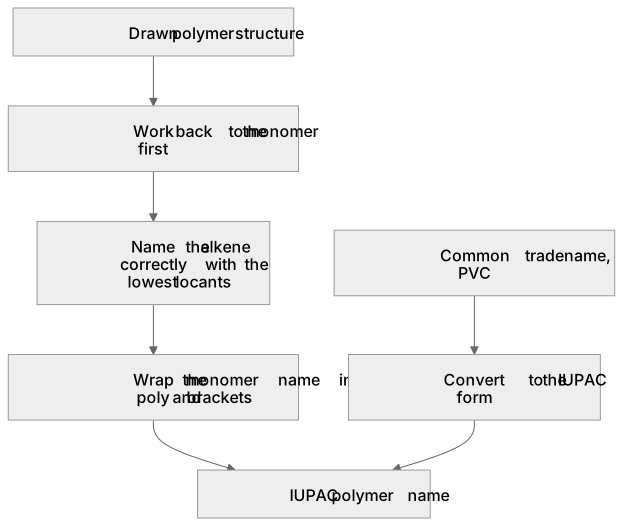
Key words
Say what each word means before you turn the card.
poly(monomer) form
Try answering aloud or in your head before turning the card.
trade names rejected
Try answering aloud or in your head before turning the card.
naming from a structure
Try answering aloud or in your head before turning the card.
locants in monomer names
Try answering aloud or in your head before turning the card.
See every definition
- poly(monomer) form
- The IUPAC name of an addition polymer is poly followed by the monomer name in brackets, and the brackets are kept even when the monomer name is a single word.
- trade names rejected
- Common trade names are not accepted in place of the IUPAC form, so polythene, PVC and polystyrene should be converted before you write them.
- naming from a structure
- To name a polymer from a drawn structure, work back to the monomer first, name that alkene correctly, and only then wrap it in poly and brackets.
- locants in monomer names
- The monomer is named with the lowest locants, and correct locants are needed in the monomer name where the substituent position matters.
Label the diagram
Some boxes have lost their names. Pick the right name for each number.
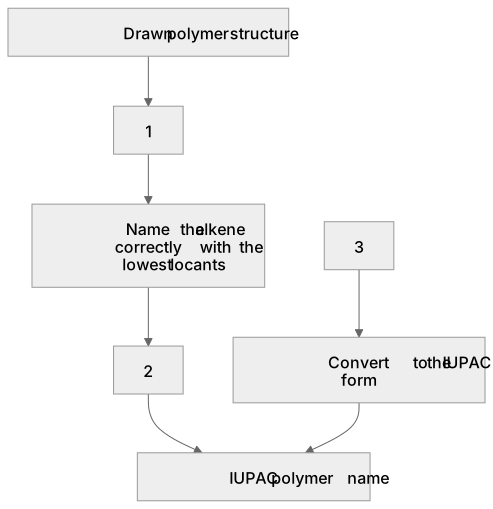
1Box 1
2Box 2
3Box 3
There is more to this lesson
The full lesson goes on to check your understanding and help you earn the marks. Create a free account to carry on, with your progress saved.
A week of Premium from your first lesson · Then the free plan continues · No card, no charge
Test your understanding of Addition polymers: IUPAC rules for naming addition polymers.
Active recall beats re-reading. Take an instant quiz now to test what you’ve learned and lock it into long-term memory.
A week of Premium from your first lesson · Then the free plan continues · No card, no charge