AQA · A-Level · Chemistry
Course version: 7405 · Version from Sept 2016
Aromatic amines, prepared by the reduction of nitro compounds, are used in…
Full specification wording
Preparation (A-level only): Aromatic amines, prepared by the reduction of nitro compounds, are used in the manufacture of dyes.
Aromatic amines cannot be made the aliphatic way, because the carbon-halogen bond in a compound such as chlorobenzene is strengthened by overlap with the ring and ammonia will not displace the…
Checked against the AQA 7405 specification (opens in a new tab) on .
- Point 2 of 2
- 4 key terms
Study notes
From the checked teaching notes for this specification point.
The idea
Aromatic amines cannot be made the aliphatic way, because the carbon-halogen bond in a compound such as chlorobenzene is strengthened by overlap with the ring and ammonia will not displace the halogen. Instead the ring is nitrated first and the nitro group is then reduced: nitrobenzene with tin and concentrated hydrochloric acid, heated under reflux, takes 6[H] and gives phenylamine and two molecules of water. In that acidic mixture the amine is protonated, so it exists as its salt, and excess sodium hydroxide is added at the end to release the free phenylamine. Aromatic amines are the feedstock for azo dyes: the amine is converted to a diazonium salt below 10 °C and then coupled to give a strongly coloured compound.
What earns the marks
- Tin and concentrated hydrochloric acid as the reducing system, heated under reflux.
- A balanced equation using 6[H] and producing two molecules of water.
- Adding excess sodium hydroxide to release the free amine from its salt.
- The aromatic amine being used to make dyes.
Common mistakes and how to put them right
Omitting the sodium hydroxide stage, so the answer stops at the ammonium salt.
Balancing the reduction with 4[H], which is the nitrile equation rather than the nitro one.
Suggesting ammonia and chlorobenzene as a route to phenylamine.
Naming the product of reducing nitrobenzene as an amide.
Exam tips
- Reduction questions want the reagent and the equation; 'reduce it' on its own scores nothing.
- Say why the sodium hydroxide is needed, not just that it is added: the amine is a base and was protonated by the excess acid.
Try the lesson
The start of the Preparation (A-level only): Aromatic amines, prepared by the reduction of nitro compounds, are used in the manufacture of dyes. lesson, made from checked teaching notes for this specification point.
Have a go first
Aromatic amines are prepared by the reduction of which type of compound?
Listen
Aromatic amines cannot be made the aliphatic way, because the carbon-halogen bond in a compound such as chlorobenzene is strengthened by overlap with the ring and ammonia will not displace the halogen. Instead the ring is nitrated first and the nitro group is then reduced: nitrobenzene with tin and concentrated hydrochloric acid, heated under reflux, takes 6[H] and gives phenylamine and two molecules of water. In that acidic mixture the amine is protonated, so it exists as its salt, and excess sodium hydroxide is added at the end to release the free phenylamine. Aromatic amines are the feedstock for azo dyes: the amine is converted to a diazonium salt below 10 °C and then coupled to give a strongly coloured compound. A strong answer earns marks for these points. tin and concentrated hydrochloric acid as the reducing system, heated under reflux. a balanced equation using 6[H] and producing two molecules of water. adding excess sodium hydroxide to release the free amine from its salt. the aromatic amine being used to make dyes. Exam tip: Reduction questions want the reagent and the equation; 'reduce it' on its own scores nothing.
See it
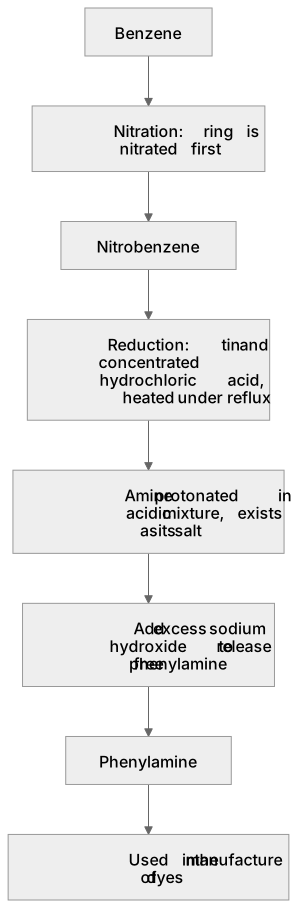
Put it in order
Put these steps in the order they happen.
- 1. Amine protonated in acidic mixture, exists as its salt
- 2. Used in the manufacture of dyes
- 3. Add excess sodium hydroxide to release free phenylamine
- 4. Benzene
- 5. Nitration: ring is nitrated first
- 6. Phenylamine
- 7. Nitrobenzene
- 8. Reduction: tin and concentrated hydrochloric acid, heated under reflux
Key words
Say what each word means before you turn the card.
tin and hydrochloric acid
Try answering aloud or in your head before turning the card.
liberating the free amine
Try answering aloud or in your head before turning the card.
azo dyes
Try answering aloud or in your head before turning the card.
unreactive aryl halides
Try answering aloud or in your head before turning the card.
See every definition
- tin and hydrochloric acid
- The reducing system used with nitrobenzene, heated under reflux, to reduce the nitro group.
- liberating the free amine
- Adding excess sodium hydroxide at the end to release the free amine from its salt, because the amine is a base and was protonated by the excess acid.
- azo dyes
- Strongly coloured compounds for which aromatic amines are the feedstock, the amine being converted to a diazonium salt below 10 °C and then coupled.
- unreactive aryl halides
- Compounds such as chlorobenzene, in which the carbon-halogen bond is strengthened by overlap with the ring, so ammonia will not displace the halogen.
Label the diagram
Some boxes have lost their names. Pick the right name for each number.
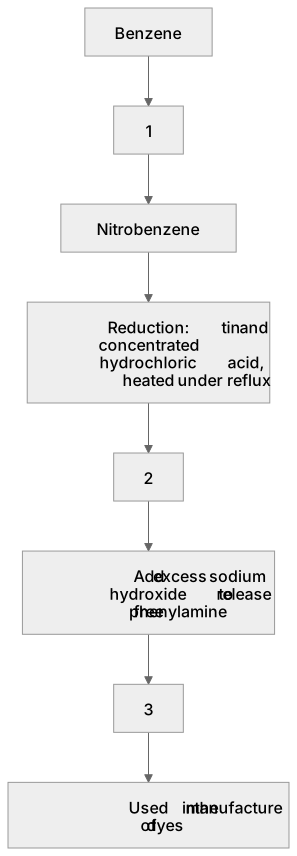
1Box 1
2Box 2
3Box 3
There is more to this lesson
The full lesson goes on to check your understanding and help you earn the marks. Create a free account to carry on, with your progress saved.
A week of Premium from your first lesson · Then the free plan continues · No card, no charge
Test your understanding of Preparation (A-level only): Aromatic amines, prepared by the reduction of nitro compounds, are used in the manufacture of dyes.
Active recall beats re-reading. Take an instant quiz now to test what you’ve learned and lock it into long-term memory.
A week of Premium from your first lesson · Then the free plan continues · No card, no charge