AQA · GCSE · Chemistry
Course version: 8462 · Version from Sept 2018
Students should be able to: recall a use of each of the alloys specified…
Full specification wording
Alloys as useful materials: Students should be able to: recall a use of each of the alloys specified interpret and evaluate the composition and uses of alloys other than those specified given appropriate information. AQA GCSE Chemistry 8462. GCSE exams Jun
This outcome has two parts.
Checked against the AQA 8462 specification (opens in a new tab) on .
- Point 10 of 10
- 4 key terms
Study notes
From the checked teaching notes for this specification point.
The idea
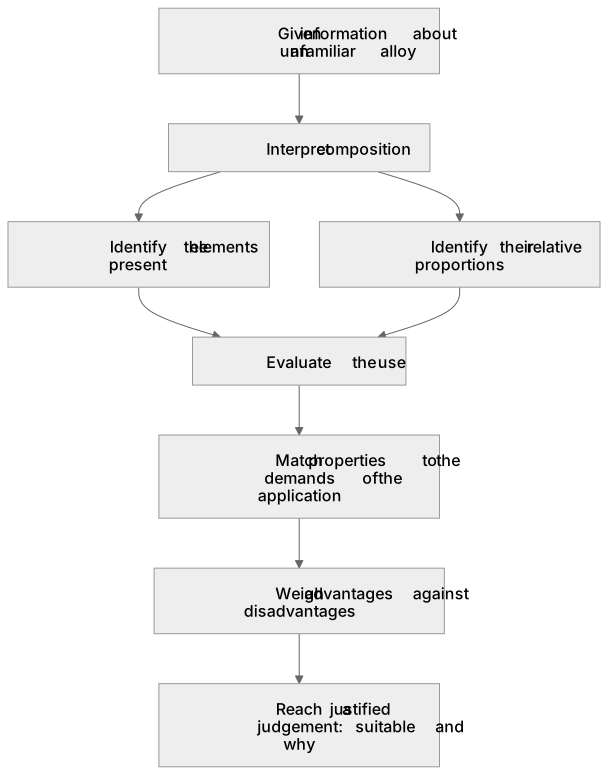
This outcome has two parts. First, recall a use for each alloy named in the specification, such as stainless steel for cutlery and aluminium alloys for aircraft. Second, when given data about an unfamiliar alloy, interpret its composition and evaluate whether its properties suit a stated use. Interpreting means reading the composition and identifying the elements and their proportions; evaluating means weighing advantages such as strength, density, corrosion resistance and cost against disadvantages.
For example: Given an alloy of copper and zinc, you might identify it as brass and judge it suitable for a door handle because it is hard, conducts heat and resists corrosion.
What earns the marks
- Recall at least one named use for each alloy specified in the course.
- Interpret composition by identifying the elements present and their relative proportions.
- Evaluate a use by matching properties such as strength, density, corrosion resistance and cost to the demands of the application.
- Use data provided in the question rather than relying only on memory when the alloy is unfamiliar.
- Reach a justified judgement that states whether the alloy is suitable and why.
Common mistakes and how to put them right
Listing a property without linking it to the use.
Put it right by writing a because clause that connects property to function.
Ignoring the data given about an unfamiliar alloy.
Put it right by quoting or using the composition figures in the answer.
Giving a use for the wrong alloy.
Put it right by matching each named alloy to a specific application.
Exam tips
- For recall questions, name one clear use per alloy rather than several vague ones.
- For unfamiliar alloys, extract the elements and proportions from the table before judging suitability.
- Finish evaluation answers with a clear judgement supported by at least one property.
Try the lesson
The start of the Alloys as useful materials: Students should be able to: recall a use of each of the alloys specified interpret and evaluate the composition and uses of alloys other than those specified given appropriate information. AQA GCSE Chemistry 8462. GCSE exams Jun lesson, made from checked teaching notes for this specification point.
Have a go first
Which alloy is commonly used to make aircraft parts and some bicycle frames because of its low density and high strength?
Listen
This outcome has two parts. First, recall a use for each alloy named in the specification, such as stainless steel for cutlery and aluminium alloys for aircraft. Second, when given data about an unfamiliar alloy, interpret its composition and evaluate whether its properties suit a stated use. Interpreting means reading the composition and identifying the elements and their proportions; evaluating means weighing advantages such as strength, density, corrosion resistance and cost against disadvantages. For example, given an alloy of copper and zinc, you might identify it as brass and judge it suitable for a door handle because it is hard, conducts heat and resists corrosion. A strong answer earns marks for these points. Recall at least one named use for each alloy specified in the course. Interpret composition by identifying the elements present and their relative proportions. Evaluate a use by matching properties such as strength, density, corrosion resistance and cost to the demands of the application. Use data provided in the question rather than relying only on memory when the alloy is unfamiliar. A common slip: Listing a property without linking it to the use. Instead, writing a because clause that connects property to function. Exam tip: For recall questions, name one clear use per alloy rather than several vague ones.
See it
Key words
Say what each word means before you turn the card.
Interpret
Try answering aloud or in your head before turning the card.
Evaluate
Try answering aloud or in your head before turning the card.
Recall a use
Try answering aloud or in your head before turning the card.
Justified judgement
Try answering aloud or in your head before turning the card.
See every definition
- Interpret
- Read the composition and identify the elements and their relative proportions.
- Evaluate
- Weigh advantages such as strength, density, corrosion resistance and cost against disadvantages.
- Recall a use
- Name one clear use for each alloy specified in the course.
- Justified judgement
- A clear judgement that states whether the alloy is suitable and why, supported by at least one property.
Label the diagram
Some boxes have lost their names. Pick the right name for each number.
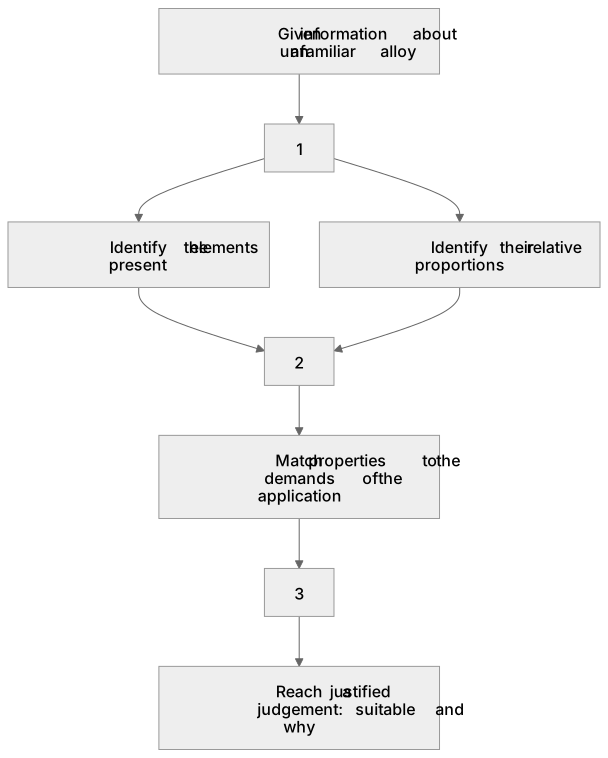
1Box 1
2Box 2
3Box 3
There is more to this lesson
The full lesson goes on to check your understanding and help you earn the marks. Create a free account to carry on, with your progress saved.
A week of Premium from your first lesson · Then the free plan continues · No card, no charge
Test your understanding of Alloys as useful materials: Students should be able to: recall a use of each of the alloys specified interpret and evaluate the composition and uses of alloys other than those specified given appropriate information. AQA GCSE Chemistry 8462. GCSE exams Jun
Active recall beats re-reading. Take an instant quiz now to test what you’ve learned and lock it into long-term memory.
A week of Premium from your first lesson · Then the free plan continues · No card, no charge