AQA · GCSE · Chemistry
Course version: 8462 · Version from Sept 2018
The metal compounds can be processed to obtain the metal.
Full specification wording
Alternative methods of extracting metals (HT only): The metal compounds can be processed to obtain the metal.
Alternative extraction methods like phytomining and bioleaching produce metal compounds, not the pure metals themselves.
Checked against the AQA 8462 specification (opens in a new tab) on .
- Point 6 of 8
Study notes
From the checked teaching notes for this specification point.
The idea
Alternative extraction methods like phytomining and bioleaching produce metal compounds, not the pure metals themselves. Phytomining yields ash containing metal compounds, while bioleaching produces a leachate solution containing dissolved metal ions. To obtain the useful metal, these compounds must be further processed. For example, copper compounds obtained from these alternative methods can be processed to extract pure copper. This is typically achieved by displacement using scrap iron, which is more reactive than copper, or by electrolysis of the leachate solution. Processing is essential because the metal remains chemically combined in the compound. These methods allow for the economical extraction of metals from low-grade ores while reducing environmental impacts compared to traditional mining.
What earns the marks
- Identifies that phytomining and bioleaching produce metal compounds, such as copper compounds, rather than pure metals.
- Explains that these metal compounds must be processed further to extract the pure metal.
- Describes displacement using scrap iron as a method to process copper compounds obtained from alternative extraction.
- Describes electrolysis of leachate solutions as another method to extract the metal from its compound.
- Explains that scrap iron can displace copper from solution because iron is more reactive than copper.
- Recognises that alternative extraction methods are used for low-grade ores to reduce environmental impact.
Common mistakes and how to put them right
Stating that phytomining or bioleaching directly produces pure copper.
Put it right: These methods produce copper compounds (in ash or leachate), which must be processed to obtain the metal.
Suggesting that aluminium is extracted by electrolysis of an aqueous solution.
Put it right: Aluminium requires electrolysis of a molten compound, whereas copper from leachate can be extracted by electrolysis of an aqueous solution.
Failing to specify how the metal is obtained from the leachate.
Put it right: Explicitly state that the metal is extracted from the leachate by displacement with scrap iron or by electrolysis.
Exam tips
- Always mention displacement with scrap iron or electrolysis when asked how copper is obtained from the products of phytomining or bioleaching.
- Remember that scrap iron is used for displacement because it is cheap and more reactive than copper.
- When asked why a compound must be processed, refer to the metal being chemically combined and therefore not present as the element.
Try the lesson
The start of the Alternative methods of extracting metals (HT only): The metal compounds can be processed to obtain the metal. lesson, made from checked teaching notes for this specification point.
Have a go first
In alternative extraction methods such as phytomining, the process produces ash containing metal compounds. What must happen next to obtain the pure metal?
Listen
Alternative extraction methods like phytomining and bioleaching produce metal compounds, not the pure metals themselves. Phytomining yields ash containing metal compounds, while bioleaching produces a leachate solution containing dissolved metal ions. To obtain the useful metal, these compounds must be further processed. For example, copper compounds obtained from these alternative methods can be processed to extract pure copper. This is typically achieved by displacement using scrap iron, which is more reactive than copper, or by electrolysis of the leachate solution. Processing is essential because the metal remains chemically combined in the compound. These methods allow for the economical extraction of metals from low-grade ores while reducing environmental impacts compared to traditional mining. A strong answer earns marks for these points. Identifies that phytomining and bioleaching produce metal compounds, such as copper compounds, rather than pure metals. Explains that these metal compounds must be processed further to extract the pure metal. Describes displacement using scrap iron as a method to process copper compounds obtained from alternative extraction. Describes electrolysis of leachate solutions as another method to extract the metal from its compound. A common slip: Stating that phytomining or bioleaching directly produces pure copper. Instead, these methods produce copper compounds (in ash or leachate), which must be processed to obtain the metal. Exam tip: Always mention displacement with scrap iron or electrolysis when asked how copper is obtained from the products of phytomining or bioleaching.
See it
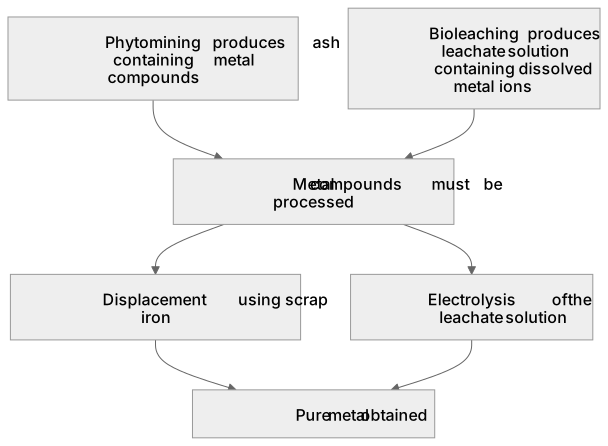
Label the diagram
Some boxes have lost their names. Pick the right name for each number.
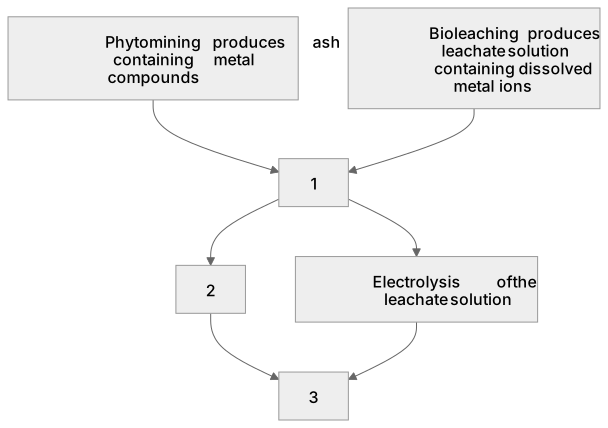
1Box 1
2Box 2
3Box 3
There is more to this lesson
The full lesson goes on to check your understanding and help you earn the marks. Create a free account to carry on, with your progress saved.
A week of Premium from your first lesson · Then the free plan continues · No card, no charge
Test your understanding of Alternative methods of extracting metals (HT only): The metal compounds can be processed to obtain the metal.
Active recall beats re-reading. Take an instant quiz now to test what you’ve learned and lock it into long-term memory.
A week of Premium from your first lesson · Then the free plan continues · No card, no charge