AQA · GCSE · Chemistry
Course version: 8462 · Version from Sept 2018
These methods avoid traditional mining methods of digging, moving and…
Full specification wording
Alternative methods of extracting metals (HT only): These methods avoid traditional mining methods of digging, moving and disposing of large amounts of rock.
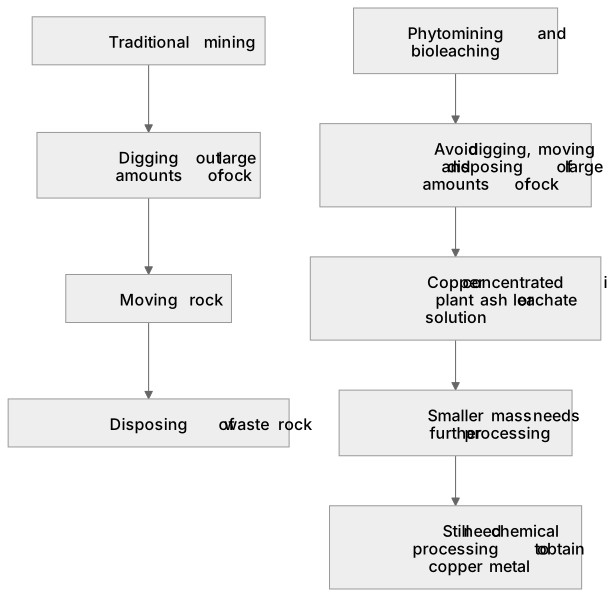
Traditional copper extraction from low-grade ore involves digging out huge quantities of rock, transporting it and disposing of waste after processing.
Checked against the AQA 8462 specification (opens in a new tab) on .
- Point 3 of 8
- 2 key terms
Study notes
From the checked teaching notes for this specification point.
The idea
Traditional copper extraction from low-grade ore involves digging out huge quantities of rock, transporting it and disposing of waste after processing. These steps use large amounts of energy, damage habitats and create spoil heaps. Phytomining and bioleaching avoid digging, moving and disposing of large amounts of rock because the plants or bacteria act on copper compounds in the ground or in heaps of low-grade ore. The copper is concentrated into plant ash or into a leachate solution, so only a much smaller mass needs further processing. This reduces landscape disturbance, waste rock and transport, although the methods are slower and may still need chemical processing to obtain copper metal.
What earns the marks
- Traditional mining requires digging, moving and disposing of large amounts of rock.
- Phytomining and bioleaching reduce or avoid these traditional mining steps.
- Less rock is dug, transported and discarded, so landscape disturbance and waste are reduced.
- The copper is concentrated into ash or leachate, so a smaller volume or mass is processed.
- Energy use and environmental impact may be lower than for traditional low-grade ore processing.
- The methods are slower than traditional mining and still require further processing to obtain copper metal.
Common mistakes and how to put them right
Claiming these methods have no environmental impact.
Put it right: They reduce digging, moving and disposal of rock but still use energy and may involve processing chemicals.
Thinking no rock is disturbed at all.
Put it right: Some ore may still be heaped or accessed, but far less rock is dug, moved and disposed of than in traditional mining.
Confusing the benefit with cost.
Put it right: The main benefit is avoiding large-scale rock movement and disposal, not making copper instantly or cheaply.
Exam tips
- Compare directly with traditional mining: state what traditional mining does and what the alternative avoids.
- Use the phrase 'large amounts of rock' and explain that concentrating copper into ash or leachate reduces the mass handled.
- Balance benefits with limitations, such as slower rates or the need for further processing.
Try the lesson
The start of the Alternative methods of extracting metals (HT only): These methods avoid traditional mining methods of digging, moving and disposing of large amounts of rock. lesson, made from checked teaching notes for this specification point.
Have a go first
Which environmental benefit is associated with phytomining and bioleaching compared with traditional mining?
Listen
Traditional copper extraction from low-grade ore involves digging out huge quantities of rock, transporting it and disposing of waste after processing. These steps use large amounts of energy, damage habitats and create spoil heaps. Phytomining and bioleaching avoid digging, moving and disposing of large amounts of rock because the plants or bacteria act on copper compounds in the ground or in heaps of low-grade ore. The copper is concentrated into plant ash or into a leachate solution, so only a much smaller mass needs further processing. This reduces landscape disturbance, waste rock and transport, although the methods are slower and may still need chemical processing to obtain copper metal. A strong answer earns marks for these points. Traditional mining requires digging, moving and disposing of large amounts of rock. Phytomining and bioleaching reduce or avoid these traditional mining steps. Less rock is dug, transported and discarded, so landscape disturbance and waste are reduced. The copper is concentrated into ash or leachate, so a smaller volume or mass is processed. A common slip: Claiming these methods have no environmental impact. Instead, they reduce digging, moving and disposal of rock but still use energy and may involve processing chemicals. Exam tip: Compare directly with traditional mining: state what traditional mining does and what the alternative avoids.
See it
Key words
Say what each word means before you turn the card.
Environmental impact of extraction
Try answering aloud or in your head before turning the card.
Waste reduction
Try answering aloud or in your head before turning the card.
See every definition
- Environmental impact of extraction
- Digging, moving and disposing of large amounts of rock damages habitats and creates spoil heaps, while these methods reduce landscape disturbance and waste.
- Waste reduction
- Less rock is dug, transported and discarded, so waste is reduced.
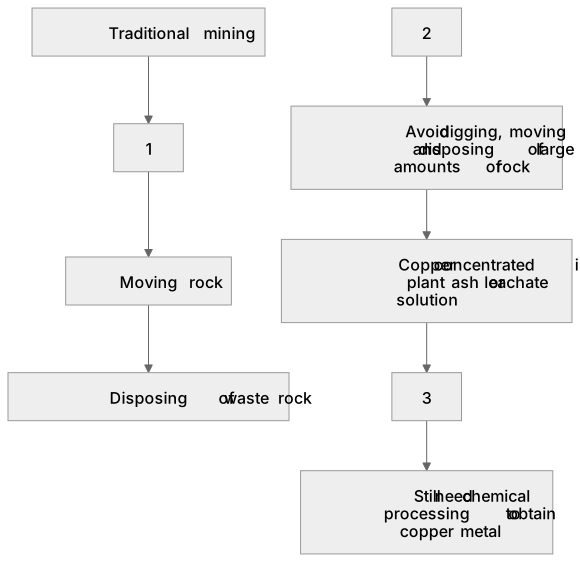
Label the diagram
Some boxes have lost their names. Pick the right name for each number.
1Box 1
2Box 2
3Box 3
There is more to this lesson
The full lesson goes on to check your understanding and help you earn the marks. Create a free account to carry on, with your progress saved.
A week of Premium from your first lesson · Then the free plan continues · No card, no charge
Test your understanding of Alternative methods of extracting metals (HT only): These methods avoid traditional mining methods of digging, moving and disposing of large amounts of rock.
Active recall beats re-reading. Take an instant quiz now to test what you’ve learned and lock it into long-term memory.
A week of Premium from your first lesson · Then the free plan continues · No card, no charge