AQA · GCSE · Chemistry
Course version: 8462 · Version from Sept 2018
A simple cell can be made by connecting two different metals in contact…
Full specification wording
Cells and batteries: A simple cell can be made by connecting two different metals in contact with an electrolyte.
A simple cell needs two different metals, each acting as an electrode, both dipped into an electrolyte such as a salt solution or dilute acid.
Checked against the AQA 8462 specification (opens in a new tab) on .
- Point 3 of 7
Study notes
From the checked teaching notes for this specification point.
The idea
A simple cell needs two different metals, each acting as an electrode, both dipped into an electrolyte such as a salt solution or dilute acid. The metals must be different so that one is more reactive than the other; this difference drives the electron transfer. The more reactive metal loses electrons and becomes oxidised, releasing electrons into the external circuit. These electrons travel through the wires to the less reactive metal, where they are gained by ions in the electrolyte in reduction. The electrolyte completes the circuit by allowing ions to move between the electrodes. If the two metals were the same, no overall voltage would be produced.
For example: Connecting zinc and copper strips in copper sulfate solution makes a working simple cell.
What earns the marks
- State that a simple cell requires two different metals as electrodes.
- Describe that both metals must be in contact with an electrolyte.
- Explain that the more reactive metal is oxidised and the less reactive metal is where reduction occurs.
- Recognise that the electrolyte allows ions to move and completes the circuit.
- State that using two identical metals would not produce a voltage.
Common mistakes and how to put them right
Using two identical metals and expecting a voltage.
Put it right by choosing two metals with different reactivity.
Forgetting the electrolyte and connecting only the two metals.
Put it right by placing both metals in contact with an electrolyte.
Saying that the electrolyte carries electrons.
Put it right by stating that ions move through the electrolyte while electrons flow through the external wires.
Exam tips
- Label a diagram clearly with the two different metals, the electrolyte and the external circuit.
- State the direction of electron flow from the more reactive metal to the less reactive metal.
- Use the terms oxidation and reduction correctly: oxidation at the more reactive electrode, reduction at the less reactive electrode.
Try the lesson
The start of the Cells and batteries: A simple cell can be made by connecting two different metals in contact with an electrolyte. lesson, made from checked teaching notes for this specification point.
Have a go first
Which set of materials is needed to make a simple chemical cell?
Listen
A simple cell needs two different metals, each acting as an electrode, both dipped into an electrolyte such as a salt solution or dilute acid. The metals must be different so that one is more reactive than the other; this difference drives the electron transfer. The more reactive metal loses electrons and becomes oxidised, releasing electrons into the external circuit. These electrons travel through the wires to the less reactive metal, where they are gained by ions in the electrolyte in reduction. The electrolyte completes the circuit by allowing ions to move between the electrodes. If the two metals were the same, no overall voltage would be produced. For example, connecting zinc and copper strips in copper sulfate solution makes a working simple cell. A strong answer earns marks for these points. State that a simple cell requires two different metals as electrodes. Describe that both metals must be in contact with an electrolyte. Explain that the more reactive metal is oxidised and the less reactive metal is where reduction occurs. Recognise that the electrolyte allows ions to move and completes the circuit. A common slip: Using two identical metals and expecting a voltage. Instead, choosing two metals with different reactivity. Exam tip: Label a diagram clearly with the two different metals, the electrolyte and the external circuit.
See it
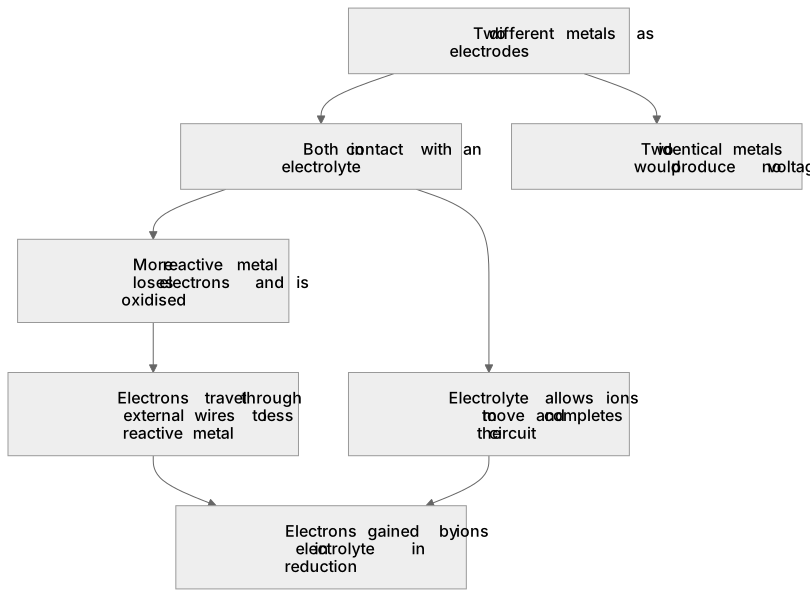
Label the diagram
Some boxes have lost their names. Pick the right name for each number.
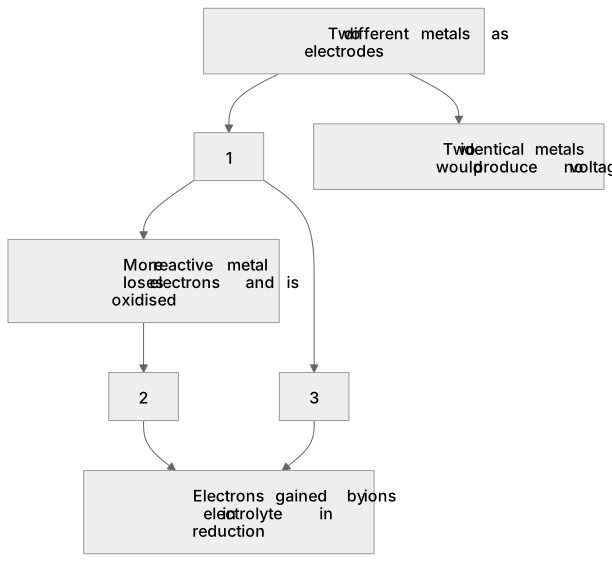
1Box 1
2Box 2
3Box 3
There is more to this lesson
The full lesson goes on to check your understanding and help you earn the marks. Create a free account to carry on, with your progress saved.
A week of Premium from your first lesson · Then the free plan continues · No card, no charge
Test your understanding of Cells and batteries: A simple cell can be made by connecting two different metals in contact with an electrolyte.
Active recall beats re-reading. Take an instant quiz now to test what you’ve learned and lock it into long-term memory.
A week of Premium from your first lesson · Then the free plan continues · No card, no charge