AQA · GCSE · Chemistry
Course version: 8462 · Version from Sept 2018
Corrosion is the destruction of materials by chemical reactions with…
Full specification wording
Corrosion and its prevention: Corrosion is the destruction of materials by chemical reactions with substances in the environment. Rusting is an example of corrosion.
Corrosion is the breakdown of a material caused by chemical reactions with substances around it, such as oxygen, water or acids.
Checked against the AQA 8462 specification (opens in a new tab) on .
- Point 1 of 6
- 2 key terms
Study notes
From the checked teaching notes for this specification point.
The idea
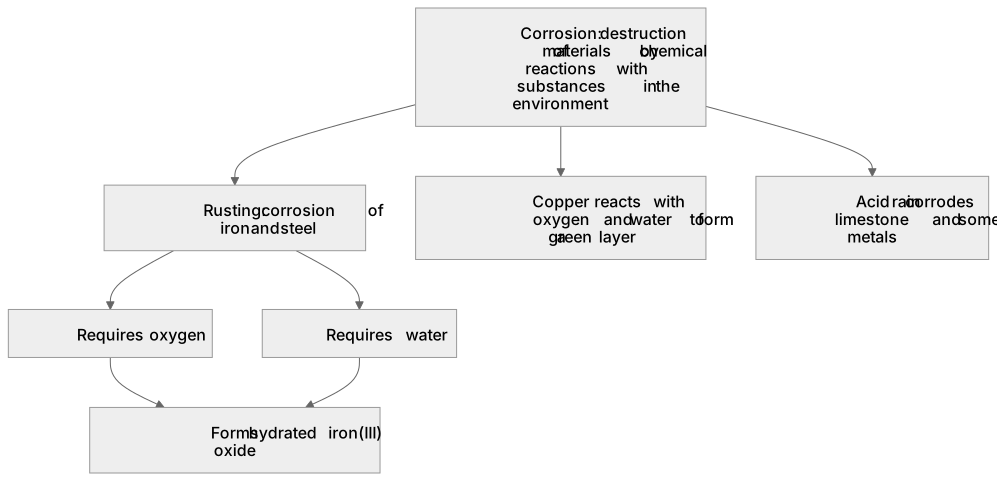
Corrosion is the breakdown of a material caused by chemical reactions with substances around it, such as oxygen, water or acids. The material is destroyed because it is chemically changed into new substances. Rusting is the corrosion of iron and steel. It needs both oxygen and water, and it forms hydrated iron(III) oxide, which is the familiar orange-brown rust. The rust flakes away, exposing fresh iron, so the metal gradually weakens and is destroyed. Corrosion is not only about iron: copper reacts slowly with oxygen and water to form a green layer, and acid rain can corrode limestone and some metals. Understanding corrosion helps explain why prevention methods such as painting, oiling, galvanising or sacrificial protection are used.
What earns the marks
- Corrosion is the destruction of a material by chemical reactions with substances in the environment.
- The material is chemically changed into new substances, so corrosion is a chemical process, not just physical wear.
- Rusting is the corrosion of iron and steel and is one example of corrosion.
- Rusting requires both oxygen and water, and produces hydrated iron(III) oxide.
- Other examples include the green layer on copper and the action of acid rain on limestone or metals.
- Corrosion weakens a material because the new substance does not have the same useful properties as the original material.
Common mistakes and how to put them right
Saying rusting needs only water or only oxygen.
Put it right: Rusting requires both oxygen and water.
Writing that rust is iron oxide without the water of crystallisation.
Put it right: Rust is hydrated iron(III) oxide.
Treating corrosion as physical wear such as scratching.
Put it right: Corrosion is a chemical reaction that forms new substances.
Exam tips
- Define corrosion in terms of chemical reactions with substances in the environment.
- When explaining rusting, name both reactants, oxygen and water, and name the product, hydrated iron(III) oxide.
- Use a second example, such as copper or acid rain on limestone, to show that rusting is only one type of corrosion.
Try the lesson
The start of the Corrosion and its prevention: Corrosion is the destruction of materials by chemical reactions with substances in the environment. Rusting is an example of corrosion. lesson, made from checked teaching notes for this specification point.
Have a go first
Which change to an iron gate is an example of corrosion?
Listen
Corrosion is the breakdown of a material caused by chemical reactions with substances around it, such as oxygen, water or acids. The material is destroyed because it is chemically changed into new substances. Rusting is the corrosion of iron and steel. It needs both oxygen and water, and it forms hydrated iron(III) oxide, which is the familiar orange-brown rust. The rust flakes away, exposing fresh iron, so the metal gradually weakens and is destroyed. Corrosion is not only about iron: copper reacts slowly with oxygen and water to form a green layer, and acid rain can corrode limestone and some metals. Understanding corrosion helps explain why prevention methods such as painting, oiling, galvanising or sacrificial protection are used. A strong answer earns marks for these points. Corrosion is the destruction of a material by chemical reactions with substances in the environment. The material is chemically changed into new substances, so corrosion is a chemical process, not just physical wear. Rusting is the corrosion of iron and steel and is one example of corrosion. Rusting requires both oxygen and water, and produces hydrated iron(III) oxide. A common slip: Saying rusting needs only water or only oxygen. Instead, rusting requires both oxygen and water. Exam tip: Define corrosion in terms of chemical reactions with substances in the environment.
See it
Key words
Say what each word means before you turn the card.
Corrosion
Try answering aloud or in your head before turning the card.
Rusting
Try answering aloud or in your head before turning the card.
See every definition
- Corrosion
- The destruction of materials by chemical reactions with substances in the environment.
- Rusting
- An example of corrosion, being the corrosion of iron and steel that requires both oxygen and water.
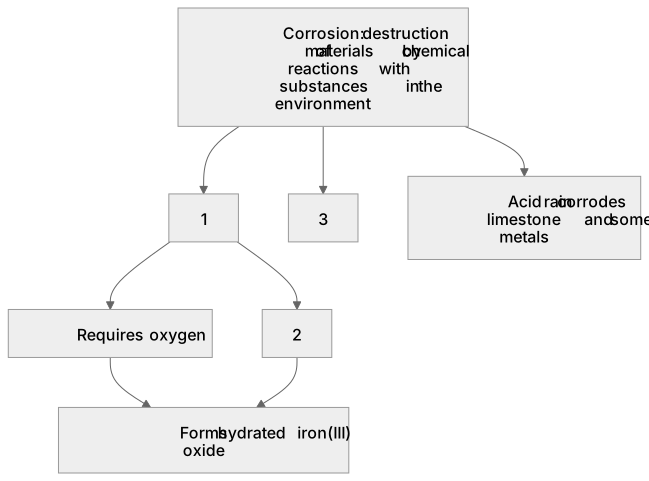
Label the diagram
Some boxes have lost their names. Pick the right name for each number.
1Box 1
2Box 2
3Box 3
There is more to this lesson
The full lesson goes on to check your understanding and help you earn the marks. Create a free account to carry on, with your progress saved.
A week of Premium from your first lesson · Then the free plan continues · No card, no charge
Test your understanding of Corrosion and its prevention: Corrosion is the destruction of materials by chemical reactions with substances in the environment. Rusting is an example of corrosion.
Active recall beats re-reading. Take an instant quiz now to test what you’ve learned and lock it into long-term memory.
A week of Premium from your first lesson · Then the free plan continues · No card, no charge