AQA · GCSE · Chemistry
Course version: 8462 · Version from Sept 2018
Some coatings are reactive and contain a more reactive metal to provide…
Full specification wording
Corrosion and its prevention: Some coatings are reactive and contain a more reactive metal to provide sacrificial protection, eg zinc is used to galvanise iron.
Sacrificial protection uses a metal more reactive than iron, such as zinc or magnesium.
Checked against the AQA 8462 specification (opens in a new tab) on .
- Point 5 of 6
- 2 key terms
Study notes
From the checked teaching notes for this specification point.
The idea
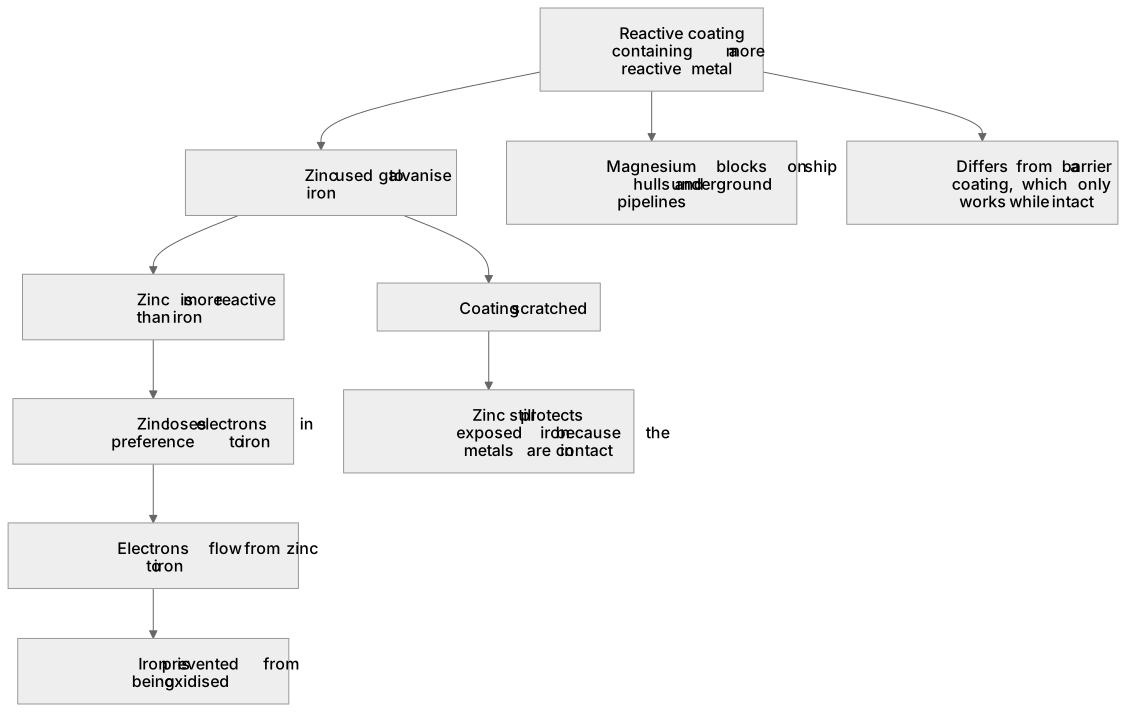
Sacrificial protection uses a metal more reactive than iron, such as zinc or magnesium. The more reactive metal loses electrons in preference to iron, so it corrodes instead. Zinc coating on iron is called galvanising. Even if the coating is scratched, the zinc still protects the exposed iron because the two metals are in contact and zinc is higher in the reactivity series. Electrons flow from zinc to iron, preventing iron from being oxidised. This differs from a barrier coating, which only works while intact. Magnesium blocks attached to ship hulls and underground pipelines work in the same way.
What earns the marks
- A more reactive metal is used so it corrodes in place of iron.
- Zinc coating on iron is called galvanising.
- Sacrificial protection still works when the coating is scratched.
- The more reactive metal loses electrons, which flow to the iron.
- Magnesium blocks on ships and pipelines are further examples.
Common mistakes and how to put them right
Thinking galvanising is only a barrier.
Put it right: Zinc also protects sacrificially when scratched.
Choosing a less reactive metal such as copper.
Put it right: The sacrificial metal must be more reactive than iron.
Saying the iron corrodes first.
Put it right: The more reactive metal corrodes instead.
Exam tips
- State that the sacrificial metal is more reactive than iron.
- Use galvanising as your named example and explain the scratch case.
- Link electron transfer to protection of iron.
Try the lesson
The start of the Corrosion and its prevention: Some coatings are reactive and contain a more reactive metal to provide sacrificial protection, eg zinc is used to galvanise iron. lesson, made from checked teaching notes for this specification point.
Have a go first
Which metal is used to galvanise iron to provide sacrificial protection?
Listen
Sacrificial protection uses a metal more reactive than iron, such as zinc or magnesium. The more reactive metal loses electrons in preference to iron, so it corrodes instead. Zinc coating on iron is called galvanising. Even if the coating is scratched, the zinc still protects the exposed iron because the two metals are in contact and zinc is higher in the reactivity series. Electrons flow from zinc to iron, preventing iron from being oxidised. This differs from a barrier coating, which only works while intact. Magnesium blocks attached to ship hulls and underground pipelines work in the same way. A strong answer earns marks for these points. A more reactive metal is used so it corrodes in place of iron. Zinc coating on iron is called galvanising. Sacrificial protection still works when the coating is scratched. The more reactive metal loses electrons, which flow to the iron. A common slip: Thinking galvanising is only a barrier. Instead, zinc also protects sacrificially when scratched. Exam tip: State that the sacrificial metal is more reactive than iron.
See it
Key words
Say what each word means before you turn the card.
Sacrificial protection
Try answering aloud or in your head before turning the card.
Galvanising
Try answering aloud or in your head before turning the card.
See every definition
- Sacrificial protection
- A more reactive metal is used so it corrodes in place of iron, losing electrons which flow to the iron.
- Galvanising
- A zinc coating on iron, which still protects the exposed iron when scratched because the two metals are in contact.
Label the diagram
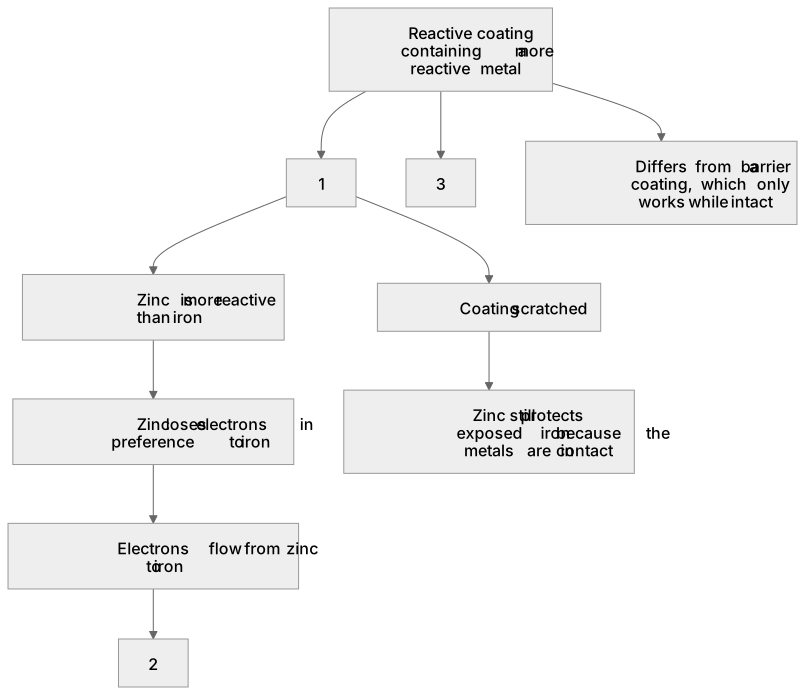
Some boxes have lost their names. Pick the right name for each number.
1Box 1
2Box 2
3Box 3
There is more to this lesson
The full lesson goes on to check your understanding and help you earn the marks. Create a free account to carry on, with your progress saved.
A week of Premium from your first lesson · Then the free plan continues · No card, no charge
Test your understanding of Corrosion and its prevention: Some coatings are reactive and contain a more reactive metal to provide sacrificial protection, eg zinc is used to galvanise iron.
Active recall beats re-reading. Take an instant quiz now to test what you’ve learned and lock it into long-term memory.
A week of Premium from your first lesson · Then the free plan continues · No card, no charge