AQA · GCSE · Chemistry
Course version: 8462 · Version from Sept 2018
Most DNA molecules are two polymer chains, made from four different…
Full specification wording
DNA (deoxyribonucleic acid) and other naturally occurring polymers: Most DNA molecules are two polymer chains, made from four different monomers called nucleotides, in the form of a double helix.
Most DNA molecules consist of two polymer chains that wind around each other to form a double helix.
Checked against the AQA 8462 specification (opens in a new tab) on .
- Point 3 of 5
- 4 key terms
Study notes
From the checked teaching notes for this specification point.
The idea
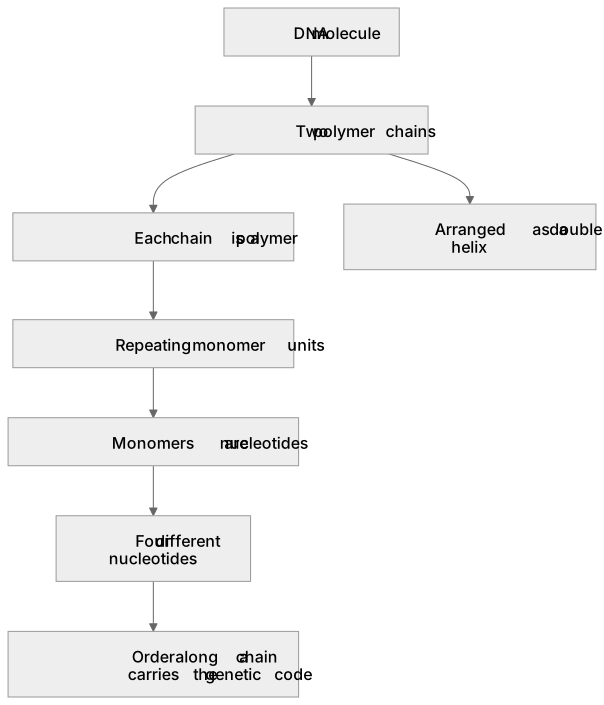
Most DNA molecules consist of two polymer chains that wind around each other to form a double helix. Each chain is a polymer built from repeating monomer units called nucleotides. There are four different nucleotides in DNA, and their order along a chain carries the genetic code. The two chains are held together by bonds between the bases of the nucleotides, and the pairing of bases means the chains are complementary. The double helix shape is like a twisted ladder, with the two chains forming the sides and the paired bases forming the rungs. For example, the four nucleotides differ in their bases, usually represented by the letters A, T, C and G, and the sequence of these bases along one chain encodes information. You should be able to state the number of chains, the number of different monomers and the double helix form.
What earns the marks
- Most DNA molecules are made of two polymer chains.
- Each chain is a polymer formed from repeating monomer units.
- The monomers are called nucleotides.
- There are four different nucleotides in DNA.
- The two chains are arranged in the form of a double helix.
- The order of the four nucleotides along a chain carries the genetic code.
Common mistakes and how to put them right
Saying DNA has one polymer chain.
Put it right: Most DNA molecules have two polymer chains.
Confusing nucleotides with amino acids.
Put it right: The monomers of DNA are nucleotides.
Stating there are many different nucleotides.
Put it right: DNA uses four different nucleotides.
Exam tips
- State the number of polymer chains and the number of different monomers clearly.
- Use the term double helix when describing the overall shape.
- Name nucleotides as the monomers of DNA.
- Link the sequence of the four nucleotides to the coded information they carry.
Try the lesson
The start of the DNA (deoxyribonucleic acid) and other naturally occurring polymers: Most DNA molecules are two polymer chains, made from four different monomers called nucleotides, in the form of a double helix. lesson, made from checked teaching notes for this specification point.
Have a go first
How many different types of monomer make up a DNA molecule?
Listen
Most DNA molecules consist of two polymer chains that wind around each other to form a double helix. Each chain is a polymer built from repeating monomer units called nucleotides. There are four different nucleotides in DNA, and their order along a chain carries the genetic code. The two chains are held together by bonds between the bases of the nucleotides, and the pairing of bases means the chains are complementary. The double helix shape is like a twisted ladder, with the two chains forming the sides and the paired bases forming the rungs. For example, the four nucleotides differ in their bases, usually represented by the letters A, T, C and G, and the sequence of these bases along one chain encodes information. You should be able to state the number of chains, the number of different monomers and the double helix form. A strong answer earns marks for these points. Most DNA molecules are made of two polymer chains. Each chain is a polymer formed from repeating monomer units. The monomers are called nucleotides. There are four different nucleotides in DNA. A common slip: Saying DNA has one polymer chain: the error is missing the double-chain structure. Instead, most DNA molecules have two polymer chains. Exam tip: State the number of polymer chains and the number of different monomers clearly.
See it
Key words
Say what each word means before you turn the card.
Polymer structure
Try answering aloud or in your head before turning the card.
Nucleotide monomers
Try answering aloud or in your head before turning the card.
Double helix
Try answering aloud or in your head before turning the card.
Complementary base pairing
Try answering aloud or in your head before turning the card.
See every definition
- Polymer structure
- Most DNA molecules are made of two polymer chains, each formed from repeating monomer units.
- Nucleotide monomers
- The monomers of DNA are called nucleotides, and there are four different nucleotides in DNA.
- Double helix
- The two chains are arranged in the form of a double helix, like a twisted ladder.
- Complementary base pairing
- The two chains are held together by bonds between the bases of the nucleotides, and the pairing of bases means the chains are complementary.
Label the diagram
Some boxes have lost their names. Pick the right name for each number.
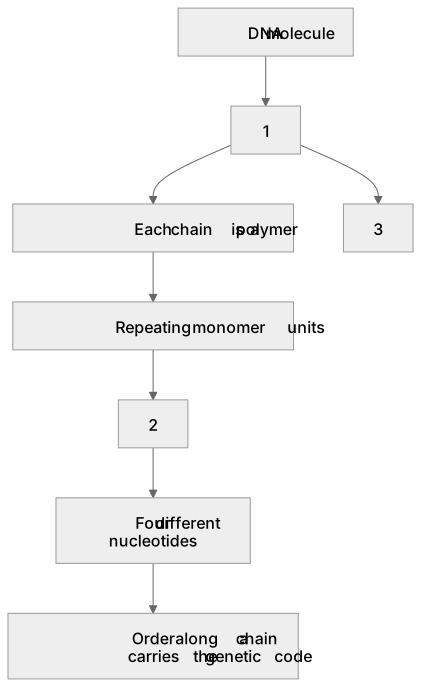
1Box 1
2Box 2
3Box 3
There is more to this lesson
The full lesson goes on to check your understanding and help you earn the marks. Create a free account to carry on, with your progress saved.
A week of Premium from your first lesson · Then the free plan continues · No card, no charge
Test your understanding of DNA (deoxyribonucleic acid) and other naturally occurring polymers: Most DNA molecules are two polymer chains, made from four different monomers called nucleotides, in the form of a double helix.
Active recall beats re-reading. Take an instant quiz now to test what you’ve learned and lock it into long-term memory.
A week of Premium from your first lesson · Then the free plan continues · No card, no charge