AQA · GCSE · Chemistry
Course version: 8462 · Version from Sept 2018
If a reaction transfers energy to the surroundings the product molecules…
Full specification wording
Energy transfer during exothermic and endothermic reactions: If a reaction transfers energy to the surroundings the product molecules must have less energy than the reactants, by the amount transferred.
In an exothermic reaction, the products have lower energy than the reactants because energy is transferred to the surroundings.
Checked against the AQA 8462 specification (opens in a new tab) on .
- Point 3 of 12
Study notes
From the checked teaching notes for this specification point.
The idea
In an exothermic reaction, the products have lower energy than the reactants because energy is transferred to the surroundings. The difference in energy between reactants and products equals the energy transferred. For example, in the combustion of methane, the chemical energy stored in the reactants is greater than that in the products; the excess is released as heat, raising the temperature of the surroundings. This concept explains why exothermic reactions cause temperature increases.
What earns the marks
- States that in an exothermic reaction, products have less energy than reactants.
- Explains that the energy difference equals the energy transferred to the surroundings.
- Relates the energy difference to bond breaking and bond making.
- Uses a reaction profile diagram to show products at a lower energy level than reactants.
- Applies the idea to a named exothermic reaction, such as combustion.
Common mistakes and how to put them right
Thinking products have more energy in an exothermic reaction.
Put it right by stating products have less energy because energy is released.
Assuming the energy transferred is lost.
Put it right by explaining it is transferred to the surroundings, often as thermal energy.
Confusing the energy change with activation energy.
Put it right by distinguishing the overall energy difference from the energy needed to start the reaction.
Exam tips
- Use reaction profile diagrams to show the energy levels of reactants and products.
- State that the energy difference is transferred to the surroundings, not destroyed.
- When explaining, refer to the energy stored in chemical bonds.
Try the lesson
The start of the Energy transfer during exothermic and endothermic reactions: If a reaction transfers energy to the surroundings the product molecules must have less energy than the reactants, by the amount transferred. lesson, made from checked teaching notes for this specification point.
Have a go first
A reaction transfers 30 kJ of energy to the surroundings. How does the energy of the product molecules compare with the reactants?
Listen
In an exothermic reaction, the products have lower energy than the reactants because energy is transferred to the surroundings. The difference in energy between reactants and products equals the energy transferred. For example, in the combustion of methane, the chemical energy stored in the reactants is greater than that in the products; the excess is released as heat, raising the temperature of the surroundings. This concept explains why exothermic reactions cause temperature increases. A strong answer earns marks for these points. States that in an exothermic reaction, products have less energy than reactants. Explains that the energy difference equals the energy transferred to the surroundings. Relates the energy difference to bond breaking and bond making. Uses a reaction profile diagram to show products at a lower energy level than reactants. A common slip: Thinking products have more energy in an exothermic reaction. Instead, stating products have less energy because energy is released. Exam tip: Use reaction profile diagrams to show the energy levels of reactants and products.
See it
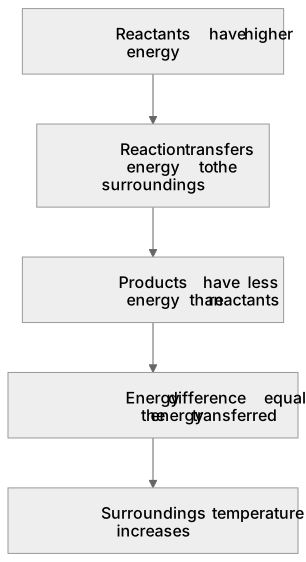
Put it in order
Put these steps in the order they happen.
- 1. Reaction transfers energy to the surroundings
- 2. Products have less energy than reactants
- 3. Reactants have higher energy
- 4. Surroundings temperature increases
- 5. Energy difference equals the energy transferred
Label the diagram
Some boxes have lost their names. Pick the right name for each number.
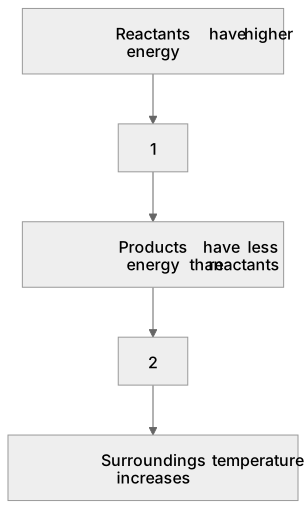
1Box 1
2Box 2
There is more to this lesson
The full lesson goes on to check your understanding and help you earn the marks. Create a free account to carry on, with your progress saved.
A week of Premium from your first lesson · Then the free plan continues · No card, no charge
Test your understanding of Energy transfer during exothermic and endothermic reactions: If a reaction transfers energy to the surroundings the product molecules must have less energy than the reactants, by the amount transferred.
Active recall beats re-reading. Take an instant quiz now to test what you’ve learned and lock it into long-term memory.
A week of Premium from your first lesson · Then the free plan continues · No card, no charge