AQA · GCSE · Chemistry
Course version: 8462 · Version from Sept 2018
Many useful materials on which modern life depends are produced by the…
Full specification wording
Fractional distillation and petrochemicals: Many useful materials on which modern life depends are produced by the petrochemical industry, such as solvents, lubricants, polymers, detergents.
The petrochemical industry uses fractions from crude oil, especially feedstock obtained by fractional distillation and cracking, to manufacture a wide range of materials.
Checked against the AQA 8462 specification (opens in a new tab) on .
- Point 4 of 6
- 4 key terms
Study notes
From the checked teaching notes for this specification point.
The idea
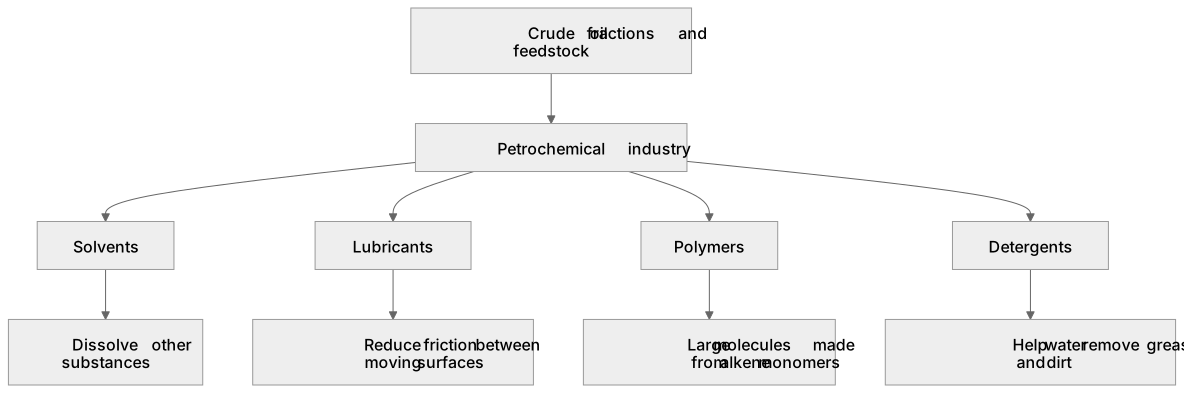
The petrochemical industry uses fractions from crude oil, especially feedstock obtained by fractional distillation and cracking, to manufacture a wide range of materials. Solvents dissolve other substances and are used in paints and cleaning products. Lubricants reduce friction between moving parts in engines and machines. Polymers are large molecules made from small alkene monomers and are used in plastics, fibres and packaging. Detergents help water to remove grease and dirt and are used in cleaning products. These materials are essential to modern life, and their production shows how crude oil is a source of chemicals as well as fuels.
What earns the marks
- The petrochemical industry produces useful materials from crude oil fractions and feedstock.
- Solvents are substances used to dissolve other substances, for example in paints and cleaning products.
- Lubricants reduce friction between moving surfaces, for example in engines and machinery.
- Polymers are large molecules made by joining many small alkene monomers together.
- Detergents help water to remove grease and dirt and are used in cleaning products.
Common mistakes and how to put them right
Thinking polymers are found naturally in crude oil.
Put it right by stating that polymers are manufactured from alkene monomers produced by cracking.
Confusing lubricants with fuels.
Put it right by explaining that lubricants reduce friction rather than burn to release energy.
Describing detergents as substances that dissolve grease completely.
Put it right by saying detergents help water to remove grease and dirt.
Exam tips
- Give a clear example for each product type, such as a solvent in paint or a polymer in plastic packaging.
- Link each petrochemical product to its function, so your answer shows understanding rather than just naming the product.
- Remember that alkenes from cracking are the starting point for many polymers, so mention this link when relevant.
Try the lesson
The start of the Fractional distillation and petrochemicals: Many useful materials on which modern life depends are produced by the petrochemical industry, such as solvents, lubricants, polymers, detergents. lesson, made from checked teaching notes for this specification point.
Have a go first
Which industry produces solvents, lubricants, polymers and detergents?
Listen
The petrochemical industry uses fractions from crude oil, especially feedstock obtained by fractional distillation and cracking, to manufacture a wide range of materials. Solvents dissolve other substances and are used in paints and cleaning products. Lubricants reduce friction between moving parts in engines and machines. Polymers are large molecules made from small alkene monomers and are used in plastics, fibres and packaging. Detergents help water to remove grease and dirt and are used in cleaning products. These materials are essential to modern life, and their production shows how crude oil is a source of chemicals as well as fuels. A strong answer earns marks for these points. The petrochemical industry produces useful materials from crude oil fractions and feedstock. Solvents are substances used to dissolve other substances, for example in paints and cleaning products. Lubricants reduce friction between moving surfaces, for example in engines and machinery. Polymers are large molecules made by joining many small alkene monomers together. A common slip: Thinking polymers are found naturally in crude oil. Instead, stating that polymers are manufactured from alkene monomers produced by cracking. Exam tip: Give a clear example for each product type, such as a solvent in paint or a polymer in plastic packaging.
See it
Key words
Say what each word means before you turn the card.
Petrochemical industry
Try answering aloud or in your head before turning the card.
Solvents
Try answering aloud or in your head before turning the card.
Lubricants
Try answering aloud or in your head before turning the card.
Detergents
Try answering aloud or in your head before turning the card.
See every definition
- Petrochemical industry
- Produces many useful materials on which modern life depends, such as solvents, lubricants, polymers and detergents.
- Solvents
- Substances used to dissolve other substances, for example in paints and cleaning products.
- Lubricants
- Reduce friction between moving surfaces, for example in engines and machinery.
- Detergents
- Help water to remove grease and dirt and are used in cleaning products.
Label the diagram
Some boxes have lost their names. Pick the right name for each number.
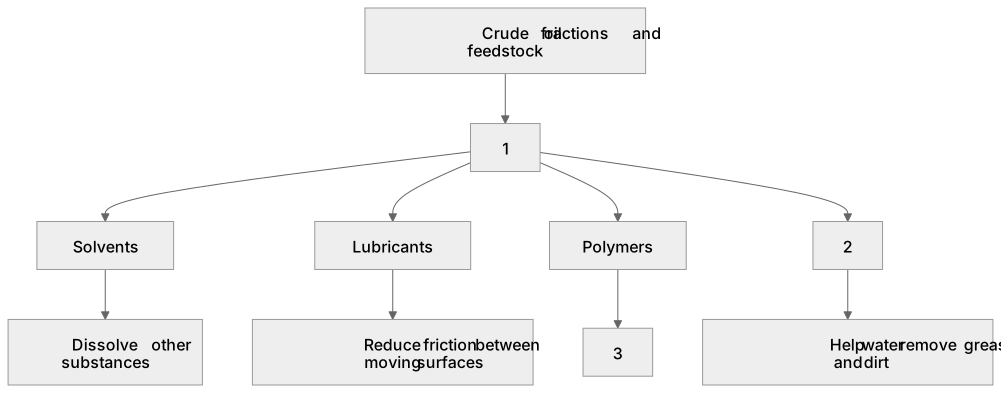
1Box 1
2Box 2
3Box 3
There is more to this lesson
The full lesson goes on to check your understanding and help you earn the marks. Create a free account to carry on, with your progress saved.
A week of Premium from your first lesson · Then the free plan continues · No card, no charge
Test your understanding of Fractional distillation and petrochemicals: Many useful materials on which modern life depends are produced by the petrochemical industry, such as solvents, lubricants, polymers, detergents.
Active recall beats re-reading. Take an instant quiz now to test what you’ve learned and lock it into long-term memory.
A week of Premium from your first lesson · Then the free plan continues · No card, no charge