AQA · GCSE · Chemistry
Course version: 8462 · Version from Sept 2018
The noble gases have eight electrons in their outer shell, except for…
Full specification wording
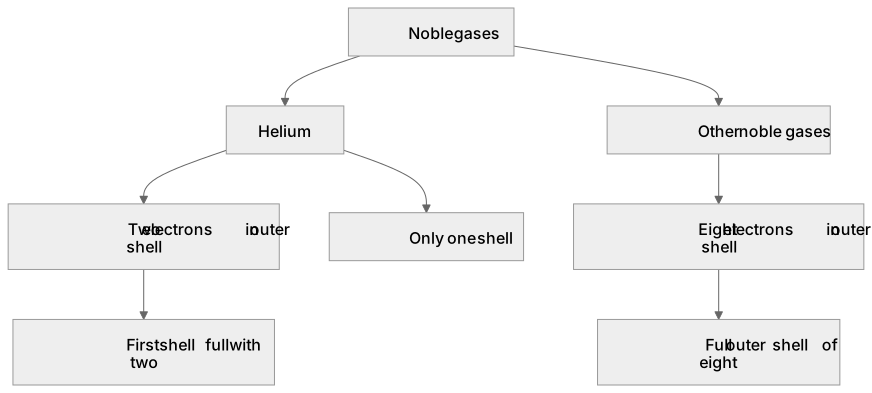
Group 0: The noble gases have eight electrons in their outer shell, except for helium, which has only two electrons.
This statement describes the electron arrangements of noble gases.
Checked against the AQA 8462 specification (opens in a new tab) on .
- Point 3 of 5
Study notes
From the checked teaching notes for this specification point.
The idea
This statement describes the electron arrangements of noble gases. Neon has 10 electrons in total: 2 in the first shell and 8 in the second, so its outer shell has 8 electrons. Argon has 18 electrons: 2, 8, 8, so its outer shell also has 8. Helium is the exception because it has only 2 electrons in total, both in the first shell, which is full for that shell. The full outer shell is the key to stability. When drawing electron shell diagrams, place two electrons in the first shell and then fill the outer shell with eight for neon and argon. Exam questions may ask you to write the electron configuration of a noble gas or to explain why helium is different.
What earns the marks
- Neon, argon, krypton, xenon and radon have eight electrons in their outer shell.
- Helium has only two electrons in its outer shell, which is also its only shell.
- The first electron shell can hold a maximum of two electrons.
- A full outer shell for helium is two electrons; for the other noble gases it is eight.
- Electron configurations can be written as numbers, for example neon is 2,8 and argon is 2,8,8.
Common mistakes and how to put them right
Writing that helium has eight outer electrons.
Put it right: Helium has two.
Drawing helium with two shells.
Put it right: Helium has only one shell containing two electrons.
Stating that all noble gases have eight outer electrons without noting the helium exception.
Exam tips
- When writing electron configurations, use commas between shell numbers, for example 2,8,8.
- If asked to explain helium's stability, state that its first shell is full with two electrons.
- Check the total number of electrons against the atomic number to avoid errors.
Try the lesson
The start of the Group 0: The noble gases have eight electrons in their outer shell, except for helium, which has only two electrons. lesson, made from checked teaching notes for this specification point.
Have a go first
How many electrons are in the outer shell of a helium atom?
Listen
This statement describes the electron arrangements of noble gases. Neon has 10 electrons in total: 2 in the first shell and 8 in the second, so its outer shell has 8 electrons. Argon has 18 electrons: 2, 8, 8, so its outer shell also has 8. Helium is the exception because it has only 2 electrons in total, both in the first shell, which is full for that shell. The full outer shell is the key to stability. When drawing electron shell diagrams, place two electrons in the first shell and then fill the outer shell with eight for neon and argon. Exam questions may ask you to write the electron configuration of a noble gas or to explain why helium is different. A strong answer earns marks for these points. Neon, argon, krypton, xenon and radon have eight electrons in their outer shell. Helium has only two electrons in its outer shell, which is also its only shell. The first electron shell can hold a maximum of two electrons. A full outer shell for helium is two electrons; for the other noble gases it is eight. Exam tip: When writing electron configurations, use commas between shell numbers, for example 2,8,8.
See it
Label the diagram
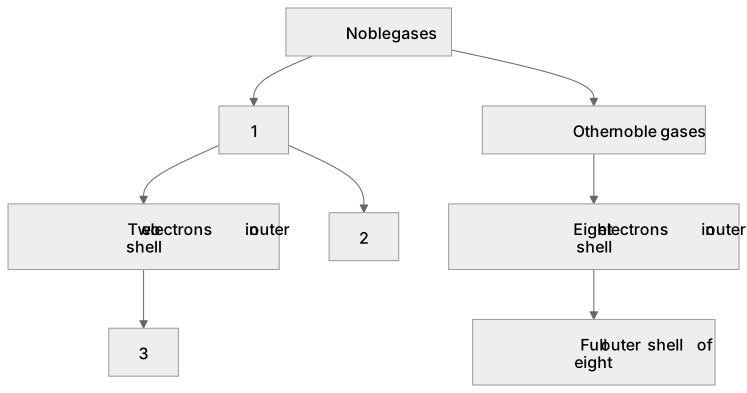
Some boxes have lost their names. Pick the right name for each number.
1Box 1
2Box 2
3Box 3
There is more to this lesson
The full lesson goes on to check your understanding and help you earn the marks. Create a free account to carry on, with your progress saved.
A week of Premium from your first lesson · Then the free plan continues · No card, no charge
Test your understanding of Group 0: The noble gases have eight electrons in their outer shell, except for helium, which has only two electrons.
Active recall beats re-reading. Take an instant quiz now to test what you’ve learned and lock it into long-term memory.
A week of Premium from your first lesson · Then the free plan continues · No card, no charge