AQA · GCSE · Chemistry
Course version: 8462 · Version from Sept 2018
Required practical 8: analysis and purification of water samples from…
Full specification wording
Potable water: Required practical 8: analysis and purification of water samples from different sources, including pH, dissolved solids and distillation.
In this required practical, students analyse water samples from different sources and purify one sample by distillation.
Checked against the AQA 8462 specification (opens in a new tab) on .
- Point 12 of 12
Study notes
From the checked teaching notes for this specification point.
The idea
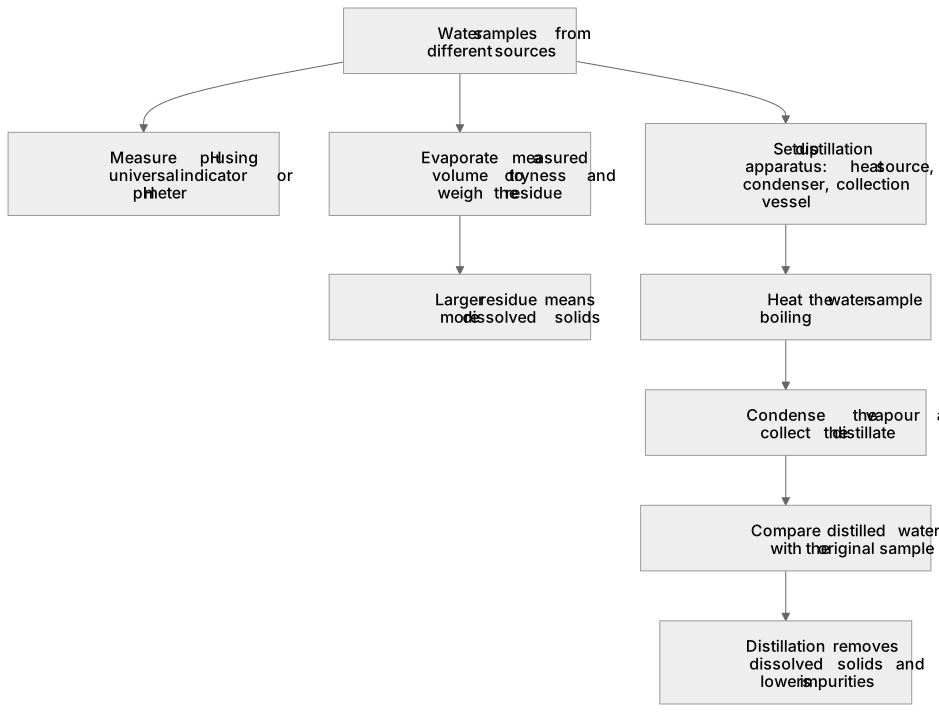
In this required practical, students analyse water samples from different sources and purify one sample by distillation. Analysis includes measuring pH using universal indicator or a pH meter, and determining dissolved solids by evaporating a measured volume of water and weighing the residue. Distillation involves heating the water sample so that water vaporises, leaving dissolved solids behind, and then condensing the vapour to collect pure water. Students record observations, compare samples and explain how results show differences in water quality. A larger residue after evaporation indicates more dissolved solids. The practical develops skills in accurate measurement, safe heating and separation techniques.
What earns the marks
- Measures the pH of water samples using universal indicator or a pH meter and records the values.
- Evaporates a measured volume of water to dryness and weighs the residue to compare dissolved solids.
- Sets up distillation apparatus correctly, with a heat source, condenser and collection vessel.
- Heats the water sample to boiling, condenses the vapour and collects the distillate.
- Compares the distilled water with the original sample, for example by pH or residue test.
- Explains that distillation removes dissolved solids and produces water with lower levels of impurities.
Common mistakes and how to put them right
Using a pH meter without calibrating it.
Put it right: Calibrate the pH meter with buffer solutions before use to obtain reliable readings.
Heating the distillation flask to dryness.
Put it right: Stop heating before the sample evaporates completely to avoid damage to the apparatus and potential hazards.
Assuming the distillate is pure water because it turns anhydrous copper(II) sulfate blue.
Put it right: Anhydrous copper(II) sulfate only tests for the presence of water, not its purity. To confirm purity, check that the boiling point is exactly 100°C or evaporate to confirm no residue remains.
Exam tips
- When describing the practical, state the volume of water used for evaporation and the method for weighing the residue.
- Draw and label the distillation apparatus clearly, including the direction of water flow in the condenser.
- Link the results to water quality: a higher residue mass indicates more dissolved solids, and a pH away from 7 indicates acidity or alkalinity.
Try the lesson
The start of the Potable water: Required practical 8: analysis and purification of water samples from different sources, including pH, dissolved solids and distillation. lesson, made from checked teaching notes for this specification point.
Have a go first
In Required practical 8, which piece of apparatus is used to measure the pH of a water sample?
Listen
In this required practical, students analyse water samples from different sources and purify one sample by distillation. Analysis includes measuring pH using universal indicator or a pH meter, and determining dissolved solids by evaporating a measured volume of water and weighing the residue. Distillation involves heating the water sample so that water vaporises, leaving dissolved solids behind, and then condensing the vapour to collect pure water. Students record observations, compare samples and explain how results show differences in water quality. A larger residue after evaporation indicates more dissolved solids. The practical develops skills in accurate measurement, safe heating and separation techniques. A strong answer earns marks for these points. Measures the pH of water samples using universal indicator or a pH meter and records the values. Evaporates a measured volume of water to dryness and weighs the residue to compare dissolved solids. Sets up distillation apparatus correctly, with a heat source, condenser and collection vessel. Heats the water sample to boiling, condenses the vapour and collects the distillate. A common slip: Using a pH meter without calibrating it. Instead, calibrate the pH meter with buffer solutions before use to obtain reliable readings. Exam tip: When describing the practical, state the volume of water used for evaporation and the method for weighing the residue.
See it
Label the diagram
Some boxes have lost their names. Pick the right name for each number.
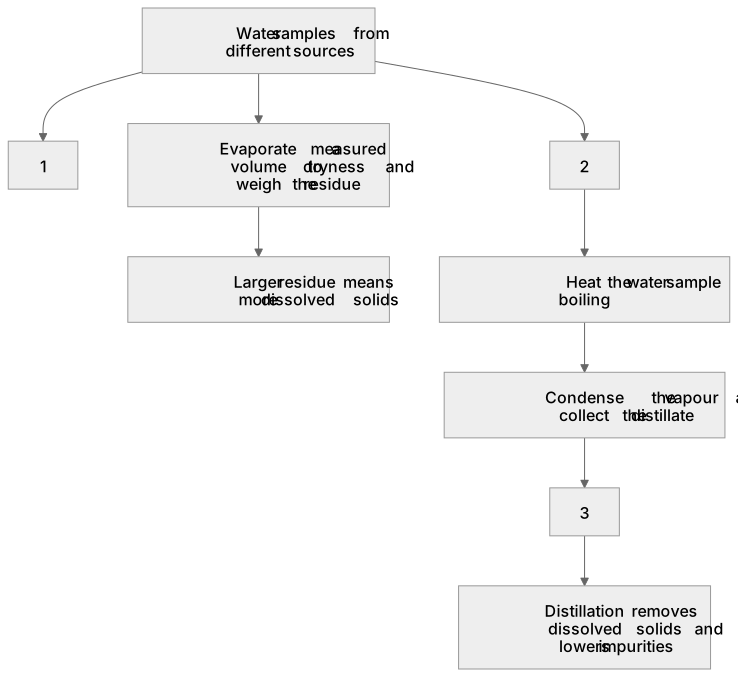
1Box 1
2Box 2
3Box 3
There is more to this lesson
The full lesson goes on to check your understanding and help you earn the marks. Create a free account to carry on, with your progress saved.
A week of Premium from your first lesson · Then the free plan continues · No card, no charge
Test your understanding of Potable water: Required practical 8: analysis and purification of water samples from different sources, including pH, dissolved solids and distillation.
Active recall beats re-reading. Take an instant quiz now to test what you’ve learned and lock it into long-term memory.
A week of Premium from your first lesson · Then the free plan continues · No card, no charge