AQA · GCSE · Chemistry
Course version: 8462 · Version from Sept 2018
When the oceans formed carbon dioxide dissolved in the water and…
Full specification wording
The Earth's early atmosphere: When the oceans formed carbon dioxide dissolved in the water and carbonates were precipitated producing sediments, reducing the amount of carbon dioxide in the atmosphere.
This statement explains one of the main ways carbon dioxide was removed from the early atmosphere.
Checked against the AQA 8462 specification (opens in a new tab) on .
- Point 6 of 7
- 3 key terms
Study notes
From the checked teaching notes for this specification point.
The idea
This statement explains one of the main ways carbon dioxide was removed from the early atmosphere. When the oceans formed, carbon dioxide from the atmosphere dissolved in the water. Some of this dissolved carbon dioxide reacted to form carbonate compounds, which precipitated as insoluble solids. These precipitates settled on the ocean floor and became sediments, such as limestone. This process reduced the amount of carbon dioxide in the atmosphere. A useful sequence is: oceans form → carbon dioxide dissolves → carbonates precipitate → sediments form → atmospheric carbon dioxide decreases. This links to the carbon cycle and to the formation of sedimentary rocks.
What earns the marks
- States that carbon dioxide dissolved in the water when the oceans formed.
- Explains that carbonates were precipitated from the water.
- States that the precipitates produced sediments.
- Explains that this process reduced the amount of carbon dioxide in the atmosphere.
- Links the removal of carbon dioxide to the formation of sedimentary rocks such as limestone.
Common mistakes and how to put them right
Saying carbon dioxide was removed only by dissolving.
Put it right: Precipitation of carbonates was also important.
Confusing precipitation with evaporation.
Put it right: Precipitation forms a solid from solution, not by evaporating water.
Thinking the oceans formed after carbon dioxide was removed.
Put it right: The oceans formed first, then carbon dioxide dissolved in them.
Exam tips
- Use the terms ‘dissolved’, ‘precipitated’ and ‘sediments’ in the correct order to show a clear sequence.
- Link the removal of carbon dioxide to a named sedimentary rock, such as limestone, to add precision.
- If asked to explain, state the effect on the atmosphere: the amount of carbon dioxide decreased.
Try the lesson
The start of the The Earth's early atmosphere: When the oceans formed carbon dioxide dissolved in the water and carbonates were precipitated producing sediments, reducing the amount of carbon dioxide in the atmosphere. lesson, made from checked teaching notes for this specification point.
Have a go first
What happened to carbon dioxide in the atmosphere when the oceans formed?
Listen
This statement explains one of the main ways carbon dioxide was removed from the early atmosphere. When the oceans formed, carbon dioxide from the atmosphere dissolved in the water. Some of this dissolved carbon dioxide reacted to form carbonate compounds, which precipitated as insoluble solids. These precipitates settled on the ocean floor and became sediments, such as limestone. This process reduced the amount of carbon dioxide in the atmosphere. A useful sequence is: oceans form → carbon dioxide dissolves → carbonates precipitate → sediments form → atmospheric carbon dioxide decreases. This links to the carbon cycle and to the formation of sedimentary rocks. A strong answer earns marks for these points. States that carbon dioxide dissolved in the water when the oceans formed. Explains that carbonates were precipitated from the water. States that the precipitates produced sediments. Explains that this process reduced the amount of carbon dioxide in the atmosphere. Exam tip: Use the terms ‘dissolved’, ‘precipitated’ and ‘sediments’ in the correct order to show a clear sequence.
See it
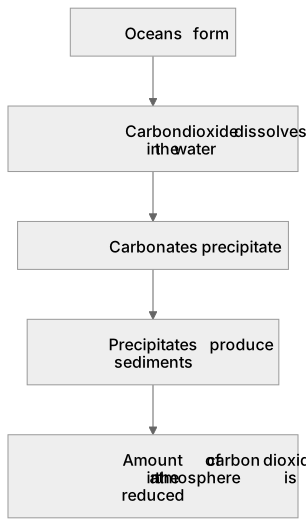
Put it in order
Put these steps in the order they happen.
- 1. Carbon dioxide dissolves in the water
- 2. Carbonates precipitate
- 3. Oceans form
- 4. Amount of carbon dioxide in the atmosphere is reduced
- 5. Precipitates produce sediments
Key words
Say what each word means before you turn the card.
Removal of carbon dioxide from the atmosphere
Try answering aloud or in your head before turning the card.
Precipitation of carbonates
Try answering aloud or in your head before turning the card.
Formation of sediments and sedimentary rocks
Try answering aloud or in your head before turning the card.
See every definition
- Removal of carbon dioxide from the atmosphere
- Carbon dioxide dissolved in the water when the oceans formed and carbonates were precipitated, reducing the amount of carbon dioxide in the atmosphere.
- Precipitation of carbonates
- Some dissolved carbon dioxide reacted to form carbonate compounds, which precipitated as insoluble solids.
- Formation of sediments and sedimentary rocks
- The precipitates settled on the ocean floor and became sediments, such as limestone.
Label the diagram
Some boxes have lost their names. Pick the right name for each number.
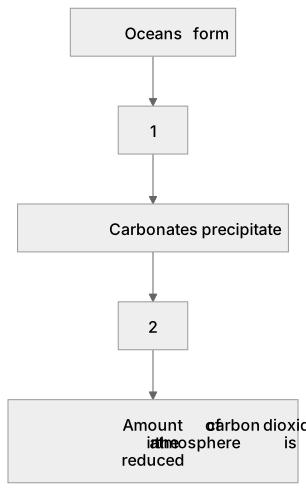
1Box 1
2Box 2
There is more to this lesson
The full lesson goes on to check your understanding and help you earn the marks. Create a free account to carry on, with your progress saved.
A week of Premium from your first lesson · Then the free plan continues · No card, no charge
Test your understanding of The Earth's early atmosphere: When the oceans formed carbon dioxide dissolved in the water and carbonates were precipitated producing sediments, reducing the amount of carbon dioxide in the atmosphere.
Active recall beats re-reading. Take an instant quiz now to test what you’ve learned and lock it into long-term memory.
A week of Premium from your first lesson · Then the free plan continues · No card, no charge