AQA · GCSE · Chemistry
Course version: 8462 · Version from Sept 2018
The Haber process is used to manufacture ammonia, which can be used to…
Full specification wording
The Haber process: The Haber process is used to manufacture ammonia, which can be used to produce nitrogen-based fertilisers.
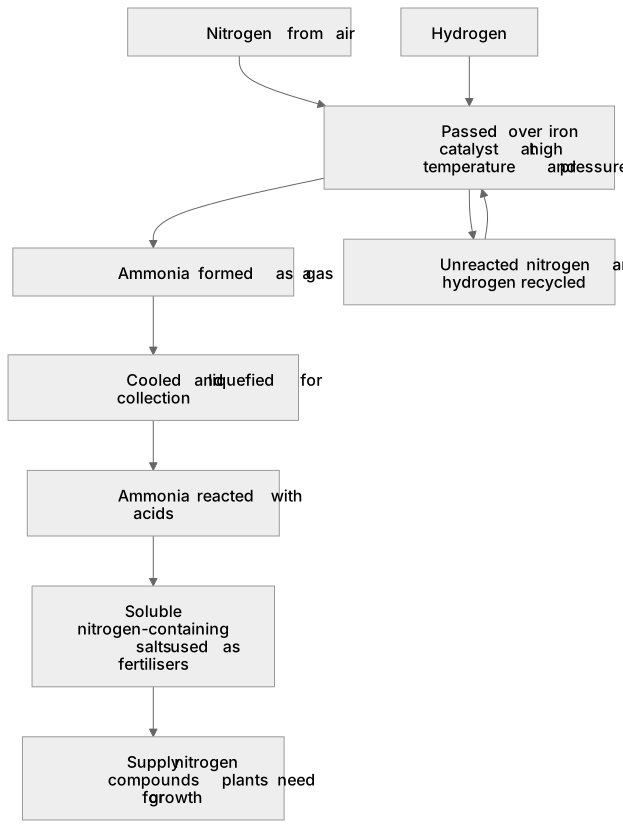
The Haber process reacts nitrogen from air with hydrogen to make ammonia.
Checked against the AQA 8462 specification (opens in a new tab) on .
- Point 1 of 5
- 3 key terms
Study notes
From the checked teaching notes for this specification point.
The idea
The Haber process reacts nitrogen from air with hydrogen to make ammonia. The ammonia produced is the starting point for nitrogen-based fertilisers such as ammonium nitrate and ammonium sulfate. Fertilisers supply nitrogen compounds that plants need for making proteins and DNA, so crops grow larger and yields increase. In the process, the gases are passed over an iron catalyst at a high temperature and pressure, and ammonia is formed as a gas and then cooled and liquefied for collection. Unreacted nitrogen and hydrogen are recycled. The link to fertilisers matters because ammonia itself is not spread on fields; it is reacted with acids to form soluble salts that release nitrate or ammonium ions into the soil.
What earns the marks
- States that the Haber process manufactures ammonia.
- Names nitrogen and hydrogen as the reacting gases.
- Identifies ammonia as the raw material or intermediate for making nitrogen-based fertilisers.
- Names a nitrogen-based fertiliser, such as ammonium nitrate or ammonium sulfate.
- Explains that nitrogen from fertilisers is needed by plants for growth, for example for making proteins.
- Describes the industrial conditions in outline, including an iron catalyst and a high temperature and pressure.
Common mistakes and how to put them right
Saying the Haber process makes nitric acid.
Put it right: It makes ammonia, which can then be used to make fertilisers.
Confusing the raw materials with the product.
Put it right: Nitrogen and hydrogen are the raw materials and ammonia is the product.
Claiming ammonia is applied directly as a fertiliser.
Put it right: Ammonia is reacted to form soluble nitrogen-containing salts used as fertilisers.
Exam tips
- Learn the word equation nitrogen + hydrogen ⇌ ammonia and use it to anchor your answer.
- When asked about fertilisers, name a specific compound and state that it supplies nitrogen to plants.
- Keep the process conditions separate from the fertiliser use so each part of the answer is clear.
Try the lesson
The start of the The Haber process: The Haber process is used to manufacture ammonia, which can be used to produce nitrogen-based fertilisers. lesson, made from checked teaching notes for this specification point.
Have a go first
Which useful product is manufactured by the Haber process?
Listen
The Haber process reacts nitrogen from air with hydrogen to make ammonia. The ammonia produced is the starting point for nitrogen-based fertilisers such as ammonium nitrate and ammonium sulfate. Fertilisers supply nitrogen compounds that plants need for making proteins and DNA, so crops grow larger and yields increase. In the process, the gases are passed over an iron catalyst at a high temperature and pressure, and ammonia is formed as a gas and then cooled and liquefied for collection. Unreacted nitrogen and hydrogen are recycled. The link to fertilisers matters because ammonia itself is not spread on fields; it is reacted with acids to form soluble salts that release nitrate or ammonium ions into the soil. A strong answer earns marks for these points. States that the Haber process manufactures ammonia. Names nitrogen and hydrogen as the reacting gases. Identifies ammonia as the raw material or intermediate for making nitrogen-based fertilisers. Names a nitrogen-based fertiliser, such as ammonium nitrate or ammonium sulfate. A common slip: Saying the Haber process makes nitric acid. Instead, it makes ammonia, which can then be used to make fertilisers. Exam tip: Learn the word equation nitrogen + hydrogen ⇌ ammonia and use it to anchor your answer.
See it
Key words
Say what each word means before you turn the card.
Haber process
Try answering aloud or in your head before turning the card.
Ammonia
Try answering aloud or in your head before turning the card.
Fertilisers
Try answering aloud or in your head before turning the card.
See every definition
- Haber process
- Used to manufacture ammonia, reacting nitrogen from air with hydrogen.
- Ammonia
- The product of the Haber process, which can be used to produce nitrogen-based fertilisers.
- Fertilisers
- Supply nitrogen compounds that plants need for making proteins and DNA, so crops grow larger and yields increase.
Label the diagram
Some boxes have lost their names. Pick the right name for each number.
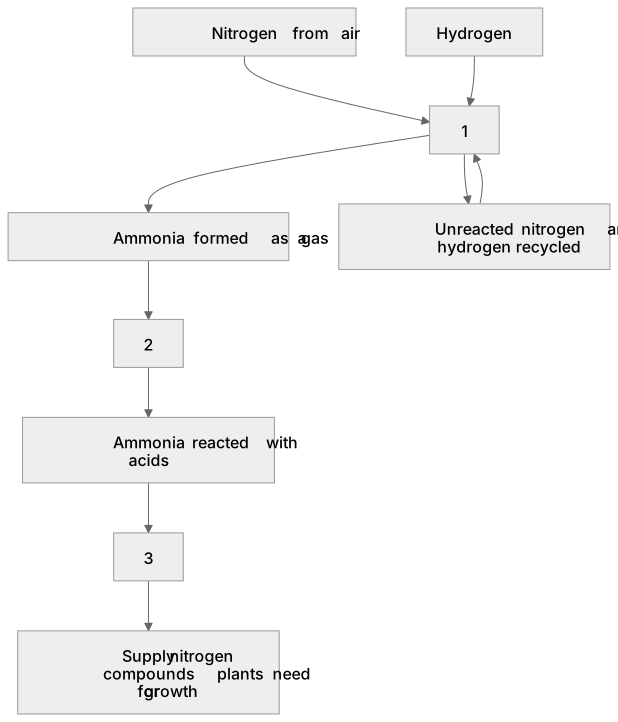
1Box 1
2Box 2
3Box 3
There is more to this lesson
The full lesson goes on to check your understanding and help you earn the marks. Create a free account to carry on, with your progress saved.
A week of Premium from your first lesson · Then the free plan continues · No card, no charge
Test your understanding of The Haber process: The Haber process is used to manufacture ammonia, which can be used to produce nitrogen-based fertilisers.
Active recall beats re-reading. Take an instant quiz now to test what you’ve learned and lock it into long-term memory.
A week of Premium from your first lesson · Then the free plan continues · No card, no charge