AQA · GCSE · Chemistry
Course version: 8462 · Version from Sept 2018
Electrolysis is used if the metal is too reactive to be extracted by…
Full specification wording
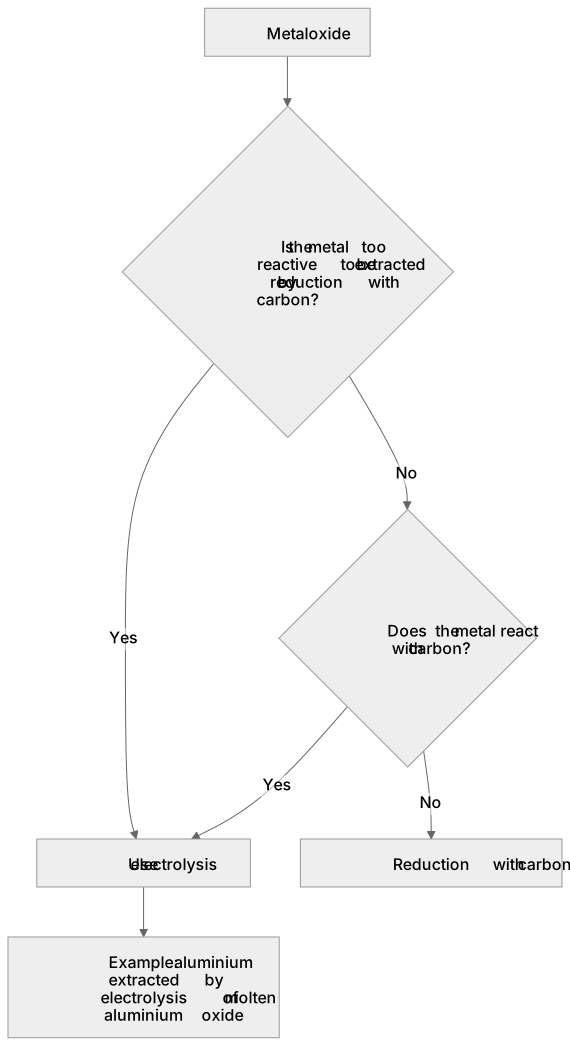
Using electrolysis to extract metals: Electrolysis is used if the metal is too reactive to be extracted by reduction with carbon or if the metal reacts with carbon.
Reduction with carbon is a common method for extracting metals from their oxides, but it only works for metals less reactive than carbon.
Checked against the AQA 8462 specification (opens in a new tab) on .
- Point 2 of 5
Study notes
From the checked teaching notes for this specification point.
The idea
Reduction with carbon is a common method for extracting metals from their oxides, but it only works for metals less reactive than carbon. If a metal is more reactive than carbon, carbon cannot reduce its oxide, so electrolysis is used instead. For example, aluminium is more reactive than carbon, so it is extracted by electrolysis of molten aluminium oxide. Electrolysis is also used if the metal reacts with carbon to form a carbide, which would contaminate the product. The choice of extraction method therefore depends on the reactivity of the metal and its chemical behaviour with carbon. Assessment may ask you to explain why a particular metal is extracted by electrolysis rather than by reduction with carbon.
What earns the marks
- State that reduction with carbon works only for metals less reactive than carbon.
- Explain that metals more reactive than carbon cannot be reduced by carbon.
- Identify electrolysis as the alternative extraction method for reactive metals.
- Give a named example, such as aluminium, which is extracted by electrolysis of molten aluminium oxide.
- Explain that some metals react with carbon to form compounds, so electrolysis avoids contamination.
- Link the choice of method to the position of the metal in the reactivity series.
Common mistakes and how to put them right
Thinking that carbon can reduce any metal oxide.
Put it right by stating that carbon is only effective for metals below carbon in the reactivity series.
Believing that electrolysis is always cheaper.
Put it right by noting that electrolysis requires large amounts of energy and is used when carbon reduction is unsuitable.
Confusing the reactivity series order.
Put it right by recalling that metals such as potassium, sodium, calcium, magnesium and aluminium are more reactive than carbon.
Assuming that all metals react with carbon.
Put it right by stating that only some metals form carbides, and electrolysis is used for those.
Exam tips
- Refer to the reactivity series when explaining the choice of extraction method.
- Use the phrase 'too reactive to be extracted by reduction with carbon' for metals above carbon.
- Give a specific metal example to support your explanation.
Try the lesson
The start of the Using electrolysis to extract metals: Electrolysis is used if the metal is too reactive to be extracted by reduction with carbon or if the metal reacts with carbon. lesson, made from checked teaching notes for this specification point.
Have a go first
Why is electrolysis used to extract aluminium instead of reduction with carbon?
Listen
Reduction with carbon is a common method for extracting metals from their oxides, but it only works for metals less reactive than carbon. If a metal is more reactive than carbon, carbon cannot reduce its oxide, so electrolysis is used instead. For example, aluminium is more reactive than carbon, so it is extracted by electrolysis of molten aluminium oxide. Electrolysis is also used if the metal reacts with carbon to form a carbide, which would contaminate the product. The choice of extraction method therefore depends on the reactivity of the metal and its chemical behaviour with carbon. Assessment may ask you to explain why a particular metal is extracted by electrolysis rather than by reduction with carbon. A strong answer earns marks for these points. State that reduction with carbon works only for metals less reactive than carbon. Explain that metals more reactive than carbon cannot be reduced by carbon. Identify electrolysis as the alternative extraction method for reactive metals. Give a named example, such as aluminium, which is extracted by electrolysis of molten aluminium oxide. A common slip: Thinking that carbon can reduce any metal oxide. Instead, stating that carbon is only effective for metals below carbon in the reactivity series. Exam tip: Refer to the reactivity series when explaining the choice of extraction method.
See it
There is more to this lesson
The full lesson goes on to check your understanding and help you earn the marks. Create a free account to carry on, with your progress saved.
A week of Premium from your first lesson · Then the free plan continues · No card, no charge
Test your understanding of Using electrolysis to extract metals: Electrolysis is used if the metal is too reactive to be extracted by reduction with carbon or if the metal reacts with carbon.
Active recall beats re-reading. Take an instant quiz now to test what you’ve learned and lock it into long-term memory.
A week of Premium from your first lesson · Then the free plan continues · No card, no charge