AQA · GCSE · Chemistry
Course version: 8462 · Version from Sept 2018
Large amounts of energy are used in the extraction process to melt the…
Full specification wording
Using electrolysis to extract metals: Large amounts of energy are used in the extraction process to melt the compounds and to produce the electrical current.
Extracting metals by electrolysis is energy-intensive.
Checked against the AQA 8462 specification (opens in a new tab) on .
- Point 3 of 5
Study notes
From the checked teaching notes for this specification point.
The idea
Extracting metals by electrolysis is energy-intensive. Energy is needed to heat the solid compound until it melts, so that its ions can move and conduct electricity. For example, aluminium oxide is mixed with cryolite and heated to about 950 °C. Additional energy is needed to generate the direct current that drives the electrolysis. This makes electrolysis expensive compared with reduction by carbon, which is why it is used only when necessary. The high energy demand also has environmental implications, depending on how the electricity is generated. Assessment may ask you to explain why electrolysis is expensive or to identify the two main energy uses in the process.
What earns the marks
- State that energy is required to melt the compound so that ions are free to move.
- Explain that melting requires heating to a high temperature, which uses significant energy.
- State that energy is also needed to produce the electrical current for electrolysis.
- Recognise that the total energy demand makes electrolysis an expensive process.
- Link the high energy use to the reason electrolysis is only used when carbon reduction is unsuitable.
- Give a named example, such as the high temperature needed to melt aluminium oxide for aluminium extraction.
Common mistakes and how to put them right
Thinking that melting the compound is not necessary.
Put it right by explaining that ions must be mobile to conduct electricity.
Forgetting that producing the electrical current also requires energy.
Put it right by stating that electricity generation uses energy.
Assuming that electrolysis is always cheaper than carbon reduction.
Put it right by noting the high energy costs of electrolysis.
Confusing the energy needed to melt the compound with the energy needed to break chemical bonds.
Put it right by distinguishing physical melting from the electrical work done in electrolysis.
Exam tips
- List the two energy demands: melting the compound and generating the current.
- Use the term 'energy-intensive' to describe the process.
- Link the high energy use to the cost and environmental impact of electrolysis.
Try the lesson
The start of the Using electrolysis to extract metals: Large amounts of energy are used in the extraction process to melt the compounds and to produce the electrical current. lesson, made from checked teaching notes for this specification point.
Have a go first
Why does the electrolytic extraction of a metal use large amounts of energy?
Listen
Extracting metals by electrolysis is energy-intensive. Energy is needed to heat the solid compound until it melts, so that its ions can move and conduct electricity. For example, aluminium oxide is mixed with cryolite and heated to about 950 °C. Additional energy is needed to generate the direct current that drives the electrolysis. This makes electrolysis expensive compared with reduction by carbon, which is why it is used only when necessary. The high energy demand also has environmental implications, depending on how the electricity is generated. Assessment may ask you to explain why electrolysis is expensive or to identify the two main energy uses in the process. A strong answer earns marks for these points. State that energy is required to melt the compound so that ions are free to move. Explain that melting requires heating to a high temperature, which uses significant energy. State that energy is also needed to produce the electrical current for electrolysis. Recognise that the total energy demand makes electrolysis an expensive process. A common slip: Thinking that melting the compound is not necessary. Instead, explaining that ions must be mobile to conduct electricity. Exam tip: List the two energy demands: melting the compound and generating the current.
See it
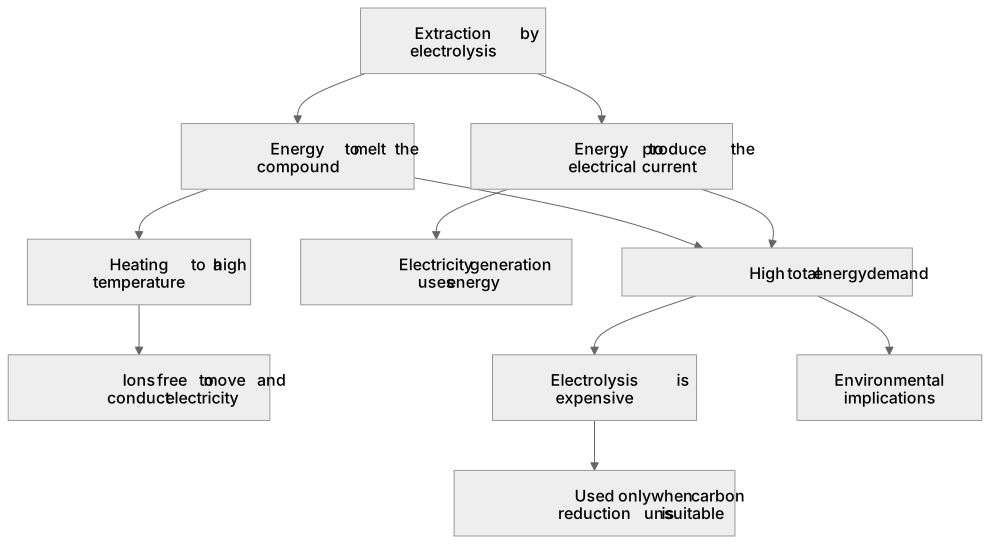
Label the diagram
Some boxes have lost their names. Pick the right name for each number.
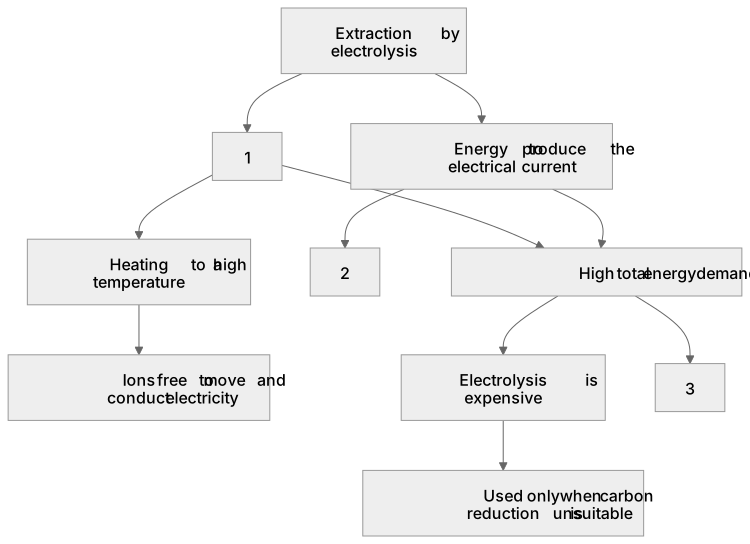
1Box 1
2Box 2
3Box 3
There is more to this lesson
The full lesson goes on to check your understanding and help you earn the marks. Create a free account to carry on, with your progress saved.
A week of Premium from your first lesson · Then the free plan continues · No card, no charge
Test your understanding of Using electrolysis to extract metals: Large amounts of energy are used in the extraction process to melt the compounds and to produce the electrical current.
Active recall beats re-reading. Take an instant quiz now to test what you’ve learned and lock it into long-term memory.
A week of Premium from your first lesson · Then the free plan continues · No card, no charge