AQA · GCSE · Chemistry
Course version: 8462 · Version from Sept 2018
Natural resources, supplemented by agriculture, provide food, timber,…
Full specification wording
Using the Earth's resources and sustainable development: Natural resources, supplemented by agriculture, provide food, timber, clothing and fuels.
This statement distinguishes natural resources from agricultural products and shows how both supply food, timber, clothing and fuels.
Checked against the AQA 8462 specification (opens in a new tab) on .
- Point 2 of 6
- 4 key terms
Study notes
From the checked teaching notes for this specification point.
The idea
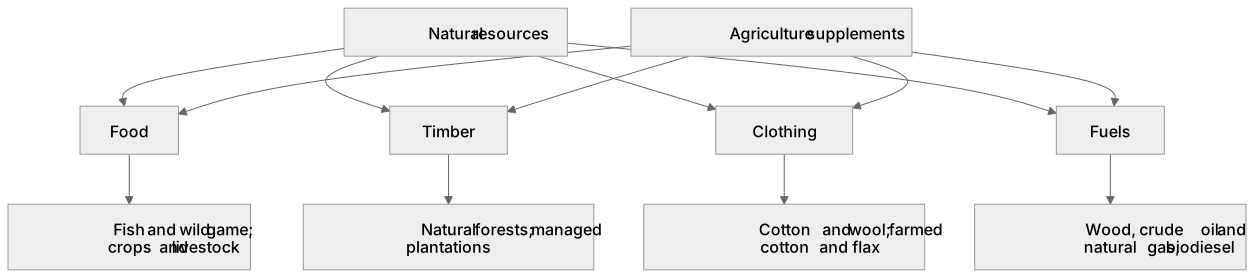
This statement distinguishes natural resources from agricultural products and shows how both supply food, timber, clothing and fuels. Natural resources include fish, wild game, wood from forests, cotton, wool, crude oil and natural gas. Agriculture supplements these by farming crops, rearing livestock, and growing cotton or flax. Food comes from both fishing and farming; timber comes from managed forests; clothing uses cotton, wool and synthetic fibres; fuels include wood, biodiesel and fossil fuels. For each category, name a natural source and an agricultural source, and explain why agriculture is needed as demand grows. A concrete example is cotton, a natural plant fibre, supplemented by farmed cotton crops for textile production.
What earns the marks
- Food is provided by natural resources such as fish and wild game, supplemented by agricultural crops and livestock.
- Timber is obtained from natural forests and from managed plantations grown through agriculture or forestry.
- Clothing uses natural fibres such as cotton and wool, supplemented by agricultural production of cotton and flax.
- Fuels include wood, crude oil and natural gas, supplemented by agricultural biofuels such as biodiesel.
- Agriculture supplements natural resources because natural supplies alone cannot meet growing human demand.
Common mistakes and how to put them right
Confusing natural resources with agricultural products.
Put it right: Agriculture is a human-managed supplement to naturally occurring resources.
Stating that cotton is synthetic.
Put it right: Cotton is a natural plant fibre, while polyester is synthetic.
Forgetting that fuels can be agricultural.
Put it right: Biodiesel and bioethanol are produced from crops.
Exam tips
- For each category, give one natural and one agricultural example to show the supplement relationship.
- Use precise terms such as natural fibre, biofuel and managed forest.
- Check that the example matches the category, because food, timber, clothing and fuels are distinct.
Try the lesson
The start of the Using the Earth's resources and sustainable development: Natural resources, supplemented by agriculture, provide food, timber, clothing and fuels. lesson, made from checked teaching notes for this specification point.
Have a go first
Which of these materials is obtained from agriculture rather than directly from a natural resource such as a forest?
Listen
This statement distinguishes natural resources from agricultural products and shows how both supply food, timber, clothing and fuels. Natural resources include fish, wild game, wood from forests, cotton, wool, crude oil and natural gas. Agriculture supplements these by farming crops, rearing livestock, and growing cotton or flax. Food comes from both fishing and farming; timber comes from managed forests; clothing uses cotton, wool and synthetic fibres; fuels include wood, biodiesel and fossil fuels. For each category, name a natural source and an agricultural source, and explain why agriculture is needed as demand grows. A concrete example is cotton, a natural plant fibre, supplemented by farmed cotton crops for textile production. A strong answer earns marks for these points. Food is provided by natural resources such as fish and wild game, supplemented by agricultural crops and livestock. Timber is obtained from natural forests and from managed plantations grown through agriculture or forestry. Clothing uses natural fibres such as cotton and wool, supplemented by agricultural production of cotton and flax. Fuels include wood, crude oil and natural gas, supplemented by agricultural biofuels such as biodiesel. A common slip: Confusing natural resources with agricultural products. Instead, agriculture is a human-managed supplement to naturally occurring resources. Exam tip: For each category, give one natural and one agricultural example to show the supplement relationship.
See it
Key words
Say what each word means before you turn the card.
Natural resources
Try answering aloud or in your head before turning the card.
Agriculture
Try answering aloud or in your head before turning the card.
Food and clothing
Try answering aloud or in your head before turning the card.
Timber and fuels
Try answering aloud or in your head before turning the card.
See every definition
- Natural resources
- Resources that occur naturally and, supplemented by agriculture, provide food, timber, clothing and fuels.
- Agriculture
- A human-managed supplement to naturally occurring resources, providing food, timber, clothing and fuels.
- Food and clothing
- Categories supplied by natural resources and supplemented by agriculture, with food from fishing and farming and clothing using cotton, wool and synthetic fibres.
- Timber and fuels
- Categories supplied by natural resources and supplemented by agriculture, with timber from managed forests and fuels including wood, biodiesel and fossil fuels.
Label the diagram
Some boxes have lost their names. Pick the right name for each number.
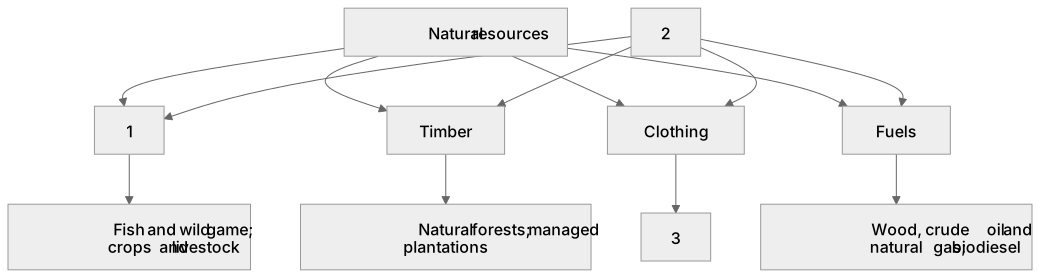
1Box 1
2Box 2
3Box 3
There is more to this lesson
The full lesson goes on to check your understanding and help you earn the marks. Create a free account to carry on, with your progress saved.
A week of Premium from your first lesson · Then the free plan continues · No card, no charge
Test your understanding of Using the Earth's resources and sustainable development: Natural resources, supplemented by agriculture, provide food, timber, clothing and fuels.
Active recall beats re-reading. Take an instant quiz now to test what you’ve learned and lock it into long-term memory.
A week of Premium from your first lesson · Then the free plan continues · No card, no charge