AQA · GCSE · Combined Science
Course version: 8464 · Version from Sept 2018
New drugs are extensively tested for toxicity, efficacy and dose.
Full specification wording
Discovery and development of drugs: New drugs are extensively tested for toxicity, efficacy and dose.
Testing a new drug covers three linked questions.
Checked against the AQA 8464 specification (opens in a new tab) on .
- Point 8 of 13
- 4 key terms
Study notes
From the checked teaching notes for this specification point.
The idea
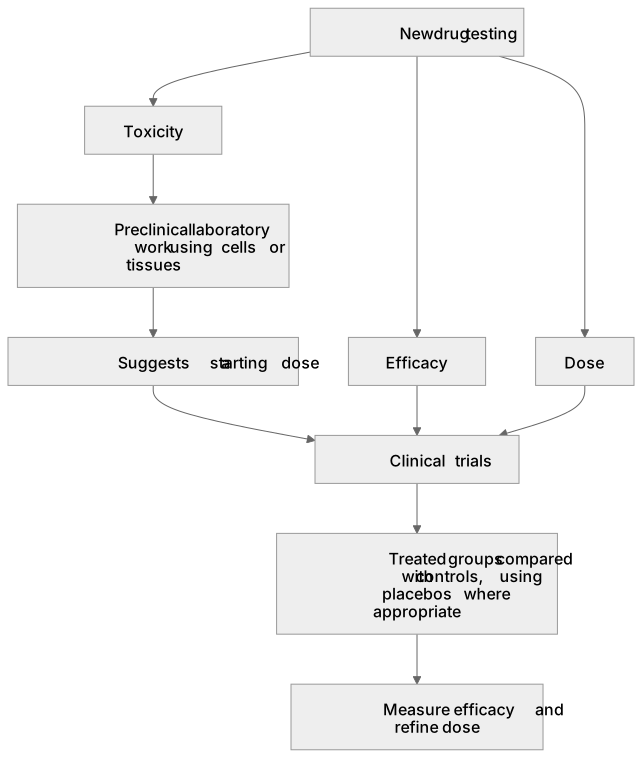
Testing a new drug covers three linked questions. Toxicity asks whether the substance harms the body, for example by damaging the liver or kidneys. Efficacy asks whether the drug produces the intended therapeutic effect, such as lowering blood pressure or killing a pathogen. Dose asks what amount gives the desired effect with acceptable side effects, because too little may not work and too much may be toxic. Preclinical laboratory work, often using cells or tissues, can reveal toxicity and suggest a starting dose. Clinical trials then compare groups receiving the drug with controls, using placebos where appropriate, to measure efficacy and refine dose.
For example: A new painkiller might be tested at several doses to find the lowest dose that relieves pain without causing unacceptable side effects.
What earns the marks
- Toxicity testing looks for harmful effects of the drug on the body, including damage to organs or dangerous side effects.
- Efficacy testing shows whether the drug produces the intended therapeutic effect in patients.
- Dose testing finds an amount that gives benefit while keeping side effects at an acceptable level.
- Preclinical laboratory studies can indicate toxicity and help choose a safe starting dose before human trials.
- Clinical trials compare treated groups with controls, often using placebos, to judge efficacy fairly.
- Testing several doses allows the relationship between dose, benefit and harm to be evaluated.
Common mistakes and how to put them right
Confusing toxicity with efficacy.
Put it right: Toxicity is about harm, while efficacy is about whether the drug works.
Treating dose as a single fixed value rather than a range that must be optimised.
Put it right: Different doses are tested to find one that balances benefit and side effects.
Assuming a placebo is always used even when an effective treatment exists.
Put it right: Where a proven treatment exists, it may be unethical to withhold it, so trials may compare the new drug with the existing treatment.
Exam tips
- Define toxicity, efficacy and dose clearly, then link each to a specific stage or purpose of testing.
- Use comparative language when describing trials, such as treated group compared with control group.
- Explain why dose matters by referring to the balance between therapeutic benefit and unwanted effects.
Try the lesson
The start of the Discovery and development of drugs: New drugs are extensively tested for toxicity, efficacy and dose. lesson, made from checked teaching notes for this specification point.
Have a go first
What is meant by the toxicity of a new drug?
Listen
Testing a new drug covers three linked questions. Toxicity asks whether the substance harms the body, for example by damaging the liver or kidneys. Efficacy asks whether the drug produces the intended therapeutic effect, such as lowering blood pressure or killing a pathogen. Dose asks what amount gives the desired effect with acceptable side effects, because too little may not work and too much may be toxic. Preclinical laboratory work, often using cells or tissues, can reveal toxicity and suggest a starting dose. Clinical trials then compare groups receiving the drug with controls, using placebos where appropriate, to measure efficacy and refine dose. For example, a new painkiller might be tested at several doses to find the lowest dose that relieves pain without causing unacceptable side effects. A strong answer earns marks for these points. Toxicity testing looks for harmful effects of the drug on the body, including damage to organs or dangerous side effects. Efficacy testing shows whether the drug produces the intended therapeutic effect in patients. Dose testing finds an amount that gives benefit while keeping side effects at an acceptable level. Preclinical laboratory studies can indicate toxicity and help choose a safe starting dose before human trials. A common slip: Confusing toxicity with efficacy. Instead, toxicity is about harm, while efficacy is about whether the drug works. Exam tip: Define toxicity, efficacy and dose clearly, then link each to a specific stage or purpose of testing.
See it
Key words
Say what each word means before you turn the card.
Toxicity
Try answering aloud or in your head before turning the card.
Efficacy
Try answering aloud or in your head before turning the card.
Dose
Try answering aloud or in your head before turning the card.
Clinical trials
Try answering aloud or in your head before turning the card.
See every definition
- Toxicity
- Asks whether the substance harms the body, for example by damaging the liver or kidneys.
- Efficacy
- Asks whether the drug produces the intended therapeutic effect, such as lowering blood pressure or killing a pathogen.
- Dose
- Asks what amount gives the desired effect with acceptable side effects, because too little may not work and too much may be toxic.
- Clinical trials
- Compare groups receiving the drug with controls, using placebos where appropriate, to measure efficacy and refine dose.
Label the diagram
Some boxes have lost their names. Pick the right name for each number.
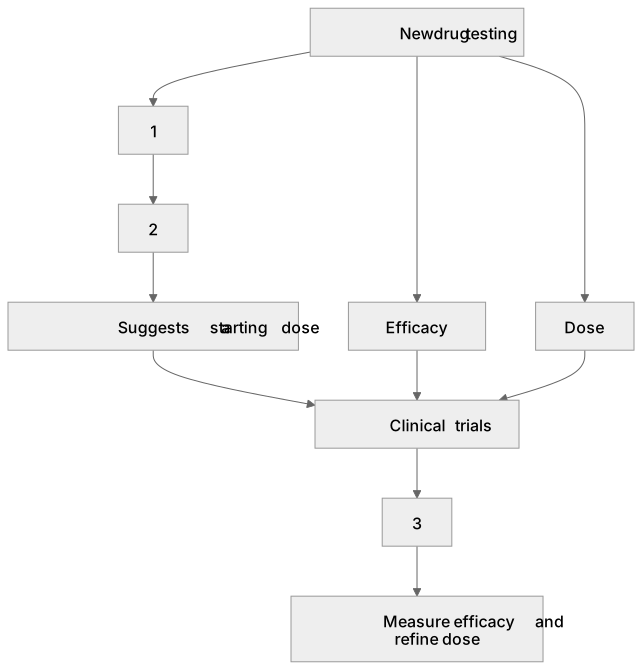
1Box 1
2Box 2
3Box 3
There is more to this lesson
The full lesson goes on to check your understanding and help you earn the marks. Create a free account to carry on, with your progress saved.
A week of Premium from your first lesson · Then the free plan continues · No card, no charge
Test your understanding of Discovery and development of drugs: New drugs are extensively tested for toxicity, efficacy and dose.
Active recall beats re-reading. Take an instant quiz now to test what you’ve learned and lock it into long-term memory.
A week of Premium from your first lesson · Then the free plan continues · No card, no charge