AQA · GCSE · Combined Science
Course version: 8464 · Version from Sept 2018
Preclinical testing is done in a laboratory using cells, tissues and live…
Full specification wording
Discovery and development of drugs: Preclinical testing is done in a laboratory using cells, tissues and live animals.
Preclinical testing happens before any medicine is given to people.
Checked against the AQA 8464 specification (opens in a new tab) on .
- Point 9 of 13
- 4 key terms
Study notes
From the checked teaching notes for this specification point.
The idea
Preclinical testing happens before any medicine is given to people. It takes place in a laboratory and uses cells, tissues and live animals. Scientists first test a new drug on cultured cells to see whether it harms them or changes how they grow. They then test on tissues, such as a piece of heart or liver tissue, to see how the drug affects a whole group of cells working together. Finally, live animals are used, for example mice or rats, because a whole living body shows how the drug moves around, how it is broken down and whether it causes harm to organs. This stage checks safety and effectiveness before human trials, and it also helps decide a safe starting dose. It cannot prove a drug is safe for humans, so clinical trials must follow.
What earns the marks
- Preclinical testing occurs in a laboratory before any testing on humans.
- Cells are used first, often grown in culture, to check for harm to individual cells.
- Tissues are used to see the effect on groups of cells working together.
- Live animals are used to study effects on a whole living body, including organs and how the drug is broken down.
- The purpose is to test safety and effectiveness and to help choose a safe starting dose for human trials.
- Results from preclinical testing cannot guarantee that a drug is safe for humans.
Common mistakes and how to put them right
Thinking preclinical testing uses human volunteers.
Put it right by stating that humans are only used in clinical trials, after laboratory and animal testing.
Believing animal testing proves a drug is safe for humans.
Put it right by explaining that animal results only give an indication, so human trials are still needed.
Confusing cells with tissues.
Put it right by saying cells are individual units grown in culture, while tissues are groups of similar cells working together.
Exam tips
- Name all three types of preclinical test — cells, tissues and live animals — because questions often award a mark for each.
- Link each test to its purpose, such as cells for cell damage and animals for whole-body effects.
- Use the phrase 'before human trials' to show the correct order of drug development.
Try the lesson
The start of the Discovery and development of drugs: Preclinical testing is done in a laboratory using cells, tissues and live animals. lesson, made from checked teaching notes for this specification point.
Have a go first
Where is preclinical testing of a new drug carried out?
Listen
Preclinical testing happens before any medicine is given to people. It takes place in a laboratory and uses cells, tissues and live animals. Scientists first test a new drug on cultured cells to see whether it harms them or changes how they grow. They then test on tissues, such as a piece of heart or liver tissue, to see how the drug affects a whole group of cells working together. Finally, live animals are used, for example mice or rats, because a whole living body shows how the drug moves around, how it is broken down and whether it causes harm to organs. This stage checks safety and effectiveness before human trials, and it also helps decide a safe starting dose. It cannot prove a drug is safe for humans, so clinical trials must follow. A strong answer earns marks for these points. Preclinical testing occurs in a laboratory before any testing on humans. Cells are used first, often grown in culture, to check for harm to individual cells. Tissues are used to see the effect on groups of cells working together. Live animals are used to study effects on a whole living body, including organs and how the drug is broken down. A common slip: Thinking preclinical testing uses human volunteers. Instead, stating that humans are only used in clinical trials, after laboratory and animal testing. Exam tip: Name all three types of preclinical test — cells, tissues and live animals — because questions often award a mark for each.
See it
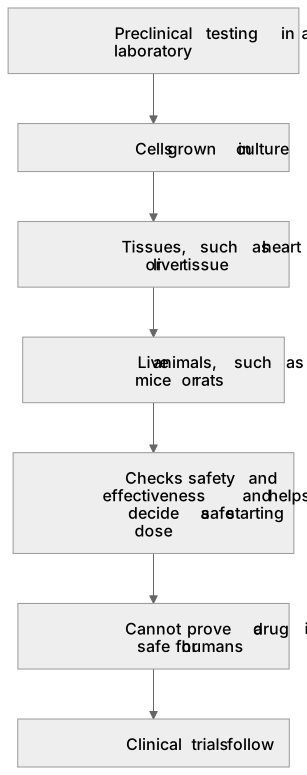
Put it in order
Put these steps in the order they happen.
- 1. Clinical trials follow
- 2. Cannot prove a drug is safe for humans
- 3. Tissues, such as heart or liver tissue
- 4. Checks safety and effectiveness and helps decide a safe starting dose
- 5. Preclinical testing in a laboratory
- 6. Cells grown in culture
- 7. Live animals, such as mice or rats
Key words
Say what each word means before you turn the card.
Preclinical testing
Try answering aloud or in your head before turning the card.
Cells
Try answering aloud or in your head before turning the card.
Tissues
Try answering aloud or in your head before turning the card.
Live animals
Try answering aloud or in your head before turning the card.
See every definition
- Preclinical testing
- Testing done in a laboratory using cells, tissues and live animals before any medicine is given to people.
- Cells
- Individual units grown in culture, used first to see whether a new drug harms them or changes how they grow.
- Tissues
- Groups of similar cells working together, such as a piece of heart or liver tissue, used to see how the drug affects them.
- Live animals
- Whole living bodies, for example mice or rats, used because they show how the drug moves around, how it is broken down and whether it harms organs.
Label the diagram
Some boxes have lost their names. Pick the right name for each number.
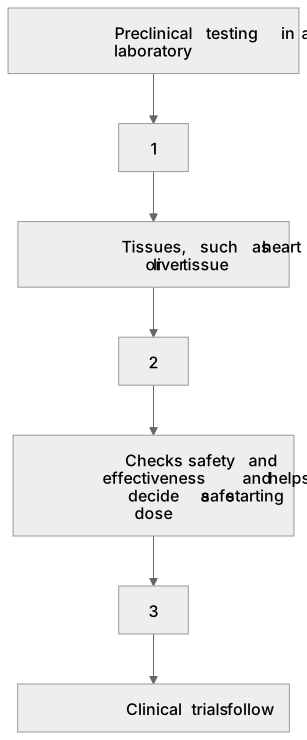
1Box 1
2Box 2
3Box 3
There is more to this lesson
The full lesson goes on to check your understanding and help you earn the marks. Create a free account to carry on, with your progress saved.
A week of Premium from your first lesson · Then the free plan continues · No card, no charge
Test your understanding of Discovery and development of drugs: Preclinical testing is done in a laboratory using cells, tissues and live animals.
Active recall beats re-reading. Take an instant quiz now to test what you’ve learned and lock it into long-term memory.
A week of Premium from your first lesson · Then the free plan continues · No card, no charge