AQA · GCSE · Combined Science
Course version: 8464 · Version from Sept 2018
Thyroxine from the thyroid gland stimulates the basal metabolic rate. It…
Full specification wording
Feedback systems (HT only): Thyroxine from the thyroid gland stimulates the basal metabolic rate. It plays an important role in growth and development.
Thyroxine is a hormone secreted by the thyroid gland, a butterfly-shaped gland in the neck.
Checked against the AQA 8464 specification (opens in a new tab) on .
- Point 3 of 4
- 3 key terms
Study notes
From the checked teaching notes for this specification point.
The idea
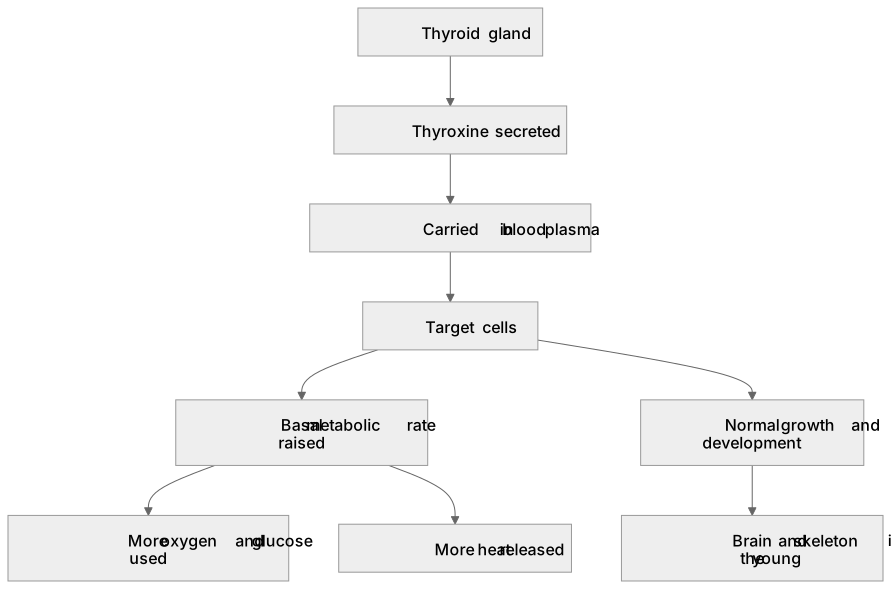
Thyroxine is a hormone secreted by the thyroid gland, a butterfly-shaped gland in the neck. Once in the blood it travels to target cells and raises the basal metabolic rate, the rate at which the resting body releases energy from its stored fuels. A higher basal metabolic rate means more oxygen and glucose are used and more heat is released, so thyroxine helps set the body's resting pace. It is also needed for normal growth and development, especially of the brain and skeleton in young mammals. For example, a child with an underactive thyroid may grow slowly unless treated. Note this is Higher Tier content.
What earns the marks
- Names the thyroid gland as the source of thyroxine and states that it is carried in the blood plasma to target tissues.
- Explains that thyroxine increases the basal metabolic rate, the rate of energy release by the resting body.
- Links a raised basal metabolic rate to increased use of oxygen and glucose and greater heat release.
- States that thyroxine is required for normal growth and development, including brain and skeletal development in the young.
- Uses a named consequence of abnormal thyroxine, such as slow growth or reduced metabolic rate in underactivity, to illustrate the role.
- Distinguishes thyroxine from other hormones, for example insulin, by naming its gland and its metabolic rather than blood-glucose effect.
Common mistakes and how to put them right
Confusing thyroxine with adrenaline.
Put it right: Link thyroxine to the thyroid gland and basal metabolism, not to immediate fight-or-flight responses.
Writing that thyroxine is made by the pituitary gland.
Put it right: Separate the controller from the source.
Treating growth and metabolic rate as unrelated effects.
Put it right: State both roles in the same answer where the question asks about the hormone's importance.
Exam tips
- Define basal metabolic rate in your answer rather than repeating the phrase, so the examiner can see you understand it means energy release at rest.
- Use the chain thyroid gland to blood to target cells to increased metabolic rate and growth when explaining the hormone's action.
- Remember that the detailed role of thyroxine is assessed on Higher Tier papers only, so expect complex application questions.
Try the lesson
The start of the Feedback systems (HT only): Thyroxine from the thyroid gland stimulates the basal metabolic rate. It plays an important role in growth and development. lesson, made from checked teaching notes for this specification point.
Have a go first
Which gland produces thyroxine?
Listen
Thyroxine is a hormone secreted by the thyroid gland, a butterfly-shaped gland in the neck. Once in the blood it travels to target cells and raises the basal metabolic rate, the rate at which the resting body releases energy from its stored fuels. A higher basal metabolic rate means more oxygen and glucose are used and more heat is released, so thyroxine helps set the body's resting pace. It is also needed for normal growth and development, especially of the brain and skeleton in young mammals. For example, a child with an underactive thyroid may grow slowly unless treated. Note this is Higher Tier content. A strong answer earns marks for these points. Names the thyroid gland as the source of thyroxine and states that it is carried in the blood plasma to target tissues. Explains that thyroxine increases the basal metabolic rate, the rate of energy release by the resting body. Links a raised basal metabolic rate to increased use of oxygen and glucose and greater heat release. States that thyroxine is required for normal growth and development, including brain and skeletal development in the young. A common slip: Confusing thyroxine with adrenaline: adrenaline prepares the body for rapid action, whereas thyroxine sets the longer-term resting metabolic rate. Instead, link thyroxine to the thyroid gland and basal metabolism, not to immediate fight-or-flight responses. Exam tip: Define basal metabolic rate in your answer rather than repeating the phrase, so the examiner can see you understand it means energy release at rest.
See it
Key words
Say what each word means before you turn the card.
Thyroxine
Try answering aloud or in your head before turning the card.
Basal metabolic rate
Try answering aloud or in your head before turning the card.
Thyroid gland
Try answering aloud or in your head before turning the card.
See every definition
- Thyroxine
- A hormone secreted by the thyroid gland that travels in the blood to target cells and raises the basal metabolic rate.
- Basal metabolic rate
- The rate at which the resting body releases energy from its stored fuels.
- Thyroid gland
- A butterfly-shaped gland in the neck that is the source of thyroxine.
Label the diagram
Some boxes have lost their names. Pick the right name for each number.
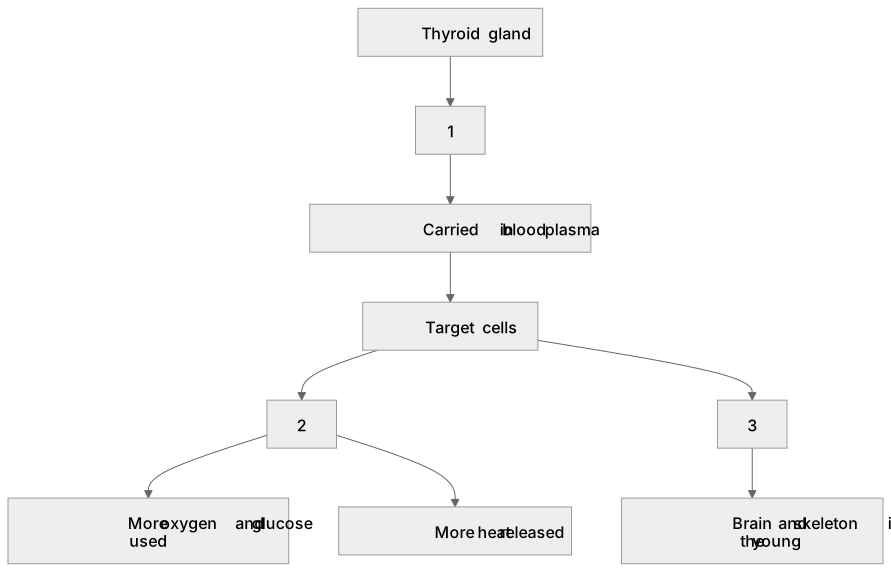
1Box 1
2Box 2
3Box 3
There is more to this lesson
The full lesson goes on to check your understanding and help you earn the marks. Create a free account to carry on, with your progress saved.
A week of Premium from your first lesson · Then the free plan continues · No card, no charge
Test your understanding of Feedback systems (HT only): Thyroxine from the thyroid gland stimulates the basal metabolic rate. It plays an important role in growth and development.
Active recall beats re-reading. Take an instant quiz now to test what you’ve learned and lock it into long-term memory.
A week of Premium from your first lesson · Then the free plan continues · No card, no charge