AQA · GCSE · Combined Science
Course version: 8464 · Version from Sept 2018
Students should be able to describe the principles of hormonal…
Full specification wording
Human endocrine system: Students should be able to describe the principles of hormonal coordination and control by the human endocrine system.
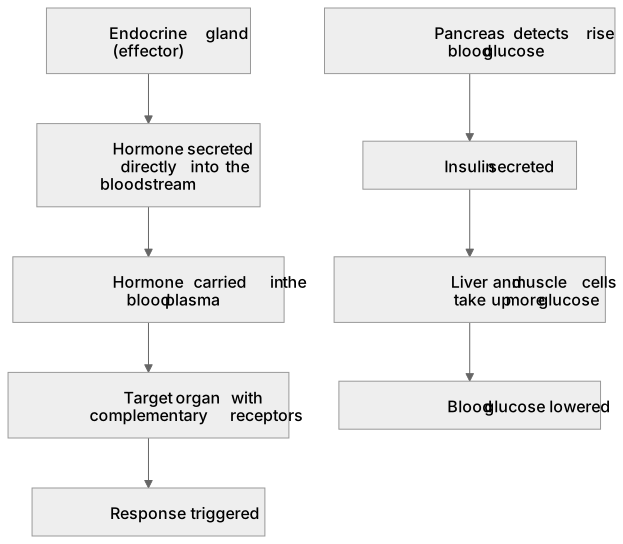
Hormonal coordination uses endocrine glands as effectors that release hormones directly into the blood.
Checked against the AQA 8464 specification (opens in a new tab) on .
- Point 1 of 10
- 4 key terms
Study notes
From the checked teaching notes for this specification point.
The idea
Hormonal coordination uses endocrine glands as effectors that release hormones directly into the blood. Each hormone travels in the blood plasma to specific target organs, where it binds to receptors and triggers a response. This produces widespread, relatively slow and long-lasting control of processes such as blood glucose concentration and growth.
For example: The pancreas detects a rise in blood glucose and secretes insulin; insulin reaches the liver and muscle cells, causing them to take up more glucose, thereby lowering blood glucose levels.
What earns the marks
- Endocrine glands are effectors that secrete hormones directly into the bloodstream.
- Hormones are chemical messengers carried in the blood plasma to target organs.
- A target organ responds to a specific hormone because it has complementary receptors.
- Hormonal responses are usually slower to begin than nervous responses but often last longer and affect more widespread areas.
- Named examples include insulin from the pancreas lowering blood glucose, adrenaline from the adrenal glands, and thyroxine from the thyroid.
Common mistakes and how to put them right
Writing that hormones travel along nerve cells or through ducts.
Put it right by stating that glands secrete hormones directly into the bloodstream and the blood carries them.
Claiming that any cell responds to any hormone.
Put it right by explaining that only specific target organs with complementary receptors respond.
Saying hormonal effects are always faster than nervous effects.
Put it right by stating that hormonal effects are slower in onset but generally longer lasting.
Exam tips
- Use the terms gland, hormone, bloodstream, and target organ in every full description of the endocrine system.
- When comparing with the nervous system, give one similarity and at least two differences, such as speed of onset and duration of effect.
Try the lesson
The start of the Human endocrine system: Students should be able to describe the principles of hormonal coordination and control by the human endocrine system. lesson, made from checked teaching notes for this specification point.
Have a go first
Which statement describes how hormones are transported in the human body?
Listen
Hormonal coordination uses endocrine glands as effectors that release hormones directly into the blood. Each hormone travels in the blood plasma to specific target organs, where it binds to receptors and triggers a response. This produces widespread, relatively slow and long-lasting control of processes such as blood glucose concentration and growth. For example, the pancreas detects a rise in blood glucose and secretes insulin; insulin reaches the liver and muscle cells, causing them to take up more glucose, thereby lowering blood glucose levels. A strong answer earns marks for these points. Endocrine glands are effectors that secrete hormones directly into the bloodstream. Hormones are chemical messengers carried in the blood plasma to target organs. A target organ responds to a specific hormone because it has complementary receptors. Hormonal responses are usually slower to begin than nervous responses but often last longer and affect more widespread areas. A common slip: Writing that hormones travel along nerve cells or through ducts. Instead, stating that glands secrete hormones directly into the bloodstream and the blood carries them. Exam tip: Use the terms gland, hormone, bloodstream, and target organ in every full description of the endocrine system.
See it
Key words
Say what each word means before you turn the card.
Endocrine glands
Try answering aloud or in your head before turning the card.
Hormones
Try answering aloud or in your head before turning the card.
Target organ
Try answering aloud or in your head before turning the card.
Hormonal responses
Try answering aloud or in your head before turning the card.
See every definition
- Endocrine glands
- These are effectors that secrete hormones directly into the bloodstream.
- Hormones
- Chemical messengers carried in the blood plasma to target organs.
- Target organ
- A structure that responds to a specific hormone because it has complementary receptors.
- Hormonal responses
- Usually slower to begin than nervous responses but often last longer and affect more widespread areas.
Label the diagram
Some boxes have lost their names. Pick the right name for each number.
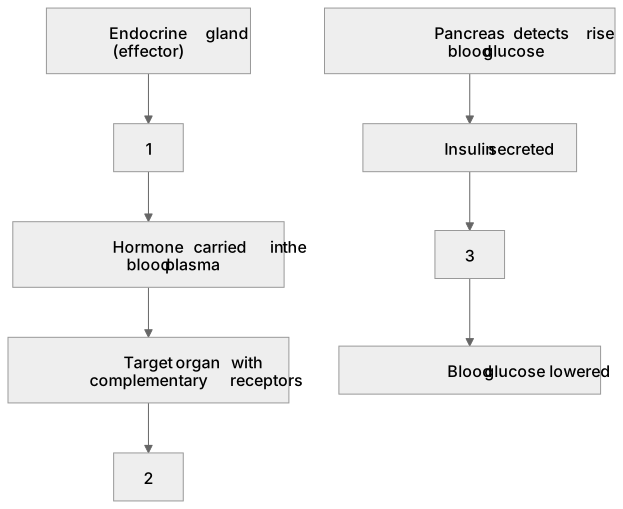
1Box 1
2Box 2
3Box 3
There is more to this lesson
The full lesson goes on to check your understanding and help you earn the marks. Create a free account to carry on, with your progress saved.
A week of Premium from your first lesson · Then the free plan continues · No card, no charge
Test your understanding of Human endocrine system: Students should be able to describe the principles of hormonal coordination and control by the human endocrine system.
Active recall beats re-reading. Take an instant quiz now to test what you’ve learned and lock it into long-term memory.
A week of Premium from your first lesson · Then the free plan continues · No card, no charge