AQA · GCSE · Combined Science
Course version: 8464 · Version from Sept 2018
Maintaining biodiversity: breeding programmes for endangered species
A breeding programme is a managed attempt to increase the numbers of an endangered species by controlling reproduction, usually in zoos, wildlife parks or specialist centres.
Checked against the AQA 8464 specification (opens in a new tab) on .
- Point 4 of 8
- 2 key terms
Study notes
From the checked teaching notes for this specification point.
The idea
A breeding programme is a managed attempt to increase the numbers of an endangered species by controlling reproduction, usually in zoos, wildlife parks or specialist centres. Endangered means the population is so small or declining so fast that extinction is likely without help. Keepers select healthy, genetically diverse adults, provide veterinary care and controlled conditions, and record pedigrees so that closely related animals are not paired. Offspring may later be released into protected habitat, a process called reintroduction, once threats such as hunting or habitat loss have been reduced. The method maintains biodiversity by preserving species that might otherwise disappear and by keeping genetic variation within the captive population. Success depends on genetic diversity, suitable release sites and long-term protection of wild habitat.
What earns the marks
- Breeding programmes raise the number of individuals of an endangered species under controlled conditions.
- Captive populations are managed to preserve genetic diversity, for example by pairing unrelated individuals using pedigree records.
- Offspring can be reintroduced to protected wild habitat once the original threats have been reduced.
- The method maintains biodiversity by preventing extinction and conserving genetic variation within the species.
- Success depends on factors such as genetic diversity, suitable habitat and continued protection after release.
Common mistakes and how to put them right
Assuming captive breeding alone guarantees survival.
Put it right: Released animals also need protected habitat and reduced threats.
Ignoring genetics and pairing close relatives.
Put it right: Inbreeding reduces genetic diversity and can lower health and survival.
Thinking breeding programmes replace habitat protection.
Put it right: They support species while habitats are restored and are most effective alongside habitat conservation.
Exam tips
- Explain the sequence: select diverse adults, breed under controlled conditions, then reintroduce to protected habitat.
- Use the term genetic diversity when explaining why pedigree records matter.
- Apply the idea to a named example, such as breeding programmes for tigers or pandas, to show understanding.
Try the lesson
The start of the Maintaining biodiversity: breeding programmes for endangered species lesson, made from checked teaching notes for this specification point.
Have a go first
What is the main purpose of a captive breeding programme for an endangered species?
Listen
A breeding programme is a managed attempt to increase the numbers of an endangered species by controlling reproduction, usually in zoos, wildlife parks or specialist centres. Endangered means the population is so small or declining so fast that extinction is likely without help. Keepers select healthy, genetically diverse adults, provide veterinary care and controlled conditions, and record pedigrees so that closely related animals are not paired. Offspring may later be released into protected habitat, a process called reintroduction, once threats such as hunting or habitat loss have been reduced. The method maintains biodiversity by preserving species that might otherwise disappear and by keeping genetic variation within the captive population. Success depends on genetic diversity, suitable release sites and long-term protection of wild habitat. A strong answer earns marks for these points. Breeding programmes raise the number of individuals of an endangered species under controlled conditions. Captive populations are managed to preserve genetic diversity, for example by pairing unrelated individuals using pedigree records. Offspring can be reintroduced to protected wild habitat once the original threats have been reduced. The method maintains biodiversity by preventing extinction and conserving genetic variation within the species. A common slip: Assuming captive breeding alone guarantees survival. Instead, released animals also need protected habitat and reduced threats. Exam tip: Explain the sequence: select diverse adults, breed under controlled conditions, then reintroduce to protected habitat.
See it
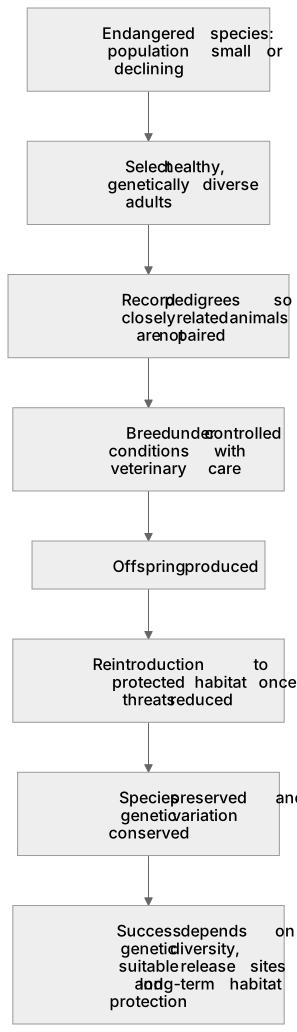
Put it in order
Put these steps in the order they happen.
- 1. Offspring produced
- 2. Success depends on genetic diversity, suitable release sites and long-term habitat protection
- 3. Reintroduction to protected habitat once threats reduced
- 4. Endangered species: population small or declining
- 5. Select healthy, genetically diverse adults
- 6. Species preserved and genetic variation conserved
- 7. Record pedigrees so closely related animals are not paired
- 8. Breed under controlled conditions with veterinary care
Key words
Say what each word means before you turn the card.
Breeding programme
Try answering aloud or in your head before turning the card.
Endangered
Try answering aloud or in your head before turning the card.
See every definition
- Breeding programme
- A managed attempt to increase the numbers of an endangered species by controlling reproduction, usually in zoos, wildlife parks or specialist centres.
- Endangered
- The population is so small or declining so fast that extinction is likely without help.
Label the diagram
Some boxes have lost their names. Pick the right name for each number.
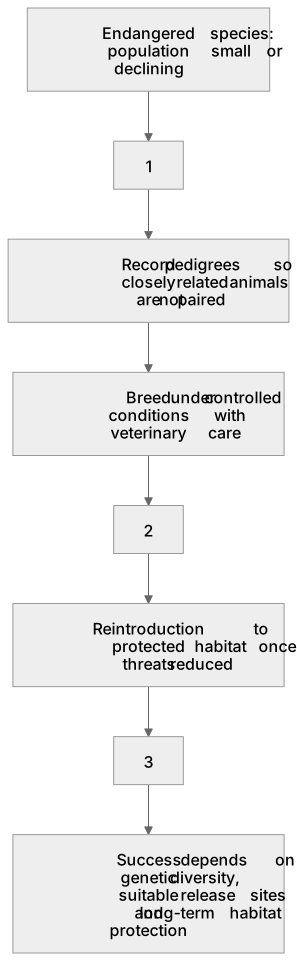
1Box 1
2Box 2
3Box 3
There is more to this lesson
The full lesson goes on to check your understanding and help you earn the marks. Create a free account to carry on, with your progress saved.
A week of Premium from your first lesson · Then the free plan continues · No card, no charge
Test your understanding of Maintaining biodiversity: breeding programmes for endangered species
Active recall beats re-reading. Take an instant quiz now to test what you’ve learned and lock it into long-term memory.
A week of Premium from your first lesson · Then the free plan continues · No card, no charge