AQA · GCSE · Combined Science
Course version: 8464 · Version from Sept 2018
Photosynthetic reaction: carbon dioxide + water
This word equation gives the reactants of photosynthesis: carbon dioxide and water.
Checked against the AQA 8464 specification (opens in a new tab) on .
- Point 3 of 5
- 3 key terms
Study notes
From the checked teaching notes for this specification point.
The idea
This word equation gives the reactants of photosynthesis: carbon dioxide and water. In the presence of light, absorbed by chlorophyll in chloroplasts, these two reactants are converted into glucose and oxygen. Carbon dioxide enters the leaf by diffusion through stomata; water is drawn up the xylem from the roots. The balanced symbol equation is 6CO₂ + 6H₂O → C₆H₁₂O₆ + 6O₂, so six molecules of each reactant yield one glucose molecule and six oxygen molecules. Energy is transferred from light to chemical stores in glucose, so photosynthesis is endothermic overall. A useful check is that the equation is not respiration reversed in wording only: respiration uses glucose and oxygen and releases carbon dioxide and water.
What earns the marks
- Identifies carbon dioxide and water as the reactants of photosynthesis.
- States that light energy is absorbed by chlorophyll and transferred to chemical stores in glucose.
- Names glucose and oxygen as the products, linking them to the full equation.
- Describes carbon dioxide entering through stomata and water arriving via the xylem.
- Recognises that photosynthesis is endothermic overall because energy is taken in from light.
Common mistakes and how to put them right
Writing oxygen as a reactant.
Put it right by stating oxygen is a product of photosynthesis and a reactant of aerobic respiration.
Omitting light or chlorophyll.
Put it right by noting both are needed even though neither appears in the word equation.
Confusing the direction of gas movement.
Put it right by stating carbon dioxide diffuses in through stomata while oxygen diffuses out.
Exam tips
- Write the word equation on one line and the balanced symbol equation directly beneath it to show the link.
- When asked to compare, set out photosynthesis and respiration side by side rather than describing them separately.
- Use the phrase 'energy transferred from light to chemical stores' rather than saying energy is 'made'.
Try the lesson
The start of the Photosynthetic reaction: carbon dioxide + water lesson, made from checked teaching notes for this specification point.
Have a go first
Which two reactants are needed for photosynthesis?
Listen
This word equation gives the reactants of photosynthesis: carbon dioxide and water. In the presence of light, absorbed by chlorophyll in chloroplasts, these two reactants are converted into glucose and oxygen. Carbon dioxide enters the leaf by diffusion through stomata; water is drawn up the xylem from the roots. The balanced symbol equation is 6CO₂ + 6H₂O → C₆H₁₂O₆ + 6O₂, so six molecules of each reactant yield one glucose molecule and six oxygen molecules. Energy is transferred from light to chemical stores in glucose, so photosynthesis is endothermic overall. A useful check is that the equation is not respiration reversed in wording only: respiration uses glucose and oxygen and releases carbon dioxide and water. A strong answer earns marks for these points. Identifies carbon dioxide and water as the reactants of photosynthesis. States that light energy is absorbed by chlorophyll and transferred to chemical stores in glucose. Names glucose and oxygen as the products, linking them to the full equation. Describes carbon dioxide entering through stomata and water arriving via the xylem. A common slip: Writing oxygen as a reactant. Instead, stating oxygen is a product of photosynthesis and a reactant of aerobic respiration. Exam tip: Write the word equation on one line and the balanced symbol equation directly beneath it to show the link.
See it
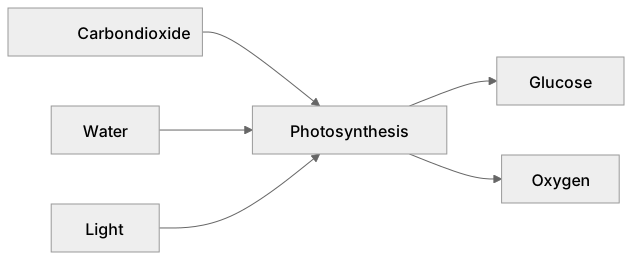
Key words
Say what each word means before you turn the card.
Energy transfer from light to chemical stores
Try answering aloud or in your head before turning the card.
Gas exchange and transport in plants
Try answering aloud or in your head before turning the card.
Endothermic and exothermic processes
Try answering aloud or in your head before turning the card.
See every definition
- Energy transfer from light to chemical stores
- Light energy is absorbed by chlorophyll and transferred to chemical stores in glucose.
- Gas exchange and transport in plants
- Carbon dioxide enters the leaf by diffusion through stomata, while water is drawn up the xylem from the roots.
- Endothermic and exothermic processes
- Photosynthesis is endothermic overall because energy is transferred from light to chemical stores in glucose.
Label the diagram
Some boxes have lost their names. Pick the right name for each number.
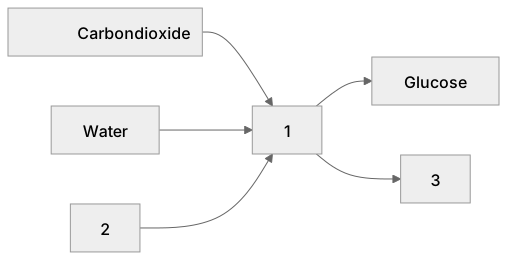
1Box 1
2Box 2
3Box 3
There is more to this lesson
The full lesson goes on to check your understanding and help you earn the marks. Create a free account to carry on, with your progress saved.
A week of Premium from your first lesson · Then the free plan continues · No card, no charge
Test your understanding of Photosynthetic reaction: carbon dioxide + water
Active recall beats re-reading. Take an instant quiz now to test what you’ve learned and lock it into long-term memory.
A week of Premium from your first lesson · Then the free plan continues · No card, no charge