AQA · GCSE · Combined Science
Course version: 8464 · Version from Sept 2018
Students should recognise the chemical symbols: CO₂, H₂O, O₂ and C₆H₁₂O₆.
Full specification wording
Photosynthetic reaction: Students should recognise the chemical symbols: CO₂, H₂O, O₂ and C₆H₁₂O₆.
Recognising these symbols means reading each formula as a substance and using it correctly in the photosynthesis equation.
Checked against the AQA 8464 specification (opens in a new tab) on .
- Point 4 of 5
- 4 key terms
Study notes
From the checked teaching notes for this specification point.
The idea
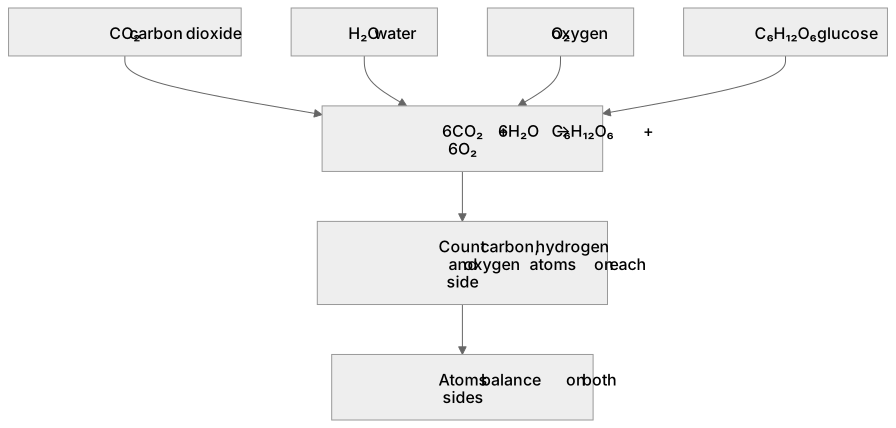
Recognising these symbols means reading each formula as a substance and using it correctly in the photosynthesis equation. CO₂ is carbon dioxide, H₂O is water, O₂ is oxygen and C₆H₁₂O₆ is glucose. The subscript numbers show atoms in one molecule: CO₂ has one carbon and two oxygen atoms; H₂O has two hydrogen and one oxygen; O₂ has two oxygen; C₆H₁₂O₆ has six carbon, twelve hydrogen and six oxygen. In the balanced equation 6CO₂ + 6H₂O → C₆H₁₂O₆ + 6O₂, the large numbers count molecules, so atoms balance on both sides. A quick check is to count carbon, hydrogen and oxygen atoms on each side.
What earns the marks
- Names each formula correctly: CO₂ carbon dioxide, H₂O water, O₂ oxygen, C₆H₁₂O₆ glucose.
- Uses the formulas in the correct positions in the photosynthesis equation.
- Counts atoms from subscripts, for example six carbon atoms in one C₆H₁₂O₆ molecule.
- Distinguishes large numbers in front of formulas, which count molecules, from subscripts, which count atoms within a molecule.
- Checks that the balanced equation has equal numbers of each type of atom on both sides.
Common mistakes and how to put them right
Reading C₆H₁₂O₆ as six separate elements.
Put it right by treating it as one glucose molecule containing 6 C, 12 H and 6 O atoms.
Treating the 6 in 6CO₂ as a subscript.
Put it right by noting it multiplies the whole molecule, giving 6 C and 12 O atoms.
Writing O instead of O₂ for oxygen gas.
Put it right by using O₂ because oxygen gas is diatomic.
Exam tips
- Underline each formula in the equation and write its name above it before answering.
- Count atoms on each side of the arrow to confirm the equation balances.
- Check subscripts carefully; H₂O and H₂O₂ are different substances.
Try the lesson
The start of the Photosynthetic reaction: Students should recognise the chemical symbols: CO₂, H₂O, O₂ and C₆H₁₂O₆. lesson, made from checked teaching notes for this specification point.
Have a go first
Which chemical formula represents carbon dioxide?
Listen
Recognising these symbols means reading each formula as a substance and using it correctly in the photosynthesis equation. CO₂ is carbon dioxide, H₂O is water, O₂ is oxygen and C₆H₁₂O₆ is glucose. The subscript numbers show atoms in one molecule: CO₂ has one carbon and two oxygen atoms; H₂O has two hydrogen and one oxygen; O₂ has two oxygen; C₆H₁₂O₆ has six carbon, twelve hydrogen and six oxygen. In the balanced equation 6CO₂ + 6H₂O → C₆H₁₂O₆ + 6O₂, the large numbers count molecules, so atoms balance on both sides. A quick check is to count carbon, hydrogen and oxygen atoms on each side. A strong answer earns marks for these points. Names each formula correctly: CO₂ carbon dioxide, H₂O water, O₂ oxygen, C₆H₁₂O₆ glucose. Uses the formulas in the correct positions in the photosynthesis equation. Counts atoms from subscripts, for example six carbon atoms in one C₆H₁₂O₆ molecule. Distinguishes large numbers in front of formulas, which count molecules, from subscripts, which count atoms within a molecule. A common slip: Reading C₆H₁₂O₆ as six separate elements. Instead, treating it as one glucose molecule containing 6 C, 12 H and 6 O atoms. Exam tip: Underline each formula in the equation and write its name above it before answering.
See it
Key words
Say what each word means before you turn the card.
CO₂
Try answering aloud or in your head before turning the card.
H₂O
Try answering aloud or in your head before turning the card.
O₂
Try answering aloud or in your head before turning the card.
C₆H₁₂O₆
Try answering aloud or in your head before turning the card.
See every definition
- CO₂
- Carbon dioxide, a substance whose formula shows one carbon and two oxygen atoms in one molecule.
- H₂O
- Water, a substance whose formula shows two hydrogen and one oxygen atom in one molecule.
- O₂
- Oxygen, a substance whose formula shows two oxygen atoms in one molecule.
- C₆H₁₂O₆
- Glucose, one molecule of which contains six carbon, twelve hydrogen and six oxygen atoms.
Label the diagram
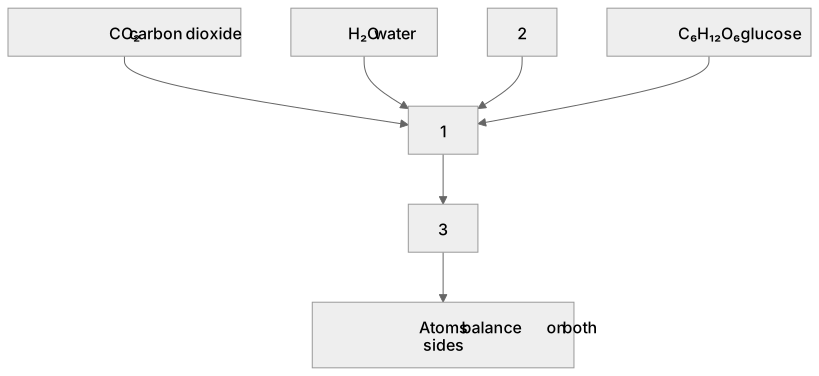
Some boxes have lost their names. Pick the right name for each number.
1Box 1
2Box 2
3Box 3
There is more to this lesson
The full lesson goes on to check your understanding and help you earn the marks. Create a free account to carry on, with your progress saved.
A week of Premium from your first lesson · Then the free plan continues · No card, no charge
Test your understanding of Photosynthetic reaction: Students should recognise the chemical symbols: CO₂, H₂O, O₂ and C₆H₁₂O₆.
Active recall beats re-reading. Take an instant quiz now to test what you’ve learned and lock it into long-term memory.
A week of Premium from your first lesson · Then the free plan continues · No card, no charge