AQA · GCSE · Combined Science
Course version: 8464 · Version from Sept 2018
A permanent magnet produces its own magnetic field. An induced magnet is a…
Full specification wording
Poles of a magnet: A permanent magnet produces its own magnetic field. An induced magnet is a material that becomes a magnet when it is placed in a magnetic field. Induced magnetism always causes a force of attraction. When removed from the magnetic field an induced magnet loses most/all of its magnetism quickly.
A permanent magnet, such as a bar magnet or a horseshoe magnet, produces its own magnetic field all the time, so it attracts magnetic materials and interacts with other magnets even when nothing…
Checked against the AQA 8464 specification (opens in a new tab) on .
- Point 2 of 5
- 4 key terms
Study notes
From the checked teaching notes for this specification point.
The idea
A permanent magnet, such as a bar magnet or a horseshoe magnet, produces its own magnetic field all the time, so it attracts magnetic materials and interacts with other magnets even when nothing else is nearby. An induced magnet behaves differently: a magnetic material such as iron or steel becomes a magnet only while it is inside a magnetic field. The field aligns the magnetic regions inside the material, so the material gains poles and is attracted to the magnet producing the field. Induced magnetism always produces attraction, never repulsion, because the near pole of the induced magnet is always unlike the pole of the permanent magnet facing it. Once the material is removed from the field, it loses most or all of its magnetism quickly, which is why a paper clip picked up by a magnet does not stay strongly magnetic for long.
What earns the marks
- State that a permanent magnet produces its own magnetic field continuously, without needing another magnet nearby.
- Define an induced magnet as a magnetic material that becomes a magnet when placed in a magnetic field.
- Explain that induced magnetism always causes attraction, because the induced pole facing the permanent magnet is always unlike it.
- Describe that an induced magnet loses most or all of its magnetism quickly when removed from the magnetic field.
- Distinguish between permanent magnets and induced magnets using examples, such as a steel bar magnet compared with an iron nail temporarily magnetised by a magnet.
Common mistakes and how to put them right
Thinking that an induced magnet can repel a permanent magnet.
Put it right: Induced magnetism always causes attraction, because the induced near pole is unlike the permanent magnet's facing pole.
Believing that an induced magnet keeps its magnetism permanently after removal from the field.
Put it right: It loses most or all of its magnetism quickly once the field is removed.
Confusing a permanent magnet with an induced magnet by saying both produce their own magnetic field.
Put it right: Only a permanent magnet produces its own field; an induced magnet becomes magnetic only in an external field.
Exam tips
- Use the phrase 'induced magnet' accurately and link it to a magnetic material placed in a magnetic field, rather than calling every magnetic object a permanent magnet.
- When explaining attraction between a magnet and an unmagnetised iron object, state that the iron becomes an induced magnet and is therefore attracted.
- Contrast permanent and induced magnets in a table or sentence pair to make the difference in field production and retention of magnetism clear.
Try the lesson
The start of the Poles of a magnet: A permanent magnet produces its own magnetic field. An induced magnet is a material that becomes a magnet when it is placed in a magnetic field. Induced magnetism always causes a force of attraction. When removed from the magnetic field an induced magnet loses most/all of its magnetism quickly. lesson, made from checked teaching notes for this specification point.
Have a go first
Which statement describes a permanent magnet?
Listen
A permanent magnet, such as a bar magnet or a horseshoe magnet, produces its own magnetic field all the time, so it attracts magnetic materials and interacts with other magnets even when nothing else is nearby. An induced magnet behaves differently: a magnetic material such as iron or steel becomes a magnet only while it is inside a magnetic field. The field aligns the magnetic regions inside the material, so the material gains poles and is attracted to the magnet producing the field. Induced magnetism always produces attraction, never repulsion, because the near pole of the induced magnet is always unlike the pole of the permanent magnet facing it. Once the material is removed from the field, it loses most or all of its magnetism quickly, which is why a paper clip picked up by a magnet does not stay strongly magnetic for long. A strong answer earns marks for these points. State that a permanent magnet produces its own magnetic field continuously, without needing another magnet nearby. Define an induced magnet as a magnetic material that becomes a magnet when placed in a magnetic field. Explain that induced magnetism always causes attraction, because the induced pole facing the permanent magnet is always unlike it. Describe that an induced magnet loses most or all of its magnetism quickly when removed from the magnetic field. A common slip: Thinking that an induced magnet can repel a permanent magnet. Instead, induced magnetism always causes attraction, because the induced near pole is unlike the permanent magnet's facing pole. Exam tip: Use the phrase 'induced magnet' accurately and link it to a magnetic material placed in a magnetic field, rather than calling every magnetic object a permanent magnet.
See it
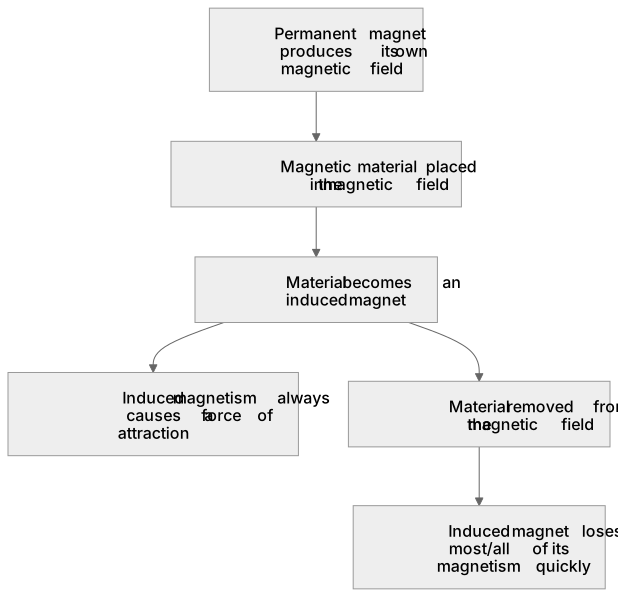
Key words
Say what each word means before you turn the card.
Permanent magnet
Try answering aloud or in your head before turning the card.
Induced magnet
Try answering aloud or in your head before turning the card.
Induced magnetism
Try answering aloud or in your head before turning the card.
Loss of induced magnetism
Try answering aloud or in your head before turning the card.
See every definition
- Permanent magnet
- A magnet that produces its own magnetic field continuously, without needing another magnet nearby.
- Induced magnet
- A material that becomes a magnet when it is placed in a magnetic field.
- Induced magnetism
- Always causes a force of attraction, because the induced pole facing the permanent magnet is always unlike it.
- Loss of induced magnetism
- When removed from the magnetic field, an induced magnet loses most or all of its magnetism quickly.
Label the diagram
Some boxes have lost their names. Pick the right name for each number.
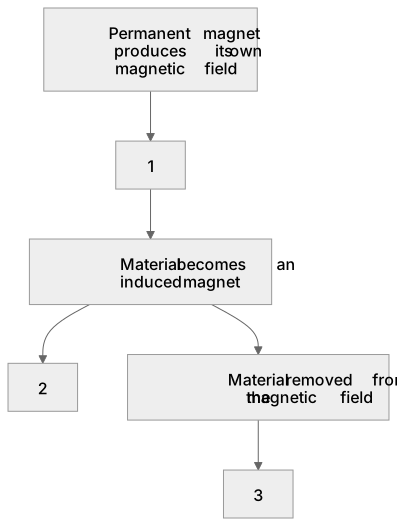
1Box 1
2Box 2
3Box 3
There is more to this lesson
The full lesson goes on to check your understanding and help you earn the marks. Create a free account to carry on, with your progress saved.
A week of Premium from your first lesson · Then the free plan continues · No card, no charge
Test your understanding of Poles of a magnet: A permanent magnet produces its own magnetic field. An induced magnet is a material that becomes a magnet when it is placed in a magnetic field. Induced magnetism always causes a force of attraction. When removed from the magnetic field an induced magnet loses most/all of its magnetism quickly.
Active recall beats re-reading. Take an instant quiz now to test what you’ve learned and lock it into long-term memory.
A week of Premium from your first lesson · Then the free plan continues · No card, no charge