AQA · GCSE · Combined Science
Course version: 8464 · Version from Sept 2018
Ultraviolet – energy efficient lamps, sun tanning
Full specification wording
Uses and applications of electromagnetic waves: ultraviolet – energy efficient lamps, sun tanning
Ultraviolet (UV) lies just beyond the violet end of the visible spectrum, with wavelengths roughly 10⁻⁸ m to 4 × 10⁻⁷ m and frequencies above those of visible light.
Checked against the AQA 8464 specification (opens in a new tab) on .
- Point 6 of 8
Study notes
From the checked teaching notes for this specification point.
The idea
Ultraviolet (UV) lies just beyond the violet end of the visible spectrum, with wavelengths roughly 10⁻⁸ m to 4 × 10⁻⁷ m and frequencies above those of visible light. Its higher frequency means each photon carries more energy than visible photons, so UV can excite certain materials and cause chemical change. This explains two contrasting uses. In an energy-efficient lamp, a mercury vapour discharge emits UV, which is absorbed by a phosphor coating that re-emits visible light, giving more useful light per joule than a filament lamp. In sun tanning, UV is absorbed by skin, stimulating melanin production and darkening the skin; overexposure damages DNA and causes sunburn, ageing and increased skin cancer risk.
What earns the marks
- Ultraviolet is electromagnetic radiation with a frequency higher than visible violet light and a wavelength shorter than visible light.
- UV photons carry more energy than visible photons, so UV can cause fluorescence in suitable phosphors and can cause chemical changes in skin cells.
- In an energy-efficient lamp, a discharge produces UV that a phosphor coating absorbs and re-emits as visible light, so less electrical energy is wasted as heat than in a filament lamp.
- Sun tanning occurs when UV is absorbed by the skin, stimulating melanin production and darkening the skin.
- Overexposure to UV can cause sunburn, premature skin ageing and an increased risk of skin cancer because UV can damage DNA.
- Comparing uses shows that the same property, high photon energy, explains both the useful fluorescence in lamps and the harmful biological effect on skin.
Common mistakes and how to put them right
Thinking UV is a type of heat or is visible.
Put it right by stating UV is invisible electromagnetic radiation beyond the violet end of the visible spectrum.
Saying energy-efficient lamps emit only UV.
Put it right by explaining that the phosphor absorbs UV and re-emits visible light.
Believing a tan is always harmless.
Put it right by linking UV absorption to DNA damage and increased skin cancer risk.
Exam tips
- When asked why a lamp is energy efficient, compare useful visible light output with wasted heating rather than simply saying it uses less electricity.
- Use comparative wavelength or frequency language, such as shorter wavelength than visible light, to show understanding of the electromagnetic spectrum order.
- For tanning questions, give both the intended effect and the hazard, then state one sensible precaution such as limiting exposure or using sunscreen.
Try the lesson
The start of the Uses and applications of electromagnetic waves: ultraviolet – energy efficient lamps, sun tanning lesson, made from checked teaching notes for this specification point.
Have a go first
Which type of electromagnetic wave is used in energy efficient lamps and can cause sun tanning?
Listen
Ultraviolet (UV) lies just beyond the violet end of the visible spectrum, with wavelengths roughly 10⁻⁸ m to 4 × 10⁻⁷ m and frequencies above those of visible light. Its higher frequency means each photon carries more energy than visible photons, so UV can excite certain materials and cause chemical change. This explains two contrasting uses. In an energy-efficient lamp, a mercury vapour discharge emits UV, which is absorbed by a phosphor coating that re-emits visible light, giving more useful light per joule than a filament lamp. In sun tanning, UV is absorbed by skin, stimulating melanin production and darkening the skin; overexposure damages DNA and causes sunburn, ageing and increased skin cancer risk. A strong answer earns marks for these points. Ultraviolet is electromagnetic radiation with a frequency higher than visible violet light and a wavelength shorter than visible light. UV photons carry more energy than visible photons, so UV can cause fluorescence in suitable phosphors and can cause chemical changes in skin cells. In an energy-efficient lamp, a discharge produces UV that a phosphor coating absorbs and re-emits as visible light, so less electrical energy is wasted as heat than in a filament lamp. Sun tanning occurs when UV is absorbed by the skin, stimulating melanin production and darkening the skin. A common slip: Thinking UV is a type of heat or is visible. Instead, stating UV is invisible electromagnetic radiation beyond the violet end of the visible spectrum. Exam tip: When asked why a lamp is energy efficient, compare useful visible light output with wasted heating rather than simply saying it uses less electricity.
See it
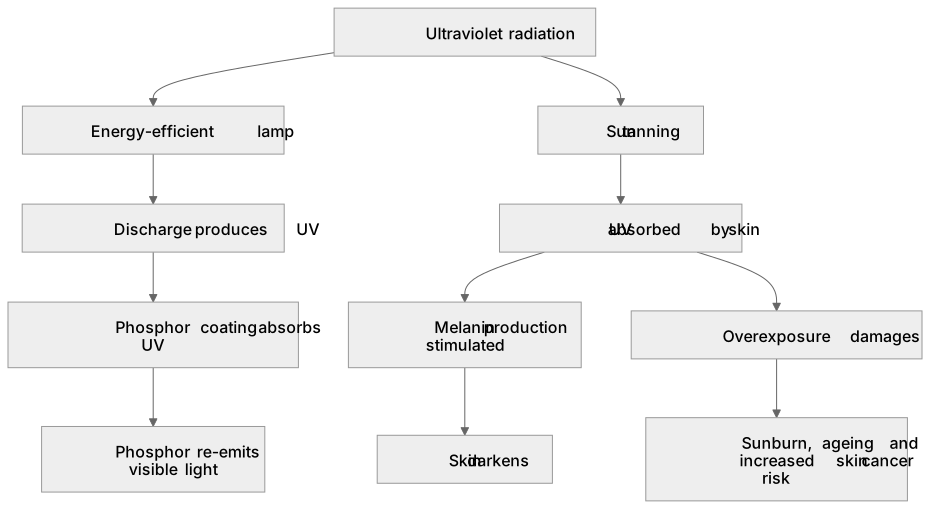
Label the diagram
Some boxes have lost their names. Pick the right name for each number.
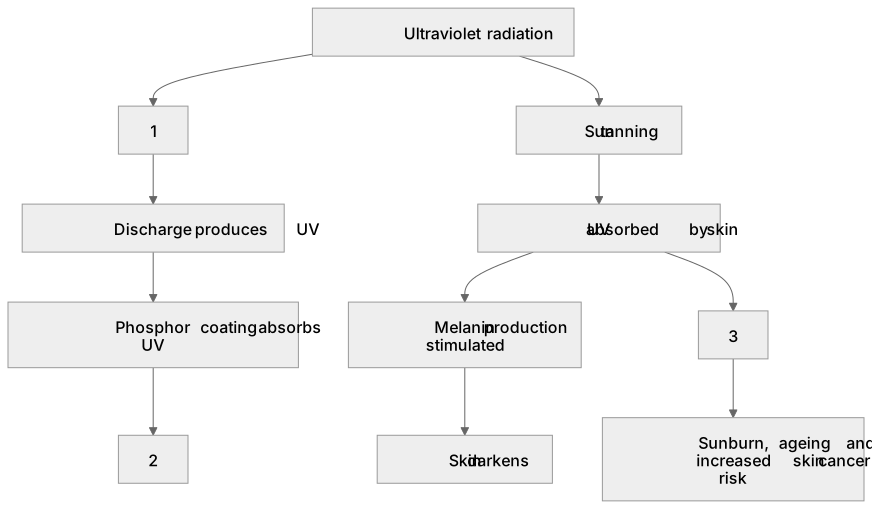
1Box 1
2Box 2
3Box 3
There is more to this lesson
The full lesson goes on to check your understanding and help you earn the marks. Create a free account to carry on, with your progress saved.
A week of Premium from your first lesson · Then the free plan continues · No card, no charge
Test your understanding of Uses and applications of electromagnetic waves: ultraviolet – energy efficient lamps, sun tanning
Active recall beats re-reading. Take an instant quiz now to test what you’ve learned and lock it into long-term memory.
A week of Premium from your first lesson · Then the free plan continues · No card, no charge