OCR · GCSE · Computer Science
Course version: J277 · Version from Sept 2022
Data storage: The term ‘character set’
A character set is a defined list of characters and the unique binary code assigned to each one.
Checked against the OCR J277 specification on .
- Point 7 of 13
- 2 key terms
Study notes
From the checked teaching notes for this specification point.
The idea
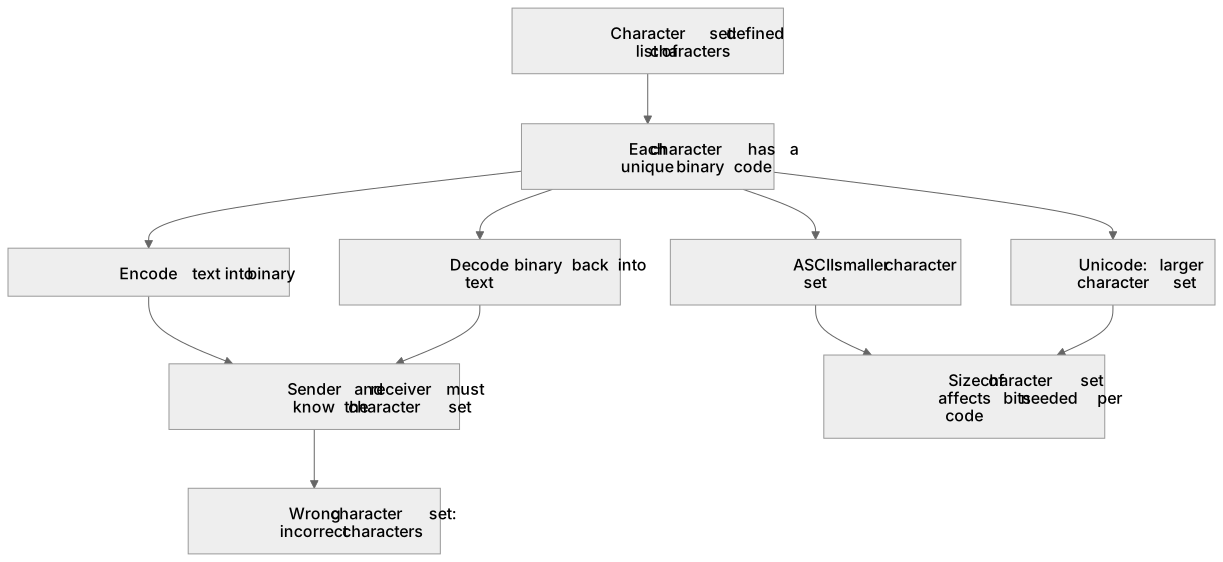
A character set is a defined list of characters and the unique binary code assigned to each one. It allows a computer to convert between binary and text. For example, in ASCII the character A is code 65, which is 01000001 in 8-bit binary. The character set must be known by both the sender and receiver; otherwise the same binary code may be displayed as a different character. ASCII is a small character set, while Unicode is a much larger character set that includes characters from many languages and many symbols. The size of a character set affects how many bits are needed for each code.
What earns the marks
- A character set is a defined list of characters and their binary codes.
- Each character in a character set has a unique binary code.
- A character set is used to encode text into binary and decode binary back into text.
- ASCII is an example of a character set that uses 7 or 8 bits per character.
- Unicode is an example of a larger character set that uses more bits and can represent many more characters.
- If the wrong character set is used, the decoded text may contain incorrect characters.
Common mistakes and how to put them right
Defining a character set as just a list of letters.
Put it right: A character set includes letters, digits, punctuation and other symbols, each with a unique binary code.
Thinking that a character set is the same as a font.
Put it right: A character set defines binary codes for characters, while a font defines their visual appearance.
Believing that ASCII and Unicode are the same.
Put it right: ASCII is a smaller character set, while Unicode is a larger character set that can represent many more characters.
Exam tips
- Give a clear definition of character set and then give one example such as ASCII or Unicode.
- When explaining why a character set is needed, refer to encoding and decoding text.
- Use the term unique binary code when describing the code for each character.
Try the lesson
The start of the Data storage: The term ‘character set’ lesson, made from checked teaching notes for this specification point.
Have a go first
What does the term character set mean?
Listen
A character set is a defined list of characters and the unique binary code assigned to each one. It allows a computer to convert between binary and text. For example, in ASCII the character A is code 65, which is 01000001 in 8-bit binary. The character set must be known by both the sender and receiver; otherwise the same binary code may be displayed as a different character. ASCII is a small character set, while Unicode is a much larger character set that includes characters from many languages and many symbols. The size of a character set affects how many bits are needed for each code. A strong answer earns marks for these points. A character set is a defined list of characters and their binary codes. Each character in a character set has a unique binary code. A character set is used to encode text into binary and decode binary back into text. ASCII is an example of a character set that uses 7 or 8 bits per character. A common slip: Defining a character set as just a list of letters. Instead, a character set includes letters, digits, punctuation and other symbols, each with a unique binary code. Exam tip: Give a clear definition of character set and then give one example such as ASCII or Unicode.
See it
Key words
Say what each word means before you turn the card.
Character set
Try answering aloud or in your head before turning the card.
ASCII and Unicode
Try answering aloud or in your head before turning the card.
See every definition
- Character set
- A defined list of characters and the unique binary code assigned to each one.
- ASCII and Unicode
- Examples of character sets, where ASCII is a small character set and Unicode is a much larger character set.
Label the diagram
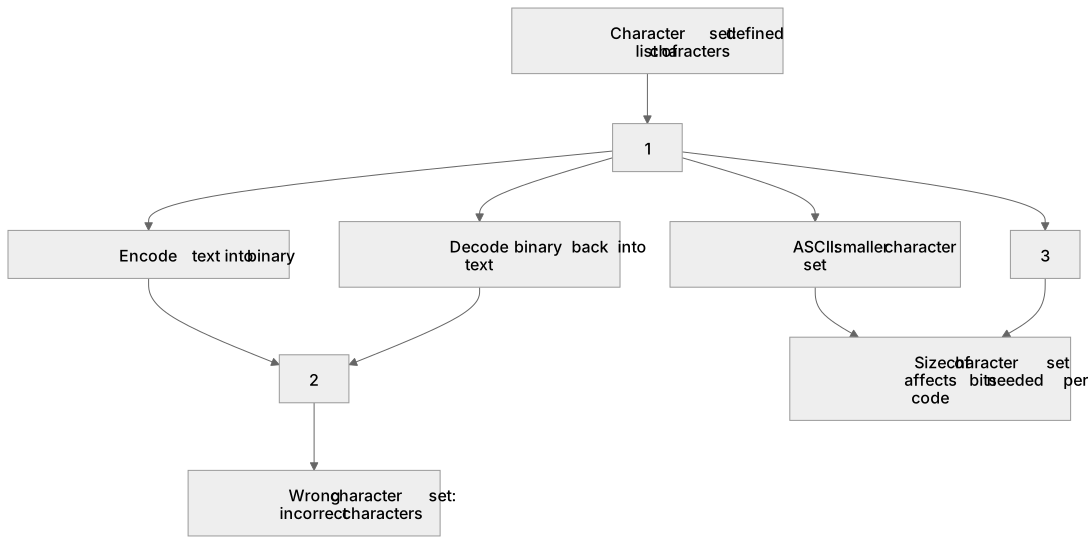
Some boxes have lost their names. Pick the right name for each number.
1Box 1
2Box 2
3Box 3
There is more to this lesson
The full lesson goes on to check your understanding and help you earn the marks. Create a free account to carry on, with your progress saved.
A week of Premium from your first lesson · Then the free plan continues · No card, no charge
Test your understanding of Data storage: The term ‘character set’
Active recall beats re-reading. Take an instant quiz now to test what you’ve learned and lock it into long-term memory.
A week of Premium from your first lesson · Then the free plan continues · No card, no charge