Pearson Edexcel · A-Level · Economics B
Course version: 9EB0 · Version from Sept 2015
B) Information and communication factors: o language, unintended meanings,…
Full specification wording
Demand-side factors in global markets: b) Information and communication factors: o language, unintended meanings, inappropriate/inaccurate translations
Effective communication is vital for generating demand in global markets.
Checked against the Pearson Edexcel 9EB0 specification (opens in a new tab) on .
- Point 2 of 3
- 4 key terms
Study notes
From the checked teaching notes for this specification point.
The idea
Effective communication is vital for generating demand in global markets. Language barriers can prevent marketing messages from reaching target audiences. Unintended meanings occur when a brand name or slogan carries a negative connotation in a different culture, damaging brand reputation. Inappropriate or inaccurate translations can confuse consumers or make a business appear unprofessional. For example, a direct translation of a successful domestic slogan might make no sense in another language, leading to a failed campaign. Businesses must use local expertise to ensure communication is culturally sensitive, accurately translated, and conveys the intended message to successfully drive international demand and avoid costly marketing blunders.
What earns the marks
- Identify how language differences act as a barrier to entry in global markets.
- Explain the negative impact of unintended meanings on brand image and consumer demand.
- Analyse the consequences of inappropriate or inaccurate translations in marketing campaigns.
- Evaluate the importance of localising marketing communications to suit specific international markets.
Common mistakes and how to put them right
Assuming that English is universally understood and sufficient for all global marketing campaigns. (Correction.
Put it right: Recognise that local languages are essential for effectively reaching and persuading consumers in many markets.).
Confusing a direct, literal translation with an effective marketing message. (Correction.
Put it right: Understand that translations must capture the cultural nuance and intent, not just the literal words, to avoid inaccurate translations.).
Underestimating the financial and reputational damage caused by unintended meanings. (Correction.
Put it right: Acknowledge that poor communication can lead to product boycotts and long-term loss of demand.).
Exam tips
- Provide real-world examples of translation errors or unintended meanings to strengthen your analysis of communication factors.
- Link communication failures directly to a reduction in demand and potential loss of market share.
- Consider the costs of hiring local marketing experts versus the risks of inaccurate translations when evaluating global strategies.
Try the lesson
The start of the Demand-side factors in global markets: b) Information and communication factors: o language, unintended meanings, inappropriate/inaccurate translations lesson, made from checked teaching notes for this specification point.
Have a go first
Which of the following is an information and communication factor that can negatively impact consumer demand in global markets?
Listen
Effective communication is vital for generating demand in global markets. Language barriers can prevent marketing messages from reaching target audiences. Unintended meanings occur when a brand name or slogan carries a negative connotation in a different culture, damaging brand reputation. Inappropriate or inaccurate translations can confuse consumers or make a business appear unprofessional. For example, a direct translation of a successful domestic slogan might make no sense in another language, leading to a failed campaign. Businesses must use local expertise to ensure communication is culturally sensitive, accurately translated, and conveys the intended message to successfully drive international demand and avoid costly marketing blunders. A strong answer earns marks for these points. Identify how language differences act as a barrier to entry in global markets. Explain the negative impact of unintended meanings on brand image and consumer demand. Analyse the consequences of inappropriate or inaccurate translations in marketing campaigns. Evaluate the importance of localising marketing communications to suit specific international markets. Exam tip: Provide real-world examples of translation errors or unintended meanings to strengthen your analysis of communication factors.
See it
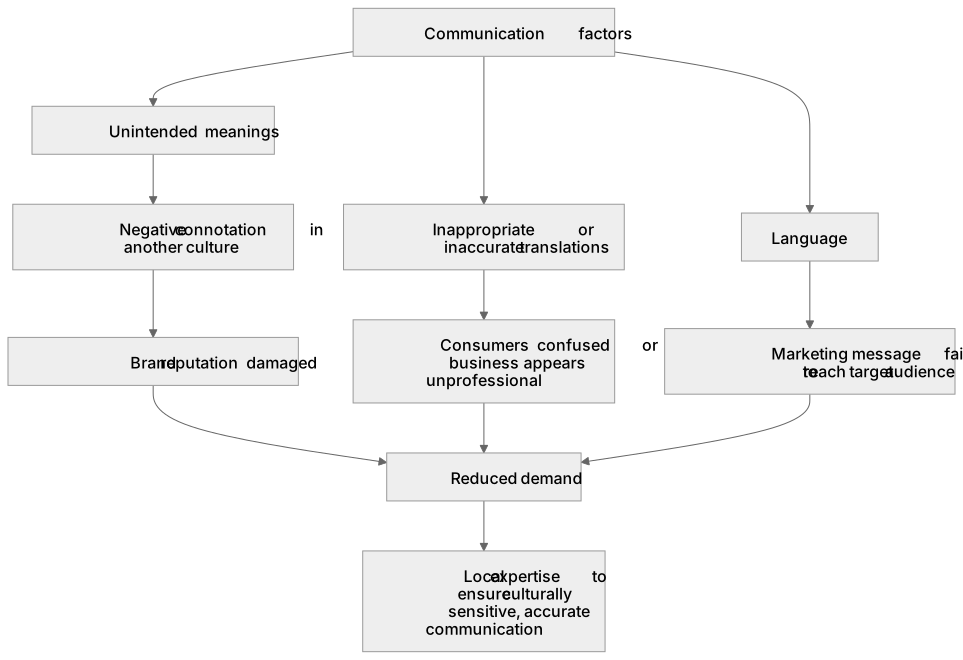
Key words
Say what each word means before you turn the card.
Language barriers
Try answering aloud or in your head before turning the card.
Unintended meanings
Try answering aloud or in your head before turning the card.
Inaccurate translations
Try answering aloud or in your head before turning the card.
Local expertise
Try answering aloud or in your head before turning the card.
See every definition
- Language barriers
- Differences in language that can prevent marketing messages from reaching target audiences in global markets.
- Unintended meanings
- When a brand name or slogan carries a negative connotation in a different culture, damaging brand reputation.
- Inaccurate translations
- Inappropriate or inaccurate translations that can confuse consumers or make a business appear unprofessional.
- Local expertise
- Support businesses must use to ensure communication is culturally sensitive, accurately translated, and conveys the intended message.
Label the diagram
Some boxes have lost their names. Pick the right name for each number.
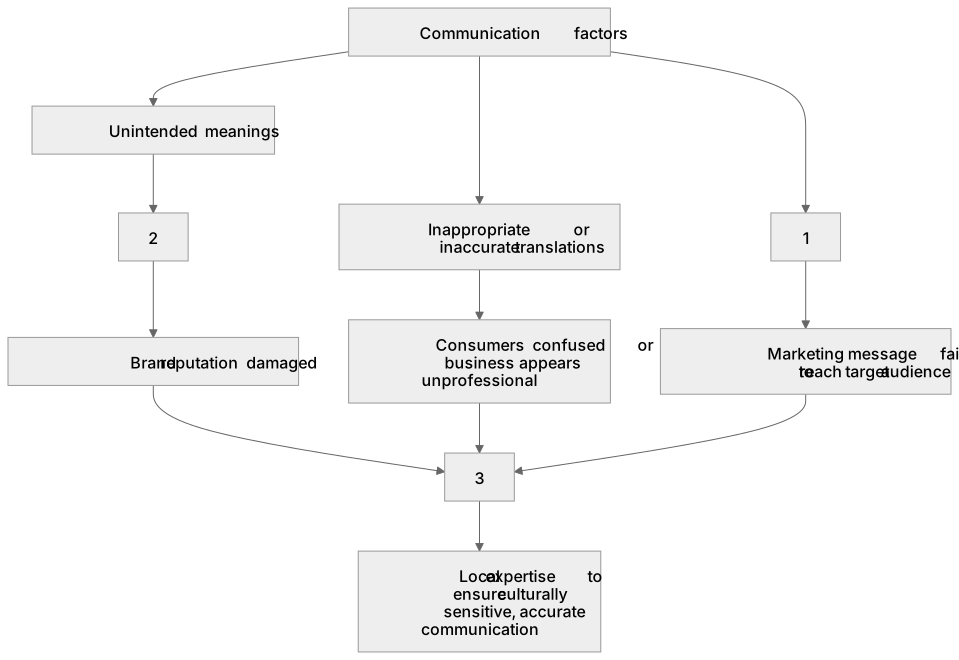
1Box 1
2Box 2
3Box 3
There is more to this lesson
The full lesson goes on to check your understanding and help you earn the marks. Create a free account to carry on, with your progress saved.
A week of Premium from your first lesson · Then the free plan continues · No card, no charge
Test your understanding of Demand-side factors in global markets: b) Information and communication factors: o language, unintended meanings, inappropriate/inaccurate translations
Active recall beats re-reading. Take an instant quiz now to test what you’ve learned and lock it into long-term memory.
A week of Premium from your first lesson · Then the free plan continues · No card, no charge