Pearson Edexcel · A-Level · Economics B
Course version: 9EB0 · Version from Sept 2015
B) How firms calculate: o gross profit o operating profit o profit for the…
Full specification wording
Profit and loss: b) How firms calculate: o gross profit o operating profit o profit for the year (net profit)
Firms calculate different levels of profit to assess financial performance.
Checked against the Pearson Edexcel 9EB0 specification (opens in a new tab) on .
- Point 2 of 4
- 4 key terms
Study notes
From the checked teaching notes for this specification point.
The idea
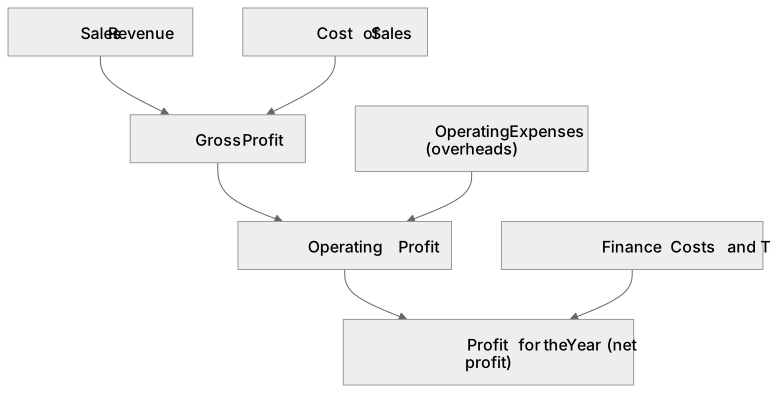
Firms calculate different levels of profit to assess financial performance. Gross profit is calculated by deducting the cost of sales (direct costs like raw materials) from sales revenue. For example, a clothing retailer selling £100,000 of stock that cost £40,000 to buy has a gross profit of £60,000. Operating profit deducts operating expenses (overheads like rent and administrative salaries) from gross profit, showing the profit from core business activities. Finally, profit for the year (net profit) is calculated by deducting finance costs (such as interest on loans) and tax from the operating profit. This final figure represents the actual surplus available to be distributed to owners as dividends or retained in the business.
What earns the marks
- State the formula for gross profit: Sales Revenue minus Cost of Sales.
- State the formula for operating profit: Gross Profit minus Operating Expenses (overheads).
- State the formula for profit for the year (net profit): Operating Profit minus Finance Costs and Tax.
- Calculate any of the three profit figures accurately given a set of financial data.
Common mistakes and how to put them right
Confusing cost of sales with operating expenses.
Put it right: Cost of sales relates directly to production or purchasing goods, whereas operating expenses are indirect overheads.
Forgetting to deduct interest and tax when calculating profit for the year.
Put it right: Ensure these finance and tax costs are subtracted from operating profit.
Using the terms gross profit and net profit interchangeably.
Put it right: They represent different stages of profitability and must be calculated in a specific sequence.
Exam tips
- Memorise the sequence of the statement of comprehensive income to ensure you deduct costs in the correct order.
- When given a table of financial data, cross out or tick off figures as you use them to avoid double-counting or missing a cost.
- Pay close attention to whether a question asks for a profit figure in absolute terms (£) or as a profit margin (percentage).
Try the lesson
The start of the Profit and loss: b) How firms calculate: o gross profit o operating profit o profit for the year (net profit) lesson, made from checked teaching notes for this specification point.
Have a go first
How is a firm's gross profit calculated from its financial data?
Listen
Firms calculate different levels of profit to assess financial performance. Gross profit is calculated by deducting the cost of sales (direct costs like raw materials) from sales revenue. For example, a clothing retailer selling £100,000 of stock that cost £40,000 to buy has a gross profit of £60,000. Operating profit deducts operating expenses (overheads like rent and administrative salaries) from gross profit, showing the profit from core business activities. Finally, profit for the year (net profit) is calculated by deducting finance costs (such as interest on loans) and tax from the operating profit. This final figure represents the actual surplus available to be distributed to owners as dividends or retained in the business. A strong answer earns marks for these points. State the formula for gross profit: Sales Revenue minus Cost of Sales. State the formula for operating profit: Gross Profit minus Operating Expenses (overheads). State the formula for profit for the year (net profit): Operating Profit minus Finance Costs and Tax. Calculate any of the three profit figures accurately given a set of financial data. Exam tip: Memorise the sequence of the statement of comprehensive income to ensure you deduct costs in the correct order.
See it
Key words
Say what each word means before you turn the card.
Financial performance
Try answering aloud or in your head before turning the card.
Gross profit
Try answering aloud or in your head before turning the card.
Operating profit
Try answering aloud or in your head before turning the card.
Profit for the year (net profit)
Try answering aloud or in your head before turning the card.
See every definition
- Financial performance
- What firms assess by calculating different levels of profit.
- Gross profit
- Calculated by deducting the cost of sales, such as direct costs like raw materials, from sales revenue.
- Operating profit
- Deducts operating expenses, such as overheads like rent and administrative salaries, from gross profit, showing the profit from core business activities.
- Profit for the year (net profit)
- Calculated by deducting finance costs, such as interest on loans, and tax from the operating profit.
Label the diagram
Some boxes have lost their names. Pick the right name for each number.
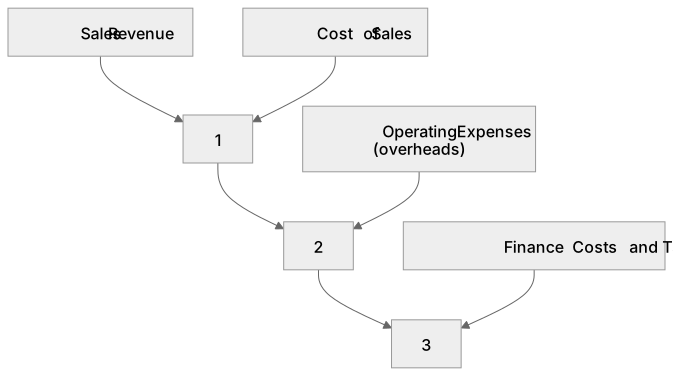
1Box 1
2Box 2
3Box 3
There is more to this lesson
The full lesson goes on to check your understanding and help you earn the marks. Create a free account to carry on, with your progress saved.
A week of Premium from your first lesson · Then the free plan continues · No card, no charge
Test your understanding of Profit and loss: b) How firms calculate: o gross profit o operating profit o profit for the year (net profit)
Active recall beats re-reading. Take an instant quiz now to test what you’ve learned and lock it into long-term memory.
A week of Premium from your first lesson · Then the free plan continues · No card, no charge