Pearson Edexcel · GCSE · Economics
The market system
The market system is the beating heart of modern economies, determining what gets produced, how, and for whom. Mastering supply, demand, and the price mechanism is essential for GCSE Economics, as it forms the foundation for understanding everything from firm behaviour to government intervention.
- 4 min read
- 3 worked examples
- 5 practice questions
- 6 key terms
Study Notes
Overview
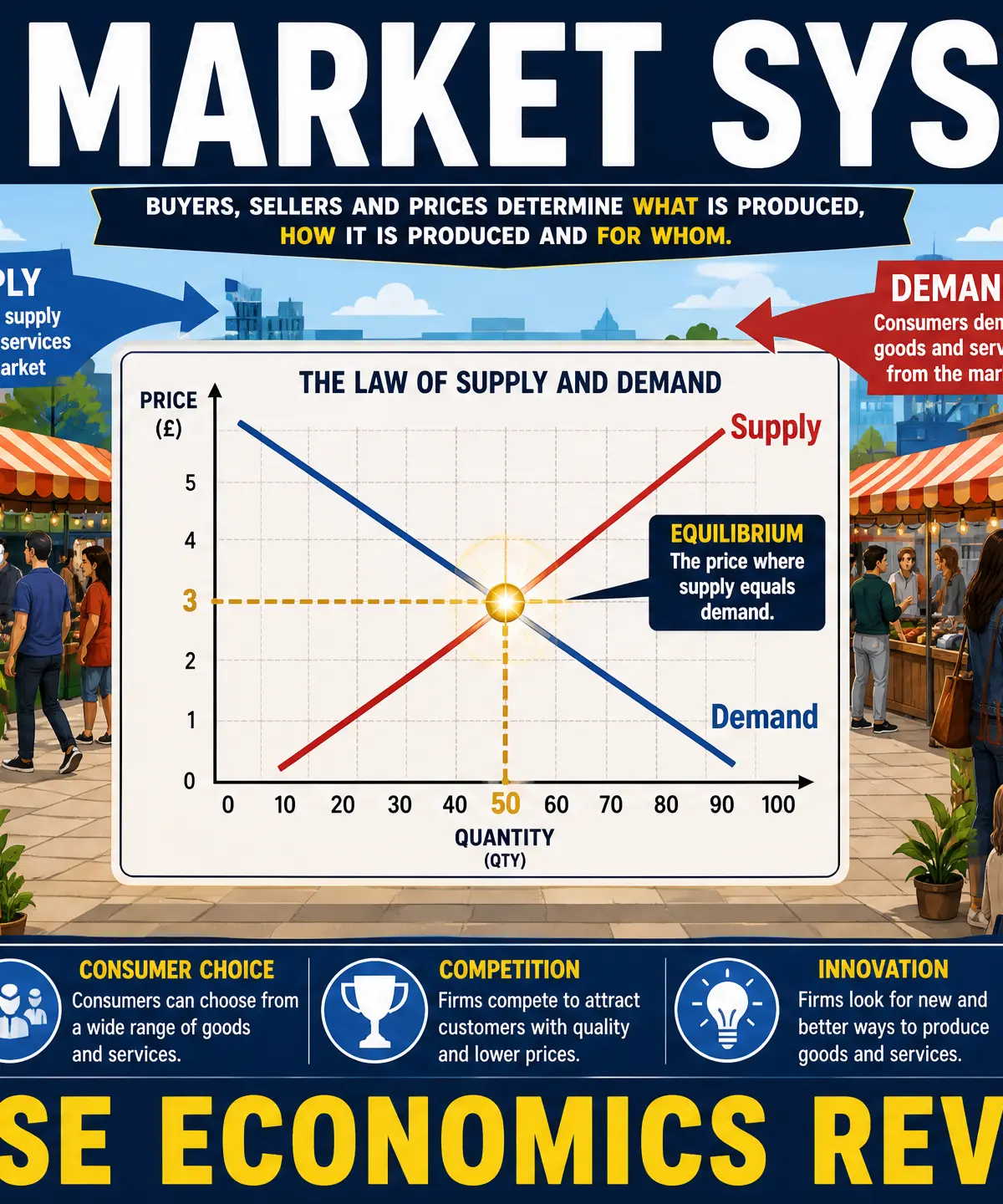
Welcome to your comprehensive guide on The Market System. In economics, a market is any arrangement where buyers and sellers interact to exchange goods, services, or resources. This topic is foundational; examiners expect you to fluently explain how the forces of supply and demand interact to determine prices and allocate scarce resources. You must understand how the price mechanism acts as an invisible hand, coordinating the decisions of millions of economic agents without any central direction.
Whether you are studying AQA, Edexcel, or OCR, you will be tested on your ability to draw and interpret supply and demand diagrams, explain shifts versus movements, and apply these concepts to real-world scenarios. This guide will walk you through the core mechanics, common pitfalls, and the exact language you need to secure top marks.
Listen to our comprehensive revision podcast for an audio deep-dive into this topic:

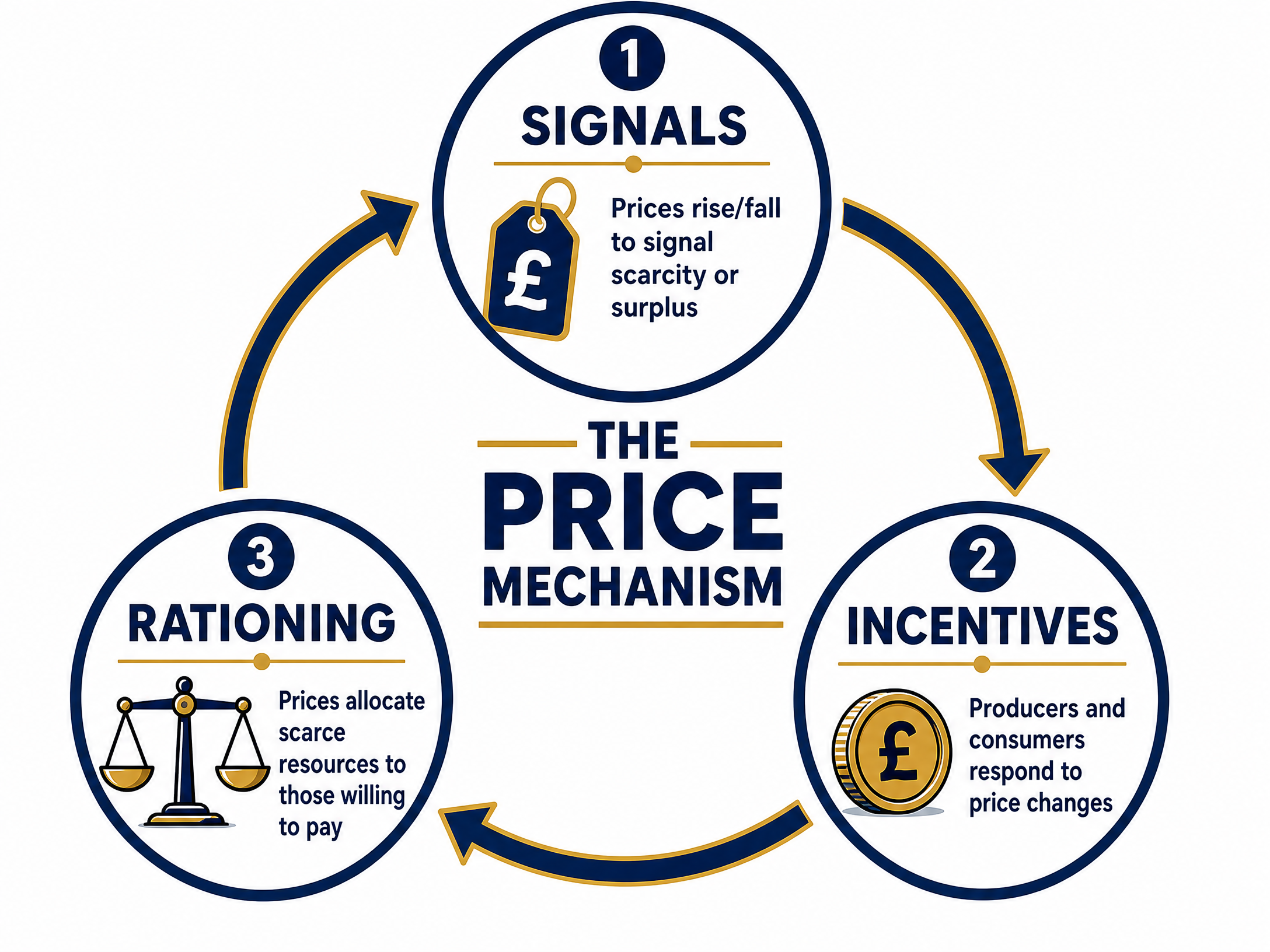
The Price Mechanism
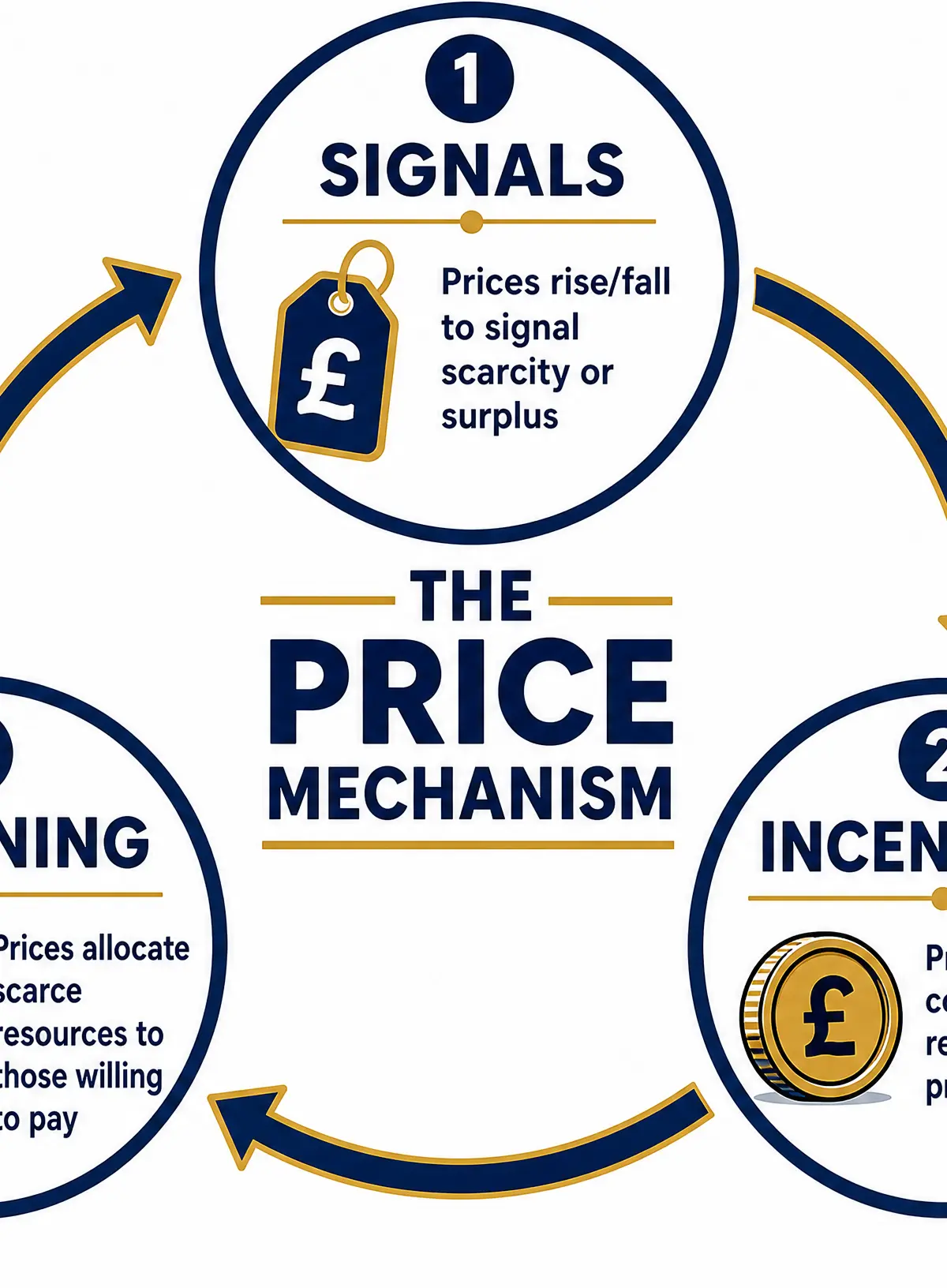
The price mechanism is the means by which millions of decisions taken by consumers and businesses interact to determine the allocation of scarce resources. Examiners look for three specific functions:
- Signalling: Prices rise and fall to reflect scarcities and surpluses. A rising price signals to producers that demand is high and they should produce more.
- Incentive: Prices create incentives for economic agents. Higher prices incentivise firms to supply more due to the prospect of higher profit margins.
- Rationing: When resources are scarce, prices rise, rationing the good to only those consumers who are willing and able to pay the higher price.
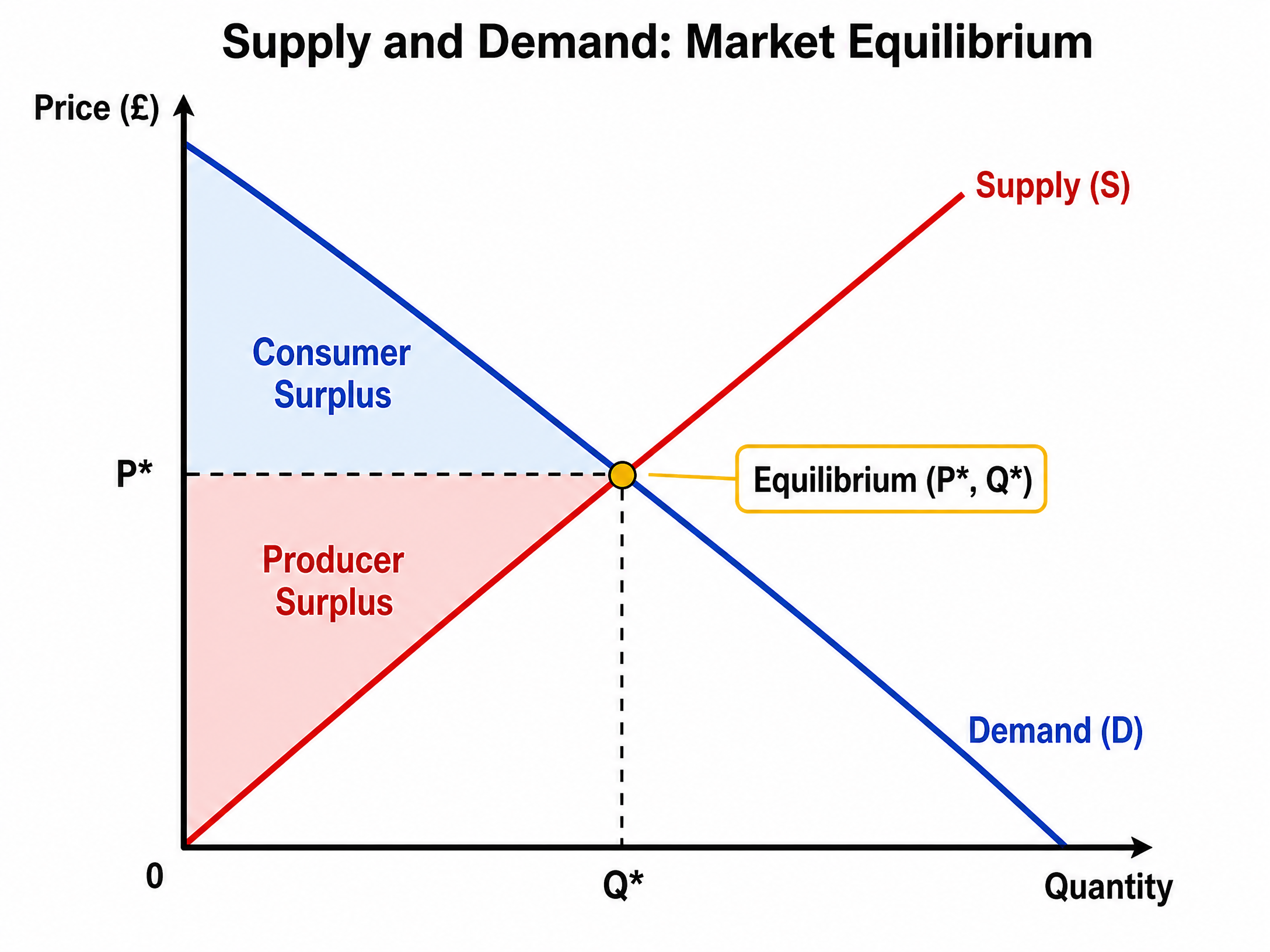
Supply and Demand: Market Equilibrium
Demand
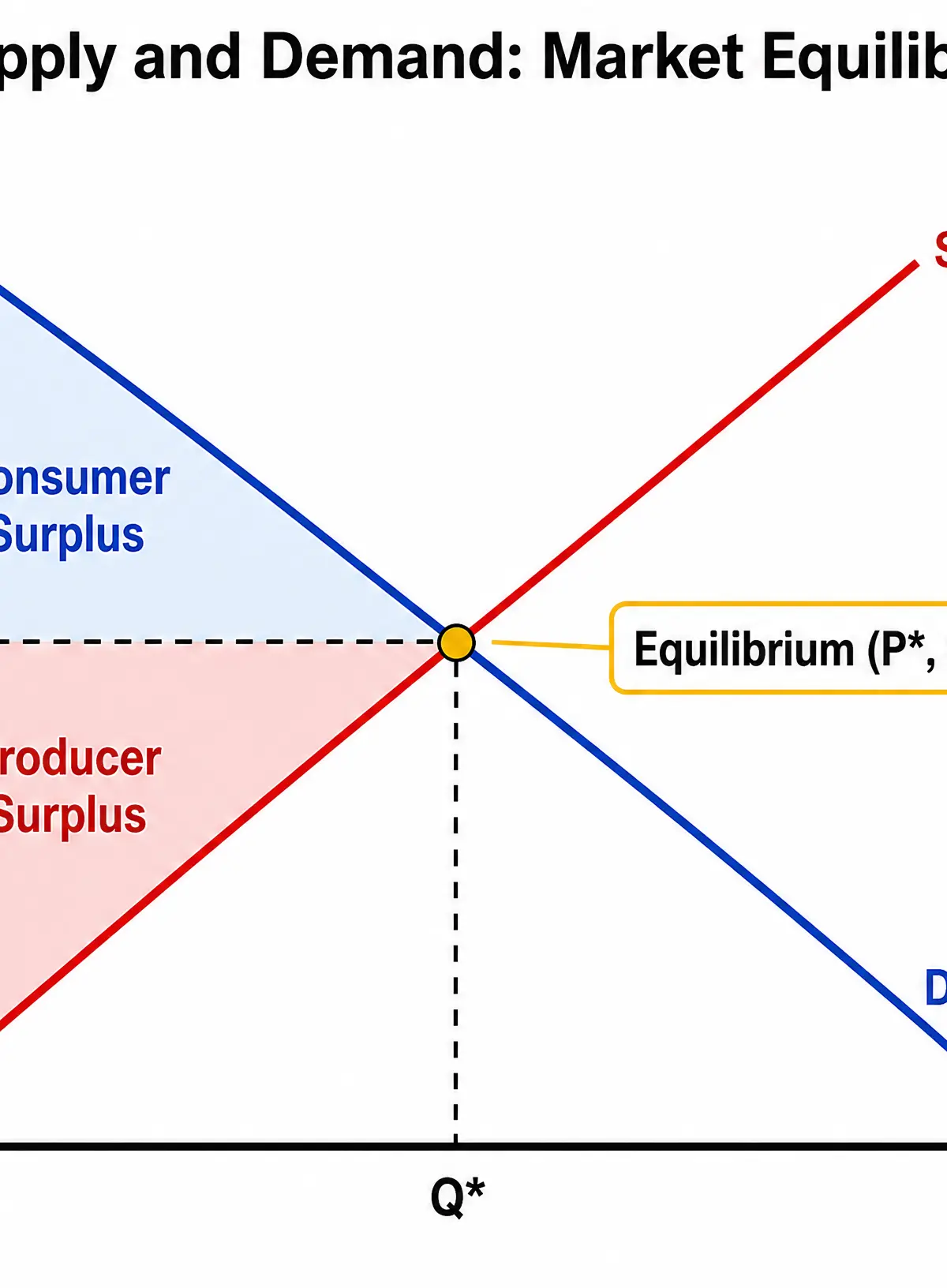
Demand is the quantity of a good or service that consumers are willing and able to buy at a given price in a given time period. The law of demand states that as price rises, quantity demanded falls (ceteris paribus).
Shifts in Demand occur due to non-price factors (conditions of demand), such as:
- Changes in real income
- Changes in tastes and fashions
- Changes in the price of substitute or complementary goods
- Demographic changes
Supply
Supply is the quantity of a good or service that producers are willing and able to offer for sale at a given price in a given time period. The law of supply states that as price rises, quantity supplied increases.
Shifts in Supply occur due to non-price factors (conditions of supply), such as:
- Changes in the costs of production (e.g., wages, raw materials)
- Technological advancements
- Government intervention (indirect taxes or subsidies)
- External shocks (e.g., weather events affecting agriculture)
Equilibrium
Market equilibrium occurs at the price where quantity demanded exactly equals quantity supplied. The market clears, meaning there is no excess demand (shortage) and no excess supply (surplus). If the price is above equilibrium, a surplus occurs, putting downward pressure on price. If the price is below equilibrium, a shortage occurs, putting upward pressure on price.
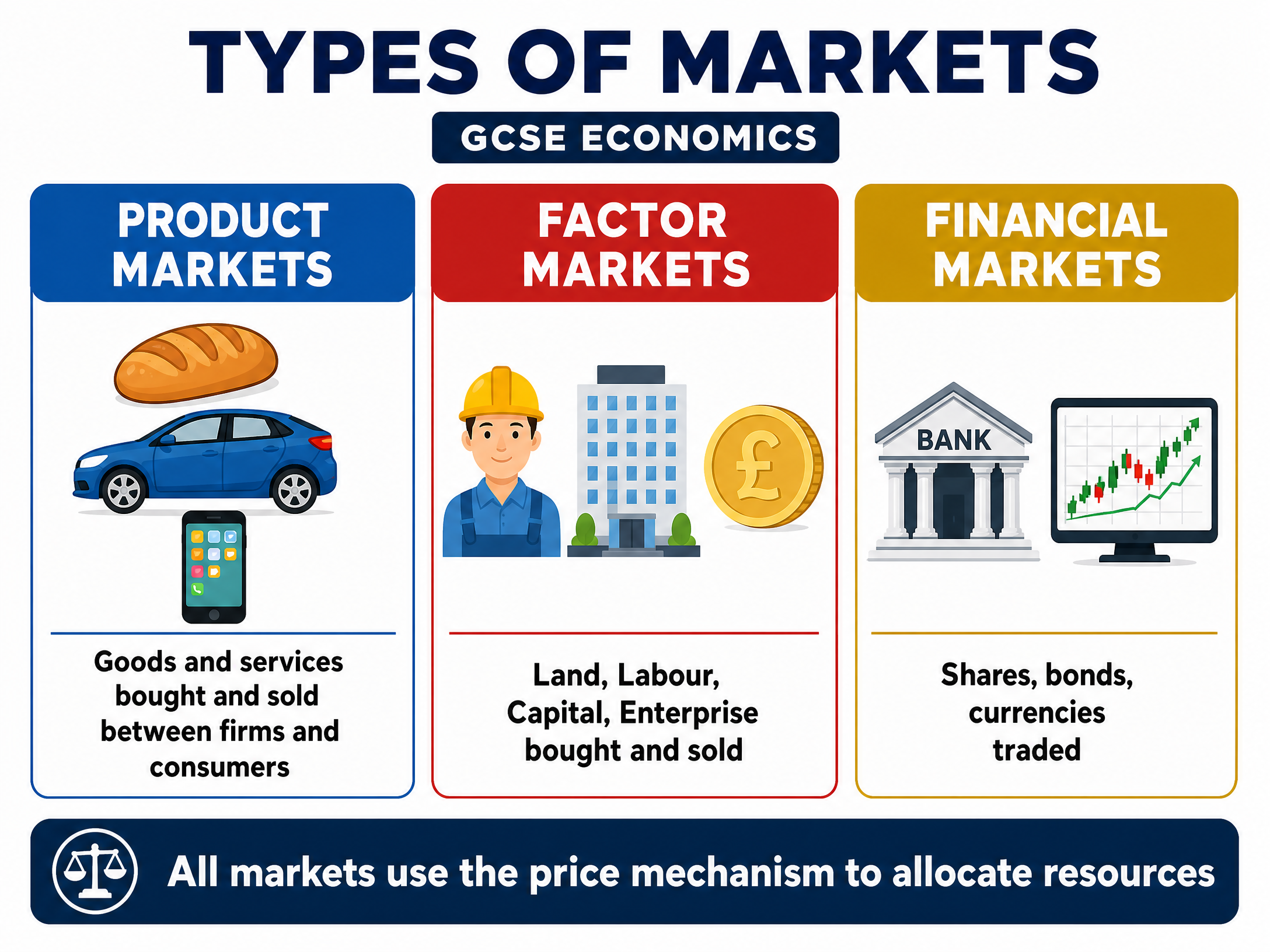
Types of Markets
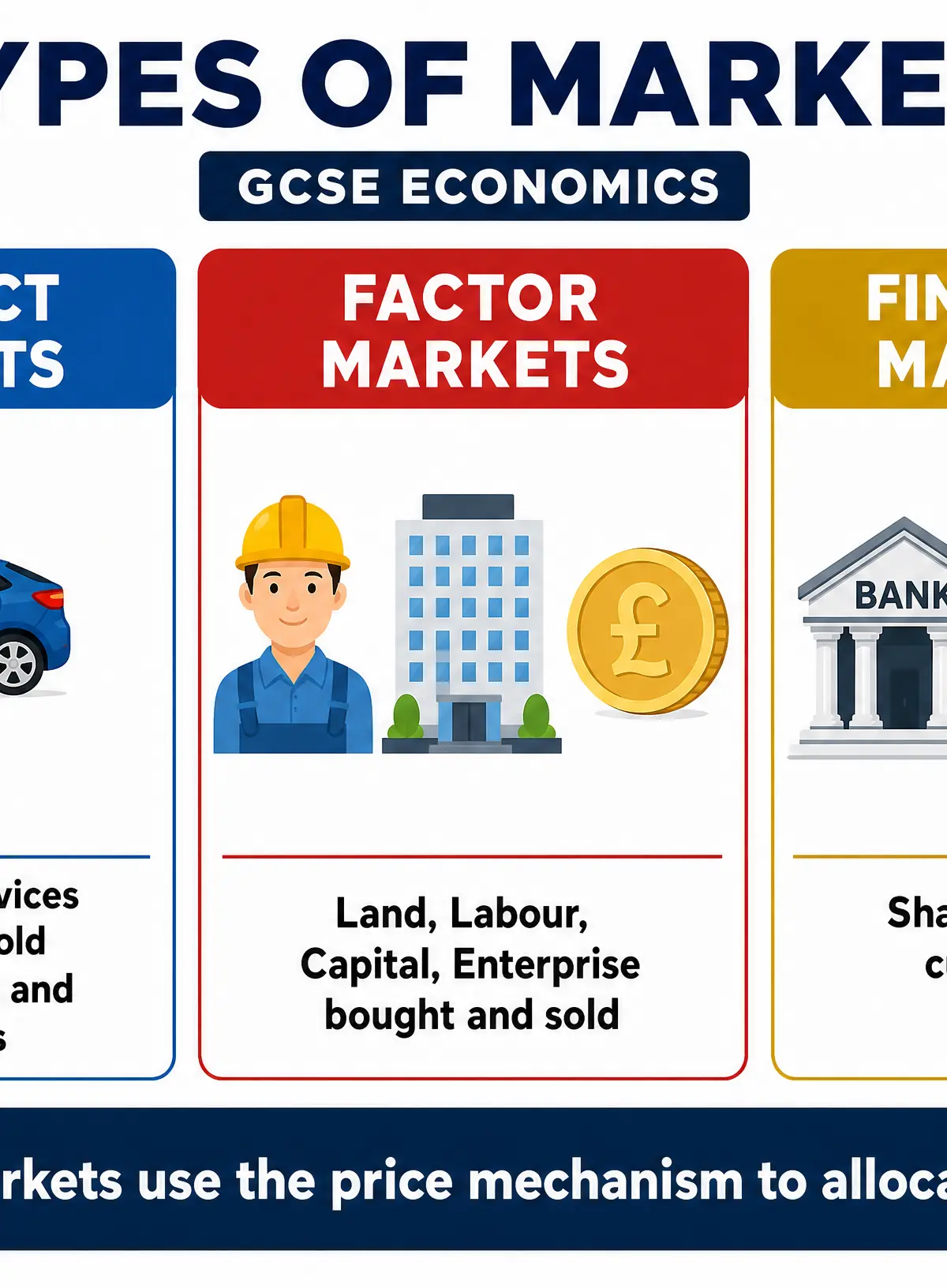
Examiners expect you to apply the price mechanism to different contexts. The three main types of markets are:
- Product Markets: Where finished goods and services are bought and sold (e.g., the market for smartphones).
- Factor Markets: Where the factors of production (land, labour, capital, enterprise) are bought and sold (e.g., the labour market for nurses).
- Financial Markets: Where financial assets like shares, bonds, and foreign currencies are traded.
All these markets rely on the interaction of supply and demand to establish equilibrium prices.
Visual Resources
3 diagrams and illustrations
Interactive Diagrams
1 interactive diagram to visualise key concepts
Conceptual Flow Outline
Step-by-step logic for analysing market changes in exam questions
Worked Examples
3 worked examples — open one to explore the question and available guidance.
Practice Questions
Test your understanding — click to reveal model answers
Define the term 'equilibrium price'.
Hint: Think about what happens to the quantities of supply and demand at this price.
Explain one reason why the supply curve for agricultural products, such as wheat, might shift to the left.
Hint: Think about factors outside the farmer's control that affect how much they can produce.
Assess the impact of a significant increase in consumer incomes on the market for restaurant meals.
Hint: Consider whether restaurant meals are normal or inferior goods, and explain the step-by-step impact on equilibrium.
Explain how the price mechanism rations scarce resources.
Hint: Think about what happens when demand exceeds supply and who gets the good in the end.
Using a diagram, explain the effect of a government subsidy granted to solar panel manufacturers.
Hint: A subsidy lowers the cost of production. Which curve does this affect?