AQA · A-Level · English Language
Course version: 7702 · Version from Sept 2017
Students should study a range of texts about various subjects, from…
Full specification wording
Textual variations and representations: Students should study a range of texts about various subjects, from various writers and speakers, for various audiences and purposes, in a variety of genres, using a variety of modes (written, spoken, electronic), from different times and places (global, national, regional).
This guidance tells you how to build a wide reading base for the whole course.
Checked against the AQA 7702 specification (opens in a new tab) on .
- Point 1 of 3
- 3 key terms
Study notes
From the checked teaching notes for this specification point.
The idea
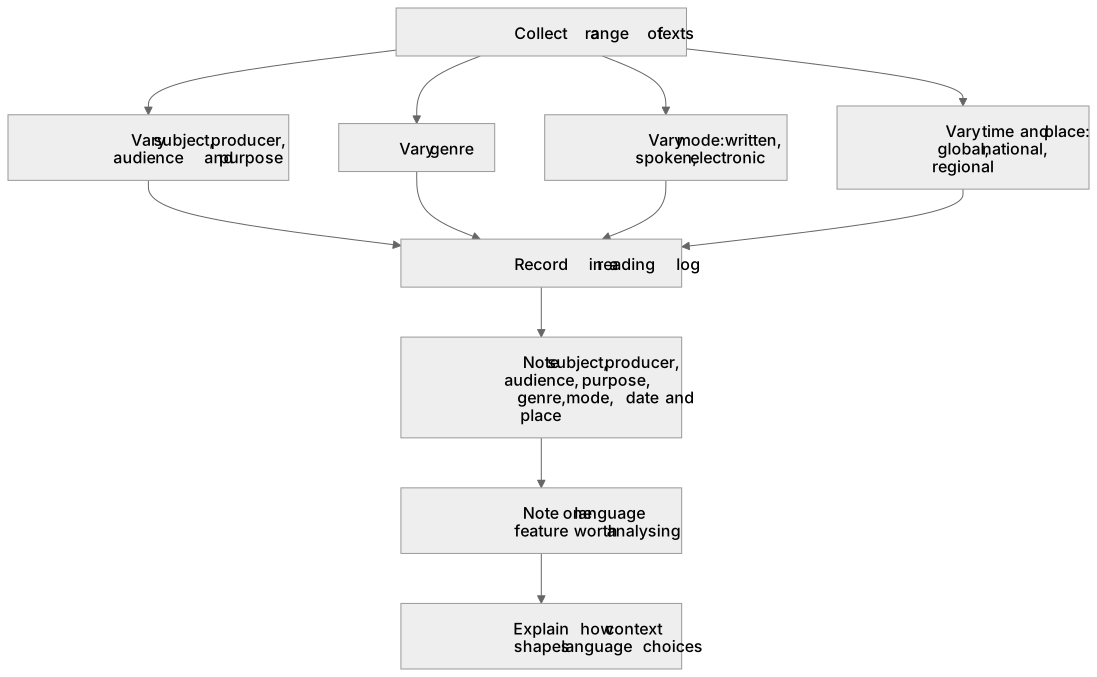
This guidance tells you how to build a wide reading base for the whole course. Collect texts about different subjects, written or spoken by different people, aimed at different audiences and serving different purposes. Work across genres such as journalism, advertising, conversation, blogs, speeches and social media. Include written, spoken and electronic modes, and texts from different times and places, whether global, national or regional. A practical method is a reading log: for each text record subject, producer, audience, purpose, genre, mode, date and place, then note one language feature worth analysing. Compare an older printed news report with a current online thread to see how mode and time shape language.
Common mistakes and how to put them right
Treating the list as a checklist of separate items and collecting texts that vary in only one dimension.
Put it right: Choose texts that differ across several dimensions at once, for example a regional spoken interview and a global electronic advertisement.
Assuming only literary texts count.
Put it right: The range covers any texts, including everyday, occupational and digital ones.
Ignoring mode or place and gathering only written national texts.
Put it right: Deliberately include spoken and electronic texts and material from outside your own region and country.
Exam tips
- Keep a reading log with columns for subject, producer, audience, purpose, genre, mode, time and place so coverage is visible and easy to audit.
- For each text, write two or three sentences on how context shapes language choices; this builds analytical habits you will use later.
- Regularly swap texts with peers so your range grows beyond your own interests and usual sources.
Try the lesson
The start of the Textual variations and representations: Students should study a range of texts about various subjects, from various writers and speakers, for various audiences and purposes, in a variety of genres, using a variety of modes (written, spoken, electronic), from different times and places (global, national, regional). lesson, made from checked teaching notes for this specification point.
Have a go first
Which of the following combinations best describes the primary modes of a live radio phone-in broadcast?
Listen
This guidance tells you how to build a wide reading base for the whole course. Collect texts about different subjects, written or spoken by different people, aimed at different audiences and serving different purposes. Work across genres such as journalism, advertising, conversation, blogs, speeches and social media. Include written, spoken and electronic modes, and texts from different times and places, whether global, national or regional. A practical method is a reading log: for each text record subject, producer, audience, purpose, genre, mode, date and place, then note one language feature worth analysing. Compare an older printed news report with a current online thread to see how mode and time shape language. A common slip: Treating the list as a checklist of separate items and collecting texts that vary in only one dimension. Instead, choose texts that differ across several dimensions at once, for example a regional spoken interview and a global electronic advertisement. Exam tip: Keep a reading log with columns for subject, producer, audience, purpose, genre, mode, time and place so coverage is visible and easy to audit.
See it
Key words
Say what each word means before you turn the card.
Diversity of producers and audiences
Try answering aloud or in your head before turning the card.
Genre and purpose variety
Try answering aloud or in your head before turning the card.
Mode, time and place
Try answering aloud or in your head before turning the card.
See every definition
- Diversity of producers and audiences
- Texts from various writers and speakers, for various audiences and purposes.
- Genre and purpose variety
- Working across genres such as journalism, advertising, conversation, blogs, speeches and social media, serving different purposes.
- Mode, time and place
- Using a variety of modes (written, spoken, electronic), from different times and places (global, national, regional).
Label the diagram
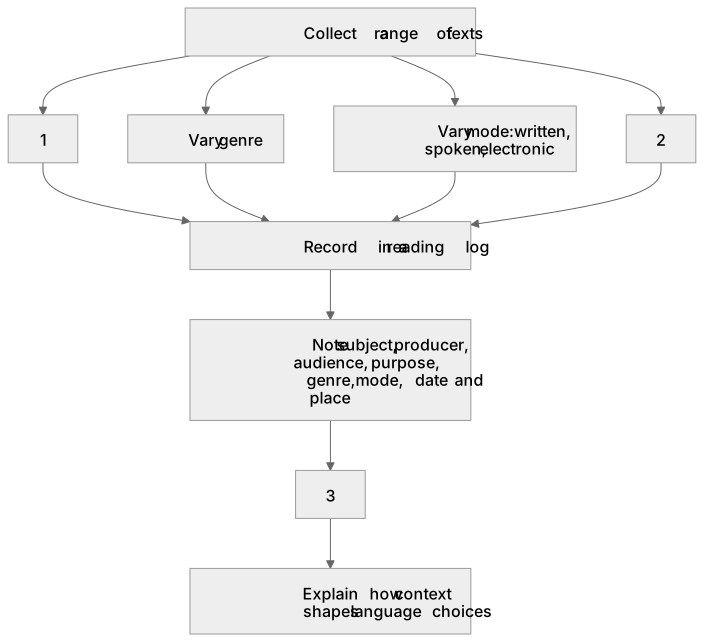
Some boxes have lost their names. Pick the right name for each number.
1Box 1
2Box 2
3Box 3
There is more to this lesson
The full lesson goes on to check your understanding and help you earn the marks. Create a free account to carry on, with your progress saved.
A week of Premium from your first lesson · Then the free plan continues · No card, no charge
Test your understanding of Textual variations and representations: Students should study a range of texts about various subjects, from various writers and speakers, for various audiences and purposes, in a variety of genres, using a variety of modes (written, spoken, electronic), from different times and places (global, national, regional).
Active recall beats re-reading. Take an instant quiz now to test what you’ve learned and lock it into long-term memory.
A week of Premium from your first lesson · Then the free plan continues · No card, no charge