AQA · A-Level · English Literature
Course version: 7717 · Version from Sept 2026
The way that language is used to heighten the comedy, particularly wit and…
Full specification wording
Aspects of comedy: the way that language is used to heighten the comedy, particularly wit and linguistic play
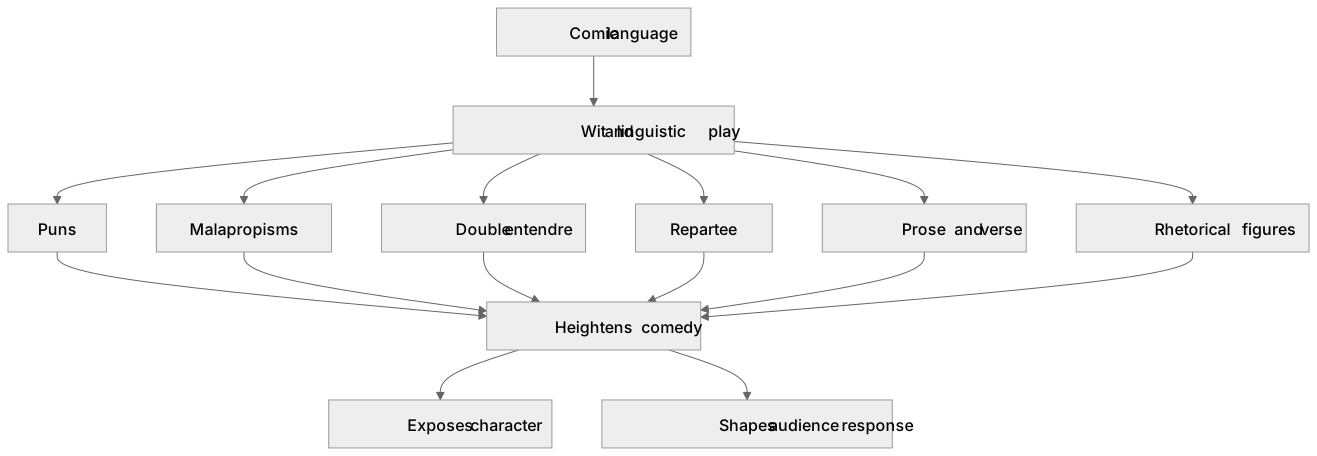
Comic language works through wit, wordplay and stylistic contrast.
Checked against the AQA 7717 specification (opens in a new tab) on .
- Point 16 of 18
- 3 key terms
Study notes
From the checked teaching notes for this specification point.
The idea
Comic language works through wit, wordplay and stylistic contrast. Wit can be verbal fencing, as in Benedick and Beatrice's exchanges in Much Ado About Nothing, where rapid stichomythia and punning display intelligence and attraction. Linguistic play also includes deliberate misrule of language by foolish characters, such as Dogberry's malapropisms, which satirise pretension. Analyse diction, syntax, rhythm and register, and explain how each choice shapes tone and audience response. Consider performance: timing, stress and delivery turn written wordplay into stage comedy, so comment on how actors might exploit pauses, emphasis and pace.
What earns the marks
- Identifies specific linguistic devices such as pun, malapropism, double entendre, repartee, antithesis and hyperbole, with accurate quotation.
- Explains how diction, syntax and register create comic effects, for example through incongruity, exaggeration or bawdy ambiguity.
- Analyses how prose and verse are contrasted to signal social status, emotional state or comic disorder.
- Discusses how sound patterns, rhythm and stichomythia shape pace and wit in performance.
- Connects linguistic play to characterisation, theme and satire rather than treating jokes as isolated decoration.
- Comments on how an audience or reader responds, including the role of shared knowledge and dramatic irony.
Common mistakes and how to put them right
Labelling a device without explaining its effect.
Put it right: Link the technique to the laughter or meaning it creates.
Assuming all wordplay is purely humorous.
Put it right: Consider how wit can also wound, expose power or convey serious themes.
Quoting long speeches without close analysis.
Put it right: Select a short phrase and examine individual word choices and sounds.
Exam tips
- Choose two or three short, rich quotations and analyse them in depth rather than listing many undeveloped examples.
- Use precise linguistic terminology, but always follow it with a comment on effect and audience response.
- Where relevant, comment on performance choices such as pause, stress or pace to show awareness of comedy as drama.
Try the lesson
The start of the Aspects of comedy: the way that language is used to heighten the comedy, particularly wit and linguistic play lesson, made from checked teaching notes for this specification point.
Have a go first
In a comedy, a servant says to his master, 'You are the sun of my world, sir — though the sun has never asked me to polish its shoes.' Which feature of language most clearly heightens the comedy here?
Listen
Comic language works through wit, wordplay and stylistic contrast. Wit can be verbal fencing, as in Benedick and Beatrice's exchanges in Much Ado About Nothing, where rapid stichomythia and punning display intelligence and attraction. Linguistic play also includes deliberate misrule of language by foolish characters, such as Dogberry's malapropisms, which satirise pretension. Analyse diction, syntax, rhythm and register, and explain how each choice shapes tone and audience response. Consider performance: timing, stress and delivery turn written wordplay into stage comedy, so comment on how actors might exploit pauses, emphasis and pace. A strong answer earns marks for these points. Identifies specific linguistic devices such as pun, malapropism, double entendre, repartee, antithesis and hyperbole, with accurate quotation. Explains how diction, syntax and register create comic effects, for example through incongruity, exaggeration or bawdy ambiguity. Analyses how prose and verse are contrasted to signal social status, emotional state or comic disorder. Discusses how sound patterns, rhythm and stichomythia shape pace and wit in performance. A common slip: Labelling a device without explaining its effect. Instead, link the technique to the laughter or meaning it creates. Exam tip: Choose two or three short, rich quotations and analyse them in depth rather than listing many undeveloped examples.
See it
Key words
Say what each word means before you turn the card.
Wit
Try answering aloud or in your head before turning the card.
Linguistic play
Try answering aloud or in your head before turning the card.
Stichomythia
Try answering aloud or in your head before turning the card.
See every definition
- Wit
- Language used to heighten comedy, often as verbal fencing that displays intelligence and attraction.
- Linguistic play
- Deliberate play with language, including puns, malapropisms, double entendre and repartee, used to create laughter and expose character.
- Stichomythia
- Rapid exchange that shapes pace and wit in performance.
Label the diagram
Some boxes have lost their names. Pick the right name for each number.
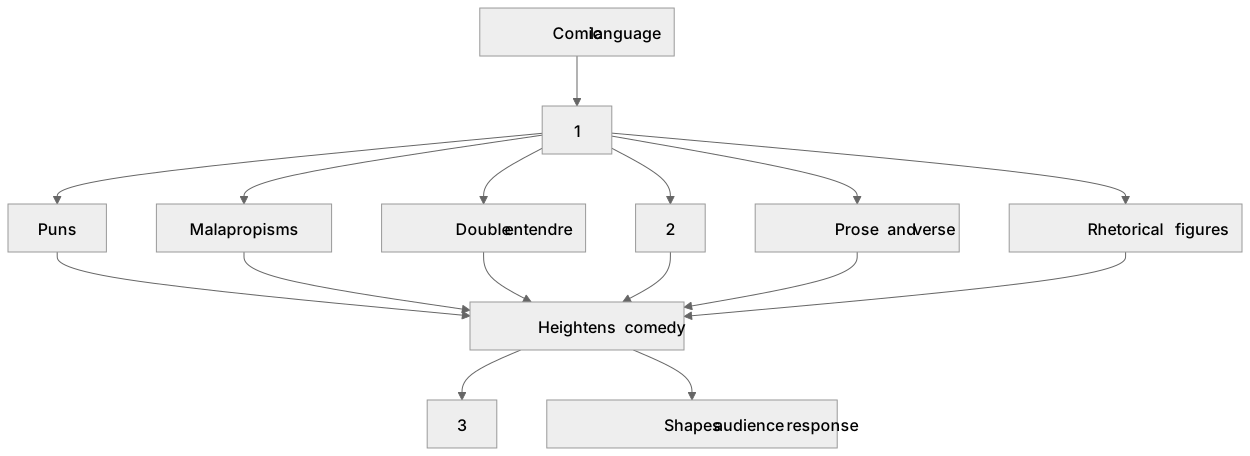
1Box 1
2Box 2
3Box 3
There is more to this lesson
The full lesson goes on to check your understanding and help you earn the marks. Create a free account to carry on, with your progress saved.
A week of Premium from your first lesson · Then the free plan continues · No card, no charge
Test your understanding of Aspects of comedy: the way that language is used to heighten the comedy, particularly wit and linguistic play
Active recall beats re-reading. Take an instant quiz now to test what you’ve learned and lock it into long-term memory.
A week of Premium from your first lesson · Then the free plan continues · No card, no charge