AQA · A-Level · English Literature
Course version: 7717 · Version from Sept 2026
Drama and further texts: Thomas Hardy: Tess of the D’Urbervilles (Pre-1900)
Full specification wording
Aspects of tragedy - Set texts: Drama and further texts: Thomas Hardy: Tess of the D’Urbervilles (Pre-1900)
Tess of the D’Urbervilles is a pre-1900 tragedy that follows Tess Durbeyfield from rural innocence to social condemnation and death.
Checked against the AQA 7717 specification (opens in a new tab) on .
- Point 2 of 6
- 3 key terms
Study notes
From the checked teaching notes for this specification point.
The idea
Tess of the D’Urbervilles is a pre-1900 tragedy that follows Tess Durbeyfield from rural innocence to social condemnation and death. Key episodes—the death of Prince, the seduction or rape in the Chase, the loss of Angel’s love, the murder of Alec, and the arrest at Stonehenge—should be examined for their tragic patterning. Hardy’s use of pastoral, classical allusion, and biblical language deepens the sense of a fallen world. When writing, track motifs such as blood, birds, and the colour red, and evaluate how Hardy makes Tess both a victim and an agent. Assessment rewards a coherent case about tragedy supported by close analysis of language, form and structure.
What earns the marks
- Analyse how Hardy’s narrator positions the reader to sympathise with Tess while also exposing her as a subject of social judgement, for example through direct address and ironic commentary.
- Examine how setting and season embody tragic trajectory, such as the fertile Vale of Blackmoor, the bleak Flintcomb-Ash, and the pagan resonance of Stonehenge.
- Explore how Hardy uses fate, coincidence and omens—the d’Urberville coach, the letter under the carpet, the death of Prince—to create a sense of inevitability.
- Consider how Victorian gender ideology and sexual double standards drive the tragedy, particularly the contrast between Tess’s punishment and Angel’s forgiveness.
- Evaluate how classical and biblical allusion frames Tess as a tragic heroine, for example references to Ceres, Artemis and the Fall.
- Analyse how language and imagery—blood, birds, red, white—create patterns of innocence, violation and sacrifice.
Common mistakes and how to put them right
Describing Tess only as a passive victim and ignoring her moments of agency and defiance.
Put it right: Analyse how Hardy presents her choices, such as refusing to be a victim at Flintcomb-Ash or killing Alec.
Treating the pre-1900 context as a separate paragraph about Victorian morality.
Put it right: Weave contextual understanding into analysis of character, plot and language.
Ignoring the narrator’s role and writing as if events speak for themselves.
Put it right: Examine Hardy’s narrative voice, its sympathies and its ironies.
Exam tips
- Select episodes that show change across the novel, such as the Chase, Talbothays, Flintcomb-Ash and Stonehenge, to demonstrate structural awareness.
- Use short embedded quotations and analyse Hardy’s diction, syntax and imagery rather than paraphrasing.
- Link every point to the tragic focus of the question, showing how Hardy creates pity, fear or a sense of waste.
Try the lesson
The start of the Aspects of tragedy - Set texts: Drama and further texts: Thomas Hardy: Tess of the D’Urbervilles (Pre-1900) lesson, made from checked teaching notes for this specification point.
Have a go first
In Tess of the D'Urbervilles, what is the name of the village where Tess's family lives at the start of the novel?
Listen
Tess of the D’Urbervilles is a pre-1900 tragedy that follows Tess Durbeyfield from rural innocence to social condemnation and death. Key episodes—the death of Prince, the seduction or rape in the Chase, the loss of Angel’s love, the murder of Alec, and the arrest at Stonehenge—should be examined for their tragic patterning. Hardy’s use of pastoral, classical allusion, and biblical language deepens the sense of a fallen world. When writing, track motifs such as blood, birds, and the colour red, and evaluate how Hardy makes Tess both a victim and an agent. Assessment rewards a coherent case about tragedy supported by close analysis of language, form and structure. A strong answer earns marks for these points. Analyse how Hardy’s narrator positions the reader to sympathise with Tess while also exposing her as a subject of social judgement, for example through direct address and ironic commentary. Examine how setting and season embody tragic trajectory, such as the fertile Vale of Blackmoor, the bleak Flintcomb-Ash, and the pagan resonance of Stonehenge. Explore how Hardy uses fate, coincidence and omens—the d’Urberville coach, the letter under the carpet, the death of Prince—to create a sense of inevitability. Consider how Victorian gender ideology and sexual double standards drive the tragedy, particularly the contrast between Tess’s punishment and Angel’s forgiveness. A common slip: Describing Tess only as a passive victim and ignoring her moments of agency and defiance. Instead, analyse how Hardy presents her choices, such as refusing to be a victim at Flintcomb-Ash or killing Alec. Exam tip: Select episodes that show change across the novel, such as the Chase, Talbothays, Flintcomb-Ash and Stonehenge, to demonstrate structural awareness.
See it
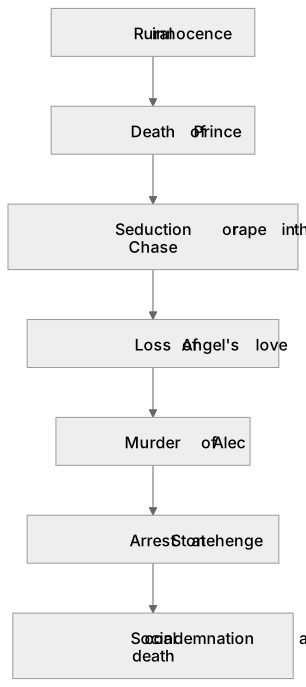
Put it in order
Put these steps in the order they happen.
- 1. Social condemnation and death
- 2. Arrest at Stonehenge
- 3. Seduction or rape in the Chase
- 4. Murder of Alec
- 5. Rural innocence
- 6. Death of Prince
- 7. Loss of Angel's love
Key words
Say what each word means before you turn the card.
Fate, chance and determinism
Try answering aloud or in your head before turning the card.
Gender, sexuality and double standards
Try answering aloud or in your head before turning the card.
Innocence, experience and sacrifice
Try answering aloud or in your head before turning the card.
See every definition
- Fate, chance and determinism
- The use of fate, coincidence and omens—the d’Urberville coach, the letter under the carpet, the death of Prince—to create a sense of inevitability.
- Gender, sexuality and double standards
- Victorian gender ideology and sexual double standards that drive the tragedy, particularly the contrast between Tess’s punishment and Angel’s forgiveness.
- Innocence, experience and sacrifice
- Patterns of innocence, violation and sacrifice created through language and imagery such as blood, birds, red and white.
Label the diagram
Some boxes have lost their names. Pick the right name for each number.
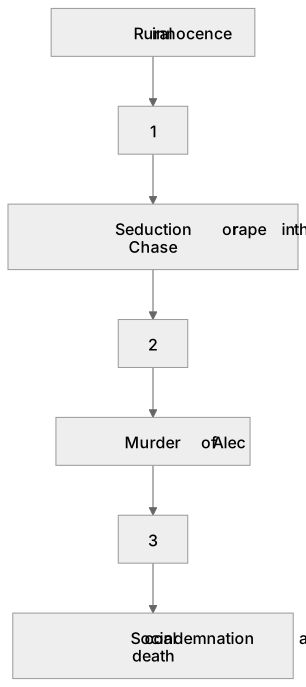
1Box 1
2Box 2
3Box 3
There is more to this lesson
The full lesson goes on to check your understanding and help you earn the marks. Create a free account to carry on, with your progress saved.
A week of Premium from your first lesson · Then the free plan continues · No card, no charge
Test your understanding of Aspects of tragedy - Set texts: Drama and further texts: Thomas Hardy: Tess of the D’Urbervilles (Pre-1900)
Active recall beats re-reading. Take an instant quiz now to test what you’ve learned and lock it into long-term memory.
A week of Premium from your first lesson · Then the free plan continues · No card, no charge