AQA · A-Level · English Literature
Course version: 7717 · Version from Sept 2026
Ultimately how the tragedy affects the audience, acting as a commentary on…
Full specification wording
Aspects of tragedy: ultimately how the tragedy affects the audience, acting as a commentary on the real world, moving the audience through pity and fear to an understanding of the human condition.
This strand asks you to treat the audience as part of the tragedy, not just the characters.
Checked against the AQA 7717 specification (opens in a new tab) on .
- Point 14 of 14
- 3 key terms
Study notes
From the checked teaching notes for this specification point.
The idea
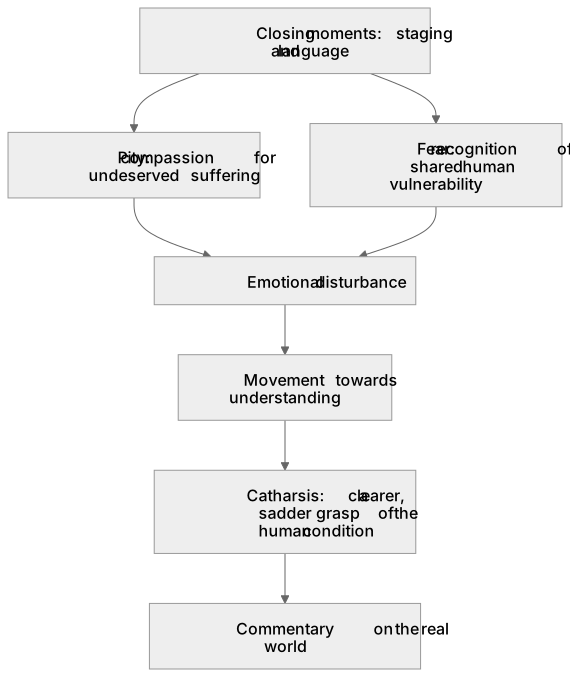
This strand asks you to treat the audience as part of the tragedy, not just the characters. Track how the ending lands: what the final suffering does to those watching, and how the play speaks about real power, grief or justice beyond the stage. Aristotle's pity and fear are useful here: pity for undeserved suffering, fear that such loss could touch us. Show the movement from emotional disturbance to insight, often called catharsis, where the audience leaves with a clearer, sadder grasp of what humans are like. Use a concrete method: choose the closing moments, note the staging and language, then explain the shift in the audience's understanding.
What earns the marks
- Explains how the tragedy's ending shapes the audience's emotional response, not only the fate of the protagonist.
- Uses pity and fear precisely, distinguishing compassion for suffering from apprehension that similar vulnerability applies to the audience.
- Traces a movement from emotional disturbance towards understanding, showing what insight is gained rather than asserting that the audience simply feels sad.
- Connects the play's concerns to the real world, for example tyranny, revenge, gender or class, showing how the tragedy comments on human experience beyond its setting.
- Supports claims with close reference to dramatic method: soliloquy, staging, imagery, structure and the order in which information reaches the audience.
- Shows awareness that different productions or readers may reach different understandings, while still arguing for a coherent reading.
Common mistakes and how to put them right
Treating pity and fear as synonyms for general sadness.
Put it right by defining pity as compassion for undeserved suffering and fear as recognition of shared human vulnerability.
Claiming the audience feels exactly what the characters feel.
Put it right by distinguishing onstage emotion from the audience's more detached, reflective response.
Asserting that the play teaches a single moral lesson.
Put it right by arguing for a complex understanding of the human condition that may include unresolved tensions.
Exam tips
- Anchor every claim about audience effect in a specific moment, quoting briefly and commenting on staging or language.
- Use the words pity, fear and understanding as analytical tools, explaining how each operates rather than listing them.
- Build an argument that moves from emotional impact to wider commentary, so the essay has direction rather than a list of effects.
Try the lesson
The start of the Aspects of tragedy: ultimately how the tragedy affects the audience, acting as a commentary on the real world, moving the audience through pity and fear to an understanding of the human condition. lesson, made from checked teaching notes for this specification point.
Have a go first
In tragic drama, which term names the audience's experience of pity and fear that leads to a deeper understanding of the human condition?
Listen
This strand asks you to treat the audience as part of the tragedy, not just the characters. Track how the ending lands: what the final suffering does to those watching, and how the play speaks about real power, grief or justice beyond the stage. Aristotle's pity and fear are useful here: pity for undeserved suffering, fear that such loss could touch us. Show the movement from emotional disturbance to insight, often called catharsis, where the audience leaves with a clearer, sadder grasp of what humans are like. Use a concrete method: choose the closing moments, note the staging and language, then explain the shift in the audience's understanding. A strong answer earns marks for these points. Explains how the tragedy's ending shapes the audience's emotional response, not only the fate of the protagonist. Uses pity and fear precisely, distinguishing compassion for suffering from apprehension that similar vulnerability applies to the audience. Traces a movement from emotional disturbance towards understanding, showing what insight is gained rather than asserting that the audience simply feels sad. Connects the play's concerns to the real world, for example tyranny, revenge, gender or class, showing how the tragedy comments on human experience beyond its setting. A common slip: Treating pity and fear as synonyms for general sadness. Instead, defining pity as compassion for undeserved suffering and fear as recognition of shared human vulnerability. Exam tip: Anchor every claim about audience effect in a specific moment, quoting briefly and commenting on staging or language.
See it
Key words
Say what each word means before you turn the card.
Catharsis
Try answering aloud or in your head before turning the card.
Fear
Try answering aloud or in your head before turning the card.
The human condition
Try answering aloud or in your head before turning the card.
See every definition
- Catharsis
- The movement from emotional disturbance to insight, where the audience leaves with a clearer, sadder grasp of what humans are like.
- Fear
- Apprehension that similar vulnerability applies to the audience, that such loss could touch us.
- The human condition
- What humans are like, grasped with a clearer, sadder understanding as the audience leaves.
Label the diagram
Some boxes have lost their names. Pick the right name for each number.
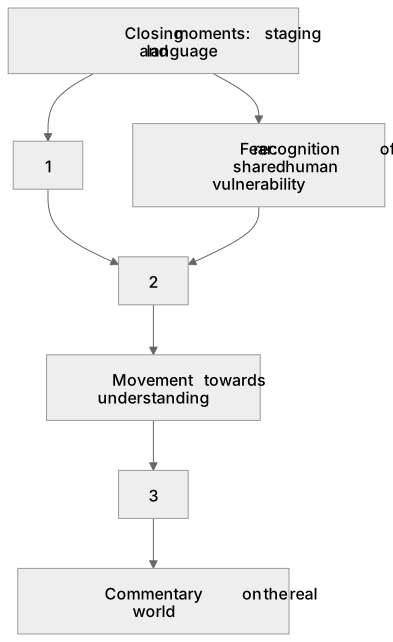
1Box 1
2Box 2
3Box 3
There is more to this lesson
The full lesson goes on to check your understanding and help you earn the marks. Create a free account to carry on, with your progress saved.
A week of Premium from your first lesson · Then the free plan continues · No card, no charge
Test your understanding of Aspects of tragedy: ultimately how the tragedy affects the audience, acting as a commentary on the real world, moving the audience through pity and fear to an understanding of the human condition.
Active recall beats re-reading. Take an instant quiz now to test what you’ve learned and lock it into long-term memory.
A week of Premium from your first lesson · Then the free plan continues · No card, no charge