AQA · A-Level · English Literature
Course version: 7717 · Version from Sept 2026
Aspects of tragedy: the way that language is used to heighten the tragedy
Tragic language works through patterns of imagery, diction, rhythm and figurative contrast to intensify emotional and moral stakes.
Checked against the AQA 7717 specification (opens in a new tab) on .
- Point 13 of 14
Study notes
From the checked teaching notes for this specification point.
The idea
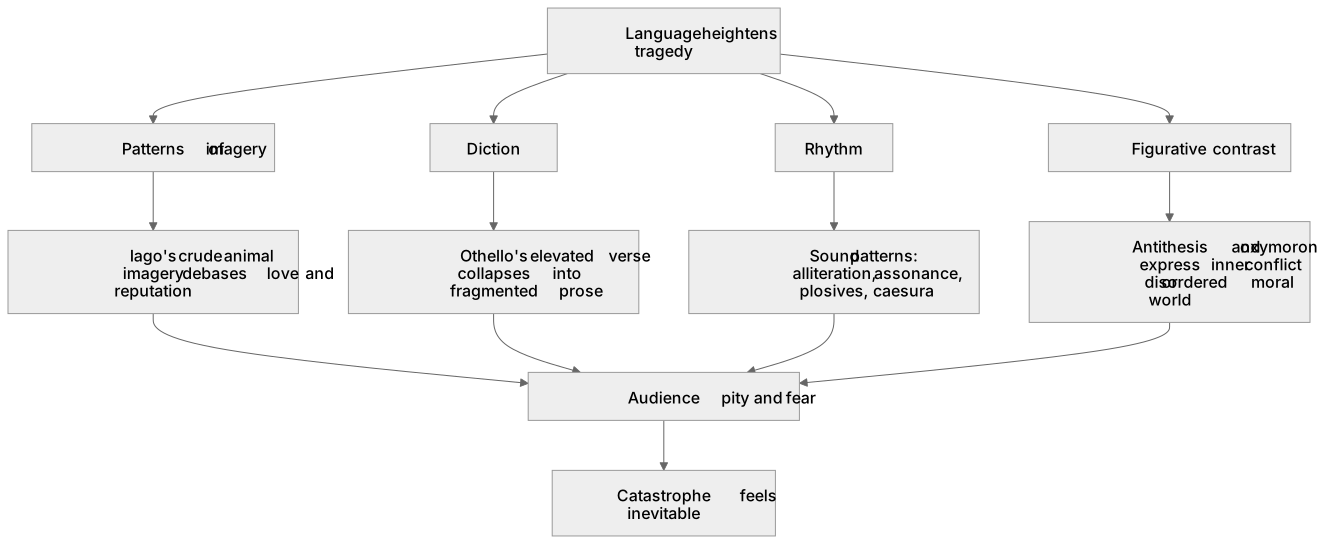
Tragic language works through patterns of imagery, diction, rhythm and figurative contrast to intensify emotional and moral stakes. In Othello, Othello's elevated verse collapses into fragmented prose as jealousy takes hold, while Iago's crude animal imagery debases love and reputation. Consider metaphor, antithesis, repetition, caesura and register shift. Explain the effect on audience pity and fear, linking each device to the tragic trajectory rather than listing features. Precise quotation and close reading of sound and syntax are essential.
What earns the marks
- Analyses how figurative language such as metaphor, simile and personification creates tragic intensity and reveals character flaw.
- Explains how shifts in register, for example from verse to prose, mark a character's psychological or moral decline.
- Examines sound patterns including alliteration, assonance, plosives and caesura, and relates them to emotional heightening.
- Discusses how antithesis and oxymoron express inner conflict or a disordered moral world.
- Links linguistic choices to the audience's experience of pity, fear and tragic inevitability rather than treating devices as decoration.
Common mistakes and how to put them right
Listing language devices without explaining their tragic effect.
Put it right: Connect each device to tension, character or theme.
Quoting long passages without close analysis of individual words.
Put it right: Select short, precise quotations and unpack connotations.
Assuming that all heightened language is automatically tragic.
Put it right: Distinguish between decorative eloquence and language that actively drives the tragic action.
Exam tips
- Choose quotations that contain a clear linguistic feature and a clear tragic effect, so analysis stays focused.
- Use terminology such as caesura, plosive and antithesis only when it sharpens your point about heightened tragedy.
- Track a single image pattern across the play to show how language accumulates tragic force.
Try the lesson
The start of the Aspects of tragedy: the way that language is used to heighten the tragedy lesson, made from checked teaching notes for this specification point.
Have a go first
In a tragedy, how does a protagonist's use of elevated, poetic language during their final moments typically heighten the tragic effect?
Listen
Tragic language works through patterns of imagery, diction, rhythm and figurative contrast to intensify emotional and moral stakes. In Othello, Othello's elevated verse collapses into fragmented prose as jealousy takes hold, while Iago's crude animal imagery debases love and reputation. Consider metaphor, antithesis, repetition, caesura and register shift. Explain the effect on audience pity and fear, linking each device to the tragic trajectory rather than listing features. Precise quotation and close reading of sound and syntax are essential. A strong answer earns marks for these points. Analyses how figurative language such as metaphor, simile and personification creates tragic intensity and reveals character flaw. Explains how shifts in register, for example from verse to prose, mark a character's psychological or moral decline. Examines sound patterns including alliteration, assonance, plosives and caesura, and relates them to emotional heightening. Discusses how antithesis and oxymoron express inner conflict or a disordered moral world. A common slip: Listing language devices without explaining their tragic effect. Instead, connect each device to tension, character or theme. Exam tip: Choose quotations that contain a clear linguistic feature and a clear tragic effect, so analysis stays focused.
See it
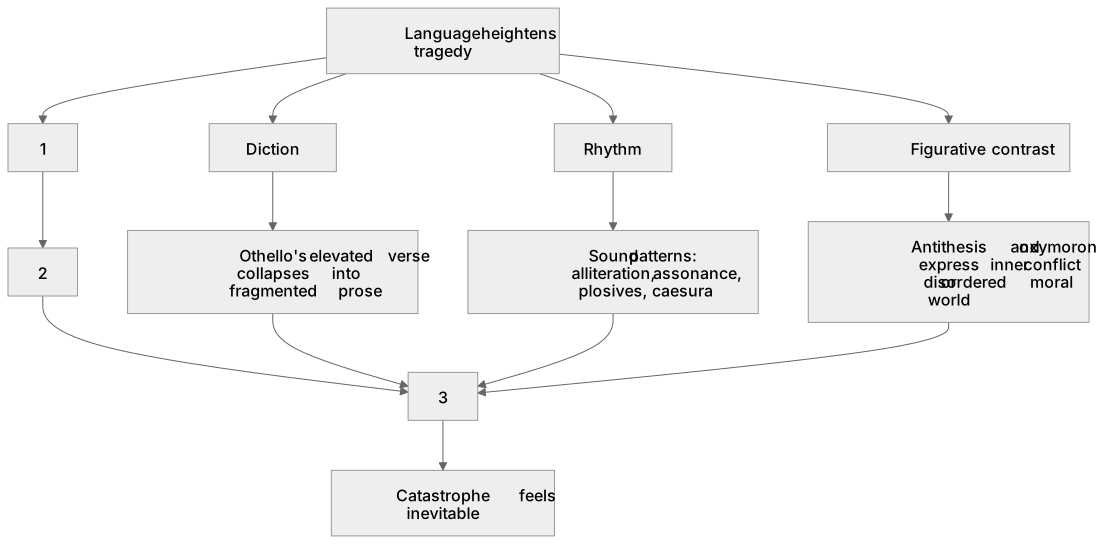
Label the diagram
Some boxes have lost their names. Pick the right name for each number.
1Box 1
2Box 2
3Box 3
There is more to this lesson
The full lesson goes on to check your understanding and help you earn the marks. Create a free account to carry on, with your progress saved.
A week of Premium from your first lesson · Then the free plan continues · No card, no charge
Test your understanding of Aspects of tragedy: the way that language is used to heighten the tragedy
Active recall beats re-reading. Take an instant quiz now to test what you’ve learned and lock it into long-term memory.
A week of Premium from your first lesson · Then the free plan continues · No card, no charge