AQA · A-Level · English Literature
Course version: 7717 · Version from Sept 2026
However, in all the texts a significant crime drives the narrative and the…
Full specification wording
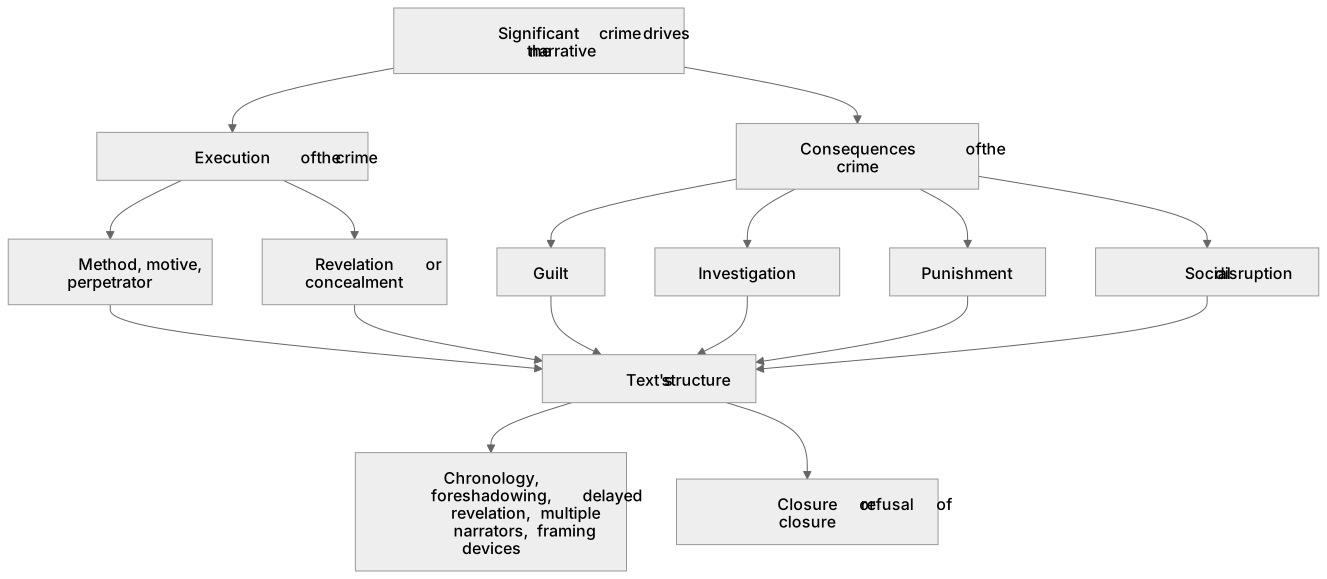
Elements of crime writing: However, in all the texts a significant crime drives the narrative and the execution and consequences of the crime are fundamentally important to the way the text is structured.
This statement identifies the unifying thread of the crime writing option: whatever the genre or period, a significant crime drives the narrative, and how that crime is carried out and what…
Checked against the AQA 7717 specification (opens in a new tab) on .
- Point 2 of 21
- 4 key terms
Study notes
From the checked teaching notes for this specification point.
The idea
This statement identifies the unifying thread of the crime writing option: whatever the genre or period, a significant crime drives the narrative, and how that crime is carried out and what follows from it shape the text's structure. In Macbeth, Duncan's murder sets off the action and the play's pattern of escalating violence and guilt. In The Murder of Roger Ackroyd, the killing and its investigation organise the chapters and the reader's experience. In Atonement, a false accusation and its consequences structure the whole novel. When you analyse structure, ask where the crime occurs, how the text withholds or reveals it, how investigation or concealment orders events, and how punishment, guilt or resolution close or refuse closure.
What earns the marks
- Identifies a significant crime in each text and explains how it generates the narrative rather than merely appearing in it.
- Analyses the execution of the crime, including method, motive, perpetrator and the text's handling of revelation or concealment.
- Explains how consequences such as guilt, investigation, punishment or social disruption shape the text's structure.
- Discusses structural features such as chronology, foreshadowing, delayed revelation, multiple narrators or framing devices.
- Connects structure to meaning, showing how the arrangement of events influences the reader's judgement and emotional response.
- Uses precise textual evidence to support claims about where and how the crime functions in the whole text.
Common mistakes and how to put them right
Treating the crime as mere plot background.
Put it right by showing how the crime organises events, perspectives and pacing.
Describing what happens without analysing structure.
Put it right by commenting on order, delay, repetition, narration and closure.
Assuming every text follows the same crime-to-detection-to-punishment pattern.
Put it right by identifying each text's own pattern, including texts that deny resolution.
Confusing the execution of the crime with its consequences.
Put it right by separating the act itself from the guilt, investigation and punishment that follow.
Exam tips
- Make structure your explicit focus: use terms such as foreshadowing, delayed revelation, framing and closure where they genuinely fit.
- Choose a small number of well-chosen moments and analyse them closely rather than listing many events.
- Link each structural observation to the question and to the text's wider concerns, such as guilt, justice or truth.
- When comparing texts, organise your response around similarities and differences in how crime drives structure, not around plot summaries.
Try the lesson
The start of the Elements of crime writing: However, in all the texts a significant crime drives the narrative and the execution and consequences of the crime are fundamentally important to the way the text is structured. lesson, made from checked teaching notes for this specification point.
Have a go first
In crime writing, what is the primary structural function of a significant crime within the narrative?
Listen
This statement identifies the unifying thread of the crime writing option: whatever the genre or period, a significant crime drives the narrative, and how that crime is carried out and what follows from it shape the text's structure. In Macbeth, Duncan's murder sets off the action and the play's pattern of escalating violence and guilt. In The Murder of Roger Ackroyd, the killing and its investigation organise the chapters and the reader's experience. In Atonement, a false accusation and its consequences structure the whole novel. When you analyse structure, ask where the crime occurs, how the text withholds or reveals it, how investigation or concealment orders events, and how punishment, guilt or resolution close or refuse closure. A strong answer earns marks for these points. Identifies a significant crime in each text and explains how it generates the narrative rather than merely appearing in it. Analyses the execution of the crime, including method, motive, perpetrator and the text's handling of revelation or concealment. Explains how consequences such as guilt, investigation, punishment or social disruption shape the text's structure. Discusses structural features such as chronology, foreshadowing, delayed revelation, multiple narrators or framing devices. A common slip: Treating the crime as mere plot background. Instead, showing how the crime organises events, perspectives and pacing. Exam tip: Make structure your explicit focus: use terms such as foreshadowing, delayed revelation, framing and closure where they genuinely fit.
See it
Key words
Say what each word means before you turn the card.
Crime as narrative driver
Try answering aloud or in your head before turning the card.
Execution and consequence
Try answering aloud or in your head before turning the card.
Structure and chronology
Try answering aloud or in your head before turning the card.
Guilt, punishment and justice
Try answering aloud or in your head before turning the card.
See every definition
- Crime as narrative driver
- A significant crime generates the narrative rather than merely appearing in it, organising events, perspectives and pacing.
- Execution and consequence
- The act itself is separated from the guilt, investigation and punishment that follow it, and both shape the text's structure.
- Structure and chronology
- Structural features such as chronology, foreshadowing, delayed revelation, multiple narrators or framing devices arrange events and influence the reader's judgement and emotional response.
- Guilt, punishment and justice
- Consequences such as guilt, investigation, punishment or social disruption shape the text's structure, and resolution may close or refuse closure.
Label the diagram
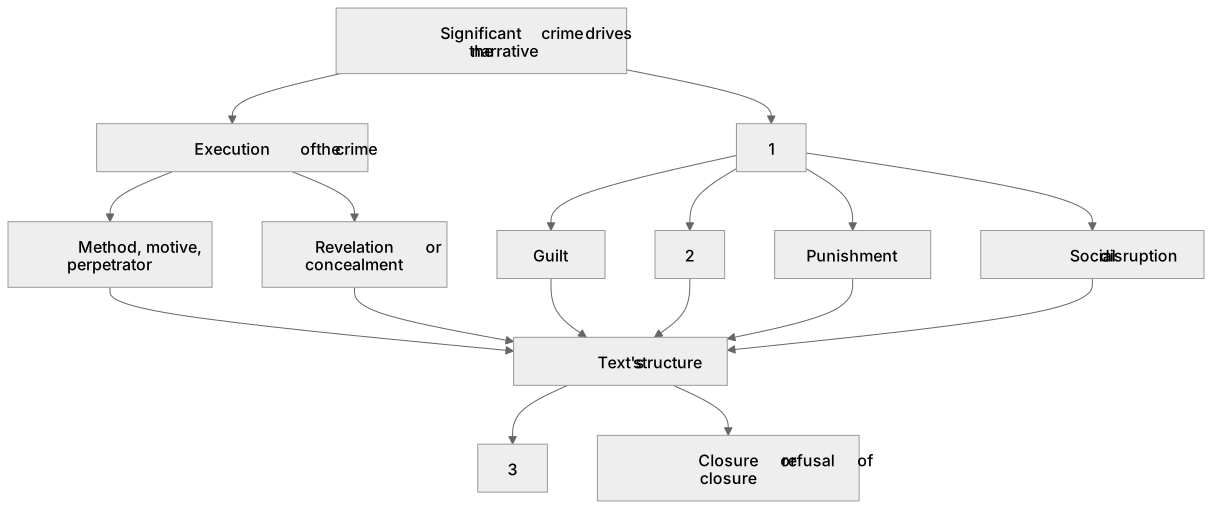
Some boxes have lost their names. Pick the right name for each number.
1Box 1
2Box 2
3Box 3
There is more to this lesson
The full lesson goes on to check your understanding and help you earn the marks. Create a free account to carry on, with your progress saved.
A week of Premium from your first lesson · Then the free plan continues · No card, no charge
Test your understanding of Elements of crime writing: However, in all the texts a significant crime drives the narrative and the execution and consequences of the crime are fundamentally important to the way the text is structured.
Active recall beats re-reading. Take an instant quiz now to test what you’ve learned and lock it into long-term memory.
A week of Premium from your first lesson · Then the free plan continues · No card, no charge