AQA · A-Level · English Literature
Course version: 7717 · Version from Sept 2026
The detection of the criminal and the investigation that leads to his or…
Full specification wording
Elements of crime writing: the detection of the criminal and the investigation that leads to his or her capture or punishment
Detection turns disorder into narrative order.
Checked against the AQA 7717 specification (opens in a new tab) on .
- Point 9 of 21
Study notes
From the checked teaching notes for this specification point.
The idea
Detection turns disorder into narrative order. An investigation may be conducted by a professional detective, an amateur, a police officer or an ordinary person caught up in events. The process usually involves gathering clues, interviewing suspects, interpreting evidence and eliminating possibilities. Capture may be literal arrest, or it may be moral exposure, social ruin or death. Punishment may be formal, through law and courts, or informal, through guilt, revenge or exclusion. Writers shape this process through narrative structure: withholding information, using red herrings, controlling the reader's knowledge and timing revelations. When analysing, ask who investigates, what methods they use, what obstacles they face, and whether the ending restores order or exposes the failures of justice. Consider how the resolution affects the reader's sense of closure or unease.
What earns the marks
- Identify who conducts the investigation and explain what skills, resources or personal qualities enable or hinder the detection.
- Analyse the methods of detection, such as clue-gathering, interrogation, surveillance or deduction, and comment on how the writer presents them.
- Examine how narrative structure controls information, for example through suspense, red herrings, withheld evidence or shifts in perspective.
- Explain how the criminal is captured or punished, and evaluate whether the resolution restores order, delivers justice or leaves ambiguity.
- Consider the role of context, including contemporary policing, class, gender or legal systems, in shaping the investigation and its outcome.
- Compare investigations across texts, assessing how different writers use detection to explore morality, power or social critique.
Common mistakes and how to put them right
Describing the plot of the investigation without analysing how the writer constructs suspense or withholds information.
Put it right by focusing on narrative method and reader effect.
Assuming capture always means formal arrest.
Put it right by recognising moral exposure, social disgrace or death as alternative forms of resolution.
Ignoring the ending's ambiguity.
Put it right by evaluating whether justice is fully achieved and what the uncertainty suggests about the text's concerns.
Exam tips
- Organise your response around the stages of detection, such as discovery, investigation and resolution, to show structural awareness.
- Use precise terminology for narrative technique, including foreshadowing, red herring and delayed revelation, and link each to effect.
- Discuss the ending in detail, weighing whether punishment feels satisfying, troubling or incomplete, and explain why.
Try the lesson
The start of the Elements of crime writing: the detection of the criminal and the investigation that leads to his or her capture or punishment lesson, made from checked teaching notes for this specification point.
Have a go first
In crime writing, which term describes the process by which a criminal is discovered and brought to justice?
Listen
Detection turns disorder into narrative order. An investigation may be conducted by a professional detective, an amateur, a police officer or an ordinary person caught up in events. The process usually involves gathering clues, interviewing suspects, interpreting evidence and eliminating possibilities. Capture may be literal arrest, or it may be moral exposure, social ruin or death. Punishment may be formal, through law and courts, or informal, through guilt, revenge or exclusion. Writers shape this process through narrative structure: withholding information, using red herrings, controlling the reader's knowledge and timing revelations. When analysing, ask who investigates, what methods they use, what obstacles they face, and whether the ending restores order or exposes the failures of justice. Consider how the resolution affects the reader's sense of closure or unease. A strong answer earns marks for these points. Identify who conducts the investigation and explain what skills, resources or personal qualities enable or hinder the detection. Analyse the methods of detection, such as clue-gathering, interrogation, surveillance or deduction, and comment on how the writer presents them. Examine how narrative structure controls information, for example through suspense, red herrings, withheld evidence or shifts in perspective. Explain how the criminal is captured or punished, and evaluate whether the resolution restores order, delivers justice or leaves ambiguity. A common slip: Describing the plot of the investigation without analysing how the writer constructs suspense or withholds information. Instead, focusing on narrative method and reader effect. Exam tip: Organise your response around the stages of detection, such as discovery, investigation and resolution, to show structural awareness.
See it
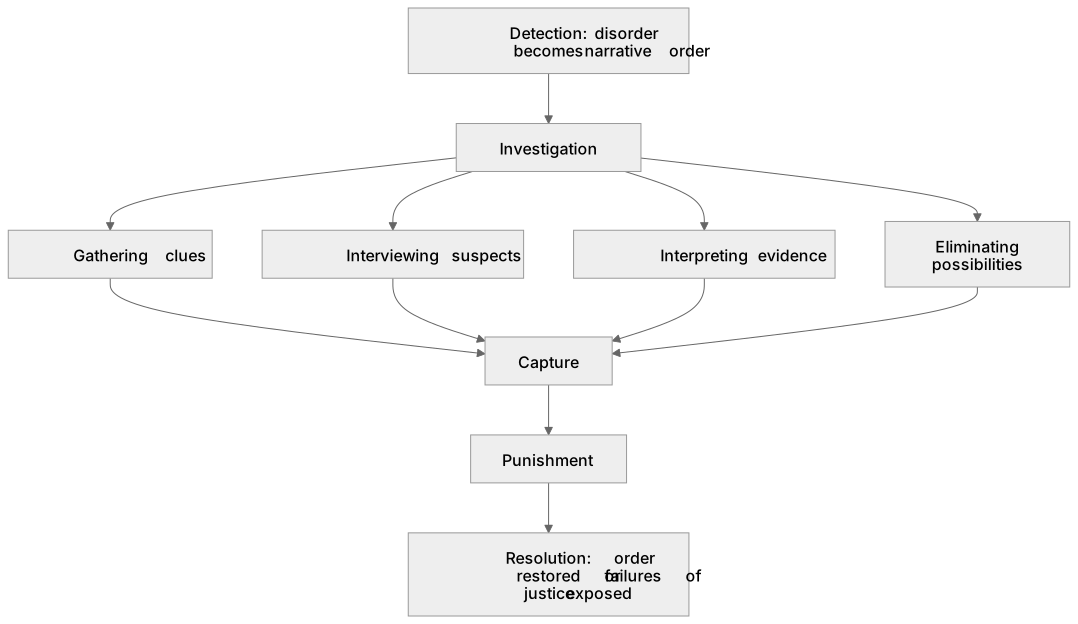
Label the diagram
Some boxes have lost their names. Pick the right name for each number.
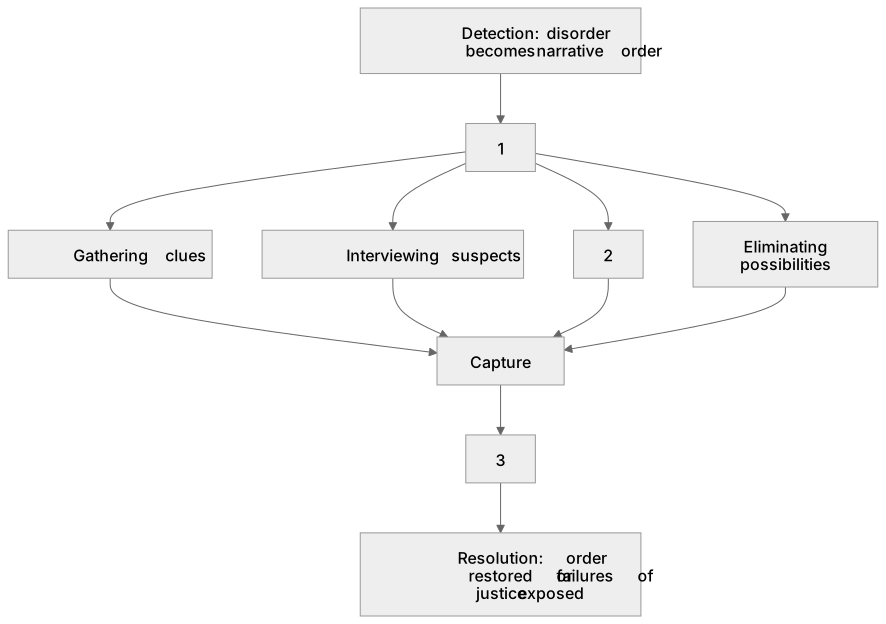
1Box 1
2Box 2
3Box 3
There is more to this lesson
The full lesson goes on to check your understanding and help you earn the marks. Create a free account to carry on, with your progress saved.
A week of Premium from your first lesson · Then the free plan continues · No card, no charge
Test your understanding of Elements of crime writing: the detection of the criminal and the investigation that leads to his or her capture or punishment
Active recall beats re-reading. Take an instant quiz now to test what you’ve learned and lock it into long-term memory.
A week of Premium from your first lesson · Then the free plan continues · No card, no charge