AQA · A-Level · English Literature
Course version: 7717 · Version from Sept 2026
The settings that are created as backdrops for criminal action and for the…
Full specification wording
Elements of crime writing: the settings that are created as backdrops for criminal action and for the pursuit of the perpetrators of crime: both places and times will be significant here
Setting in crime writing is never neutral scenery: it frames the crime and shapes the pursuit of those who commit it.
Checked against the AQA 7717 specification (opens in a new tab) on .
- Point 6 of 21
Study notes
From the checked teaching notes for this specification point.
The idea
Setting in crime writing is never neutral scenery: it frames the crime and shapes the pursuit of those who commit it. Study both place and time. Place may be enclosed (a locked room, a country house, a foggy Victorian street) or open (a moor, a motorway, a city at night); each controls who can see, hear, escape or intervene. Time matters too: historical period, season, hour of day and chronology. A crime at midnight in a storm limits witnesses; a crime in a respectable drawing room exposes reputations. Pursuit is equally spatial and temporal: detectives trace routes, revisit scenes, race against deadlines. Ask how setting creates atmosphere, conceals or reveals evidence, embodies social values and pressures characters. Compare texts by noting recurring patterns, such as the city as corrupting maze or the countryside as falsely idyllic.
What earns the marks
- Explains how a specific place controls action: entrances, exits, sightlines, isolation or crowding shape what criminals and pursuers can do.
- Analyses how time operates: period, season, time of day, pace and chronology create tension, opportunity or delay in investigation.
- Shows how setting generates atmosphere and meaning, for example fog obscuring truth or a wealthy house embodying respectable hypocrisy.
- Connects setting to pursuit: routes, revisited scenes, surveillance and deadlines structure the hunt for perpetrators.
- Uses precise textual detail and quotation to support claims about place and time rather than generalised description.
- Compares texts, noting how different settings produce different kinds of crime narrative and different moral perspectives.
Common mistakes and how to put them right
Describing setting without linking it to crime or pursuit.
Put it right by asking how place and time enable, conceal or expose criminal action.
Treating time as mere background.
Put it right by analysing chronology, deadlines, time of day and period as active narrative forces.
Ignoring the pursuit half of the statement.
Put it right by tracking how investigators move through and use the same settings.
Offering plot summary instead of analysis.
Put it right by commenting on effects, patterns and significance.
Exam tips
- Plan responses around both place and time, ensuring each paragraph addresses criminal action or pursuit.
- Embed short quotations that name specific settings, then analyse the effect of those details.
- When comparing texts, use connectives that signal similarity and difference in how settings function.
- Keep the focus on crime writing conventions, such as detection, concealment and transgression, rather than treating setting as decoration.
Try the lesson
The start of the Elements of crime writing: the settings that are created as backdrops for criminal action and for the pursuit of the perpetrators of crime: both places and times will be significant here lesson, made from checked teaching notes for this specification point.
Have a go first
A crime novel sets its murder in a remote country house cut off by snow, and its detective's investigation in the same house over one weekend. Which statement best explains why the writer has made both the place and the time significant?
Listen
Setting in crime writing is never neutral scenery: it frames the crime and shapes the pursuit of those who commit it. Study both place and time. Place may be enclosed (a locked room, a country house, a foggy Victorian street) or open (a moor, a motorway, a city at night); each controls who can see, hear, escape or intervene. Time matters too: historical period, season, hour of day and chronology. A crime at midnight in a storm limits witnesses; a crime in a respectable drawing room exposes reputations. Pursuit is equally spatial and temporal: detectives trace routes, revisit scenes, race against deadlines. Ask how setting creates atmosphere, conceals or reveals evidence, embodies social values and pressures characters. Compare texts by noting recurring patterns, such as the city as corrupting maze or the countryside as falsely idyllic. A strong answer earns marks for these points. Explains how a specific place controls action: entrances, exits, sightlines, isolation or crowding shape what criminals and pursuers can do. Analyses how time operates: period, season, time of day, pace and chronology create tension, opportunity or delay in investigation. Shows how setting generates atmosphere and meaning, for example fog obscuring truth or a wealthy house embodying respectable hypocrisy. Connects setting to pursuit: routes, revisited scenes, surveillance and deadlines structure the hunt for perpetrators. A common slip: Describing setting without linking it to crime or pursuit. Instead, asking how place and time enable, conceal or expose criminal action. Exam tip: Plan responses around both place and time, ensuring each paragraph addresses criminal action or pursuit.
See it
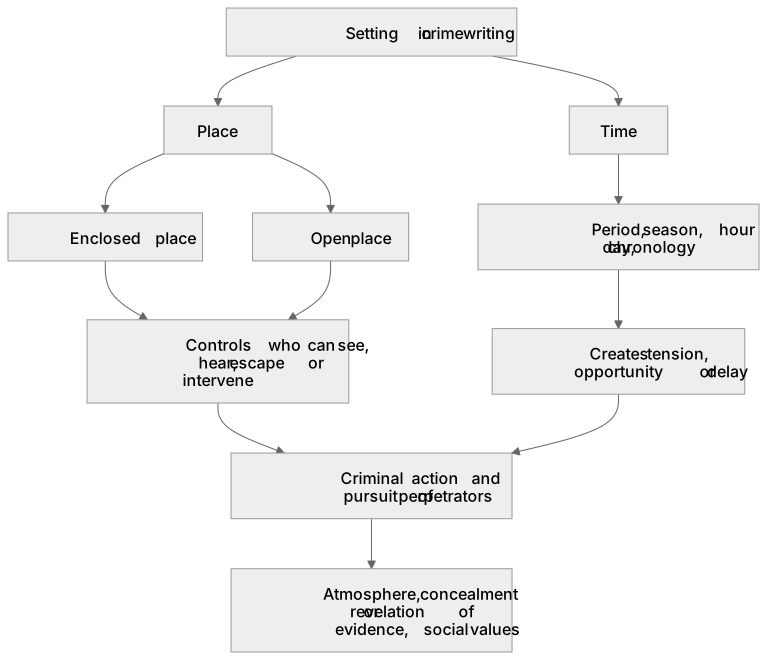
Label the diagram
Some boxes have lost their names. Pick the right name for each number.
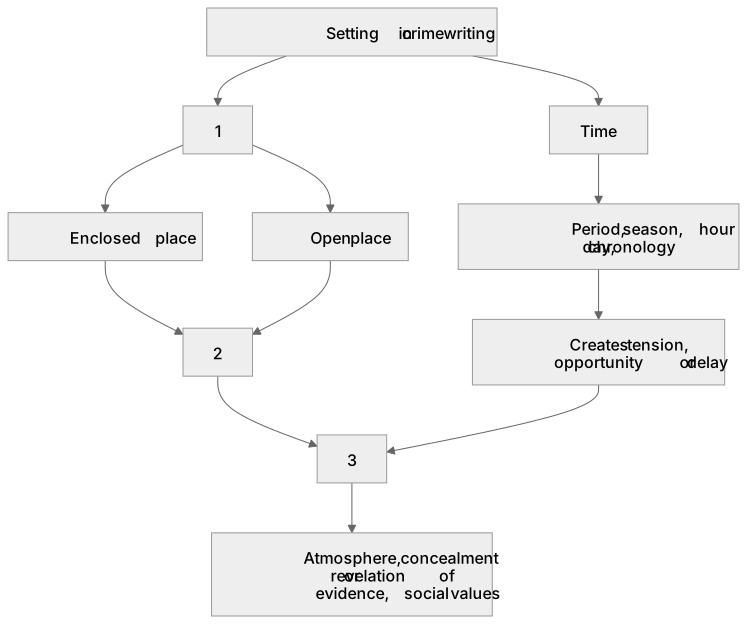
1Box 1
2Box 2
3Box 3
There is more to this lesson
The full lesson goes on to check your understanding and help you earn the marks. Create a free account to carry on, with your progress saved.
A week of Premium from your first lesson · Then the free plan continues · No card, no charge
Test your understanding of Elements of crime writing: the settings that are created as backdrops for criminal action and for the pursuit of the perpetrators of crime: both places and times will be significant here
Active recall beats re-reading. Take an instant quiz now to test what you’ve learned and lock it into long-term memory.
A week of Premium from your first lesson · Then the free plan continues · No card, no charge