AQA · A-Level · English Literature
Course version: 7717 · Version from Sept 2026
Although it could be claimed that all texts are political, what defines…
Full specification wording
Elements of political and social protest writing: Although it could be claimed that all texts are political, what defines the texts here is that they have issues of power and powerlessness at their core, with political and social protest issues central to each text’s structure.
This statement explains what unites the set texts in the political and social protest writing unit.
Checked against the AQA 7717 specification (opens in a new tab) on .
- Point 1 of 17
- 4 key terms
Study notes
From the checked teaching notes for this specification point.
The idea
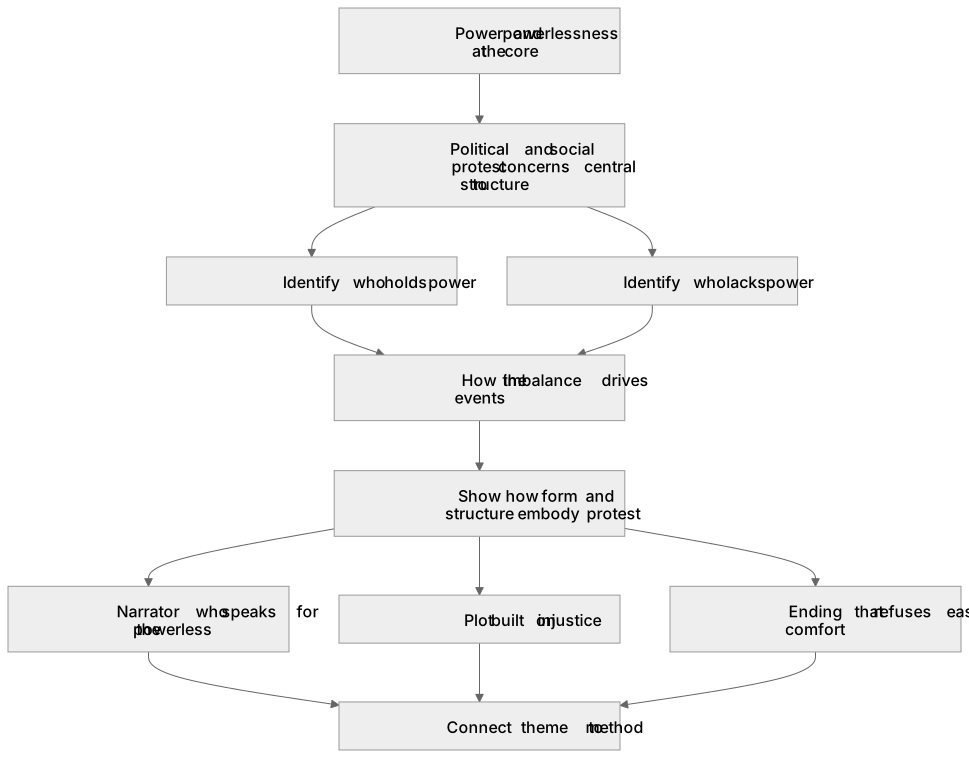
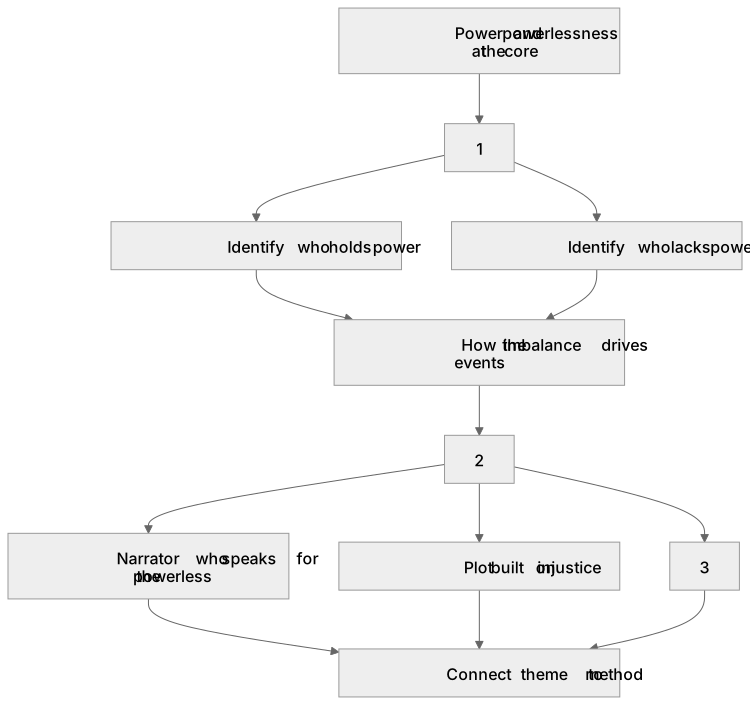
This statement explains what unites the set texts in the political and social protest writing unit. It accepts that any text might be read politically, but argues that these texts are defined by power and powerlessness sitting at their centre. Political and social protest concerns are not decoration; they shape how each text is structured, including its plot, voices and conflicts. When studying a set text, identify who holds power, who lacks it, and how that imbalance drives events. Then show how the text's form and structure embody protest, for example through a narrator who speaks for the powerless, a plot built on injustice, or an ending that refuses easy comfort. Analysis should connect theme to method.
What earns the marks
- Identify the specific power relationships in a set text, showing who exercises authority and who is denied agency.
- Explain how political and social protest concerns shape structure, such as through conflict, resolution, narrative voice or chronology.
- Analyse how the writer uses language and form to expose injustice or give voice to the powerless.
- Connect the text's protest concerns to its historical or social context without reducing analysis to background information.
- Compare how different set texts position the reader to question authority or sympathise with the powerless.
Common mistakes and how to put them right
Treating any mention of politics as proof the text is political.
Put it right: Show that power and powerlessness are central and structurally significant.
Describing injustice in the plot without analysing how the writing creates protest.
Put it right: Link theme to form, voice and structure.
Assuming all set texts protest in the same way.
Put it right: Compare the different methods and targets of protest in each text.
Exam tips
- Anchor each point in the wording of the question, especially references to power, powerlessness or protest.
- Use close analysis of short quotations to show how language and form carry political meaning.
- Keep context relevant and integrated, using it to illuminate the text rather than as separate factual background.
Try the lesson
The start of the Elements of political and social protest writing: Although it could be claimed that all texts are political, what defines the texts here is that they have issues of power and powerlessness at their core, with political and social protest issues central to each text’s structure. lesson, made from checked teaching notes for this specification point.
Have a go first
According to the statement, what is it that defines the political and social protest texts studied in this section?
Listen
This statement explains what unites the set texts in the political and social protest writing unit. It accepts that any text might be read politically, but argues that these texts are defined by power and powerlessness sitting at their centre. Political and social protest concerns are not decoration; they shape how each text is structured, including its plot, voices and conflicts. When studying a set text, identify who holds power, who lacks it, and how that imbalance drives events. Then show how the text's form and structure embody protest, for example through a narrator who speaks for the powerless, a plot built on injustice, or an ending that refuses easy comfort. Analysis should connect theme to method. A strong answer earns marks for these points. Identify the specific power relationships in a set text, showing who exercises authority and who is denied agency. Explain how political and social protest concerns shape structure, such as through conflict, resolution, narrative voice or chronology. Analyse how the writer uses language and form to expose injustice or give voice to the powerless. Connect the text's protest concerns to its historical or social context without reducing analysis to background information. A common slip: Treating any mention of politics as proof the text is political. Instead, show that power and powerlessness are central and structurally significant. Exam tip: Anchor each point in the wording of the question, especially references to power, powerlessness or protest.
See it
Key words
Say what each word means before you turn the card.
Power and powerlessness
Try answering aloud or in your head before turning the card.
Political and social protest
Try answering aloud or in your head before turning the card.
Structure and form as argument
Try answering aloud or in your head before turning the card.
Voice and representation
Try answering aloud or in your head before turning the card.
See every definition
- Power and powerlessness
- Issues of who holds power and who lacks it sit at the core of each text, and this imbalance drives events.
- Political and social protest
- Concerns that are central to each text's structure rather than decoration, shaping plot, voices and conflicts.
- Structure and form as argument
- The way a text's form and structure embody protest, for example through a narrator who speaks for the powerless or a plot built on injustice.
- Voice and representation
- How the writer uses language and form to give voice to the powerless, such as through a narrator who speaks for them.
Label the diagram
Some boxes have lost their names. Pick the right name for each number.
1Box 1
2Box 2
3Box 3
There is more to this lesson
The full lesson goes on to check your understanding and help you earn the marks. Create a free account to carry on, with your progress saved.
A week of Premium from your first lesson · Then the free plan continues · No card, no charge
Test your understanding of Elements of political and social protest writing: Although it could be claimed that all texts are political, what defines the texts here is that they have issues of power and powerlessness at their core, with political and social protest issues central to each text’s structure.
Active recall beats re-reading. Take an instant quiz now to test what you’ve learned and lock it into long-term memory.
A week of Premium from your first lesson · Then the free plan continues · No card, no charge