AQA · A-Level · English Literature
Course version: 7717 · Version from Sept 2026
The pursuit of power itself, rebellion against those with power, warfare
Full specification wording
Elements of political and social protest writing: the pursuit of power itself, rebellion against those with power, warfare
This element asks you to examine three connected drives in protest writing: the pursuit of power, rebellion against it, and warfare as an expression of both.
Checked against the AQA 7717 specification (opens in a new tab) on .
- Point 8 of 17
- 3 key terms
Study notes
From the checked teaching notes for this specification point.
The idea
This element asks you to examine three connected drives in protest writing: the pursuit of power, rebellion against it, and warfare as an expression of both. Pursuit may be individual ambition, dynastic greed or ideological mission; trace the methods used and the moral cost. Rebellion may be violent, legal, spiritual or linguistic; consider who rebels, why and with what consequences. Warfare can be literal conflict or a metaphor for class, gender or colonial struggle, and writers often expose its human cost rather than glorifying it. A productive method is to follow one pursuit of power through a text, such as the patriarchal authority in Atwood's The Handmaid's Tale, and show how it generates rebellion and conflict.
What earns the marks
- Analyses the pursuit of power as a motive, including the methods used and the moral or psychological cost to the pursuer.
- Examines rebellion against those with power, distinguishing its forms, participants and consequences within the text.
- Explores warfare as literal conflict or as a metaphor for political, social or gendered struggle.
- Shows how pursuit, rebellion and warfare interconnect rather than treating them as separate topics.
- Uses form, structure and language to explain how the writer shapes the reader's judgement of these drives.
- Relates these representations to the text's political and social protest concerns.
Common mistakes and how to put them right
Treating warfare only as background setting.
Put it right by analysing how conflict shapes character, language and structure.
Assuming all rebellion is heroic.
Put it right by weighing the text's presentation of rebel motives and violent consequences.
Discussing ambition without tracing its methods.
Put it right by identifying the specific actions and rhetoric used to gain power.
Exam tips
- Link the three strands explicitly in topic sentences so your essay argues a connected case rather than three mini-essays.
- Select quotations that reveal motive and method, then analyse individual words for their political connotations.
- Consider the ending of the text: ask whether pursuit, rebellion or warfare is shown to be resolved, punished or continuing.
Try the lesson
The start of the Elements of political and social protest writing: the pursuit of power itself, rebellion against those with power, warfare lesson, made from checked teaching notes for this specification point.
Have a go first
In political and social protest writing, how is 'the pursuit of power itself' most commonly presented by authors?
Listen
This element asks you to examine three connected drives in protest writing: the pursuit of power, rebellion against it, and warfare as an expression of both. Pursuit may be individual ambition, dynastic greed or ideological mission; trace the methods used and the moral cost. Rebellion may be violent, legal, spiritual or linguistic; consider who rebels, why and with what consequences. Warfare can be literal conflict or a metaphor for class, gender or colonial struggle, and writers often expose its human cost rather than glorifying it. A productive method is to follow one pursuit of power through a text, such as the patriarchal authority in Atwood's The Handmaid's Tale, and show how it generates rebellion and conflict. A strong answer earns marks for these points. Analyses the pursuit of power as a motive, including the methods used and the moral or psychological cost to the pursuer. Examines rebellion against those with power, distinguishing its forms, participants and consequences within the text. Explores warfare as literal conflict or as a metaphor for political, social or gendered struggle. Shows how pursuit, rebellion and warfare interconnect rather than treating them as separate topics. A common slip: Treating warfare only as background setting. Instead, analysing how conflict shapes character, language and structure. Exam tip: Link the three strands explicitly in topic sentences so your essay argues a connected case rather than three mini-essays.
See it
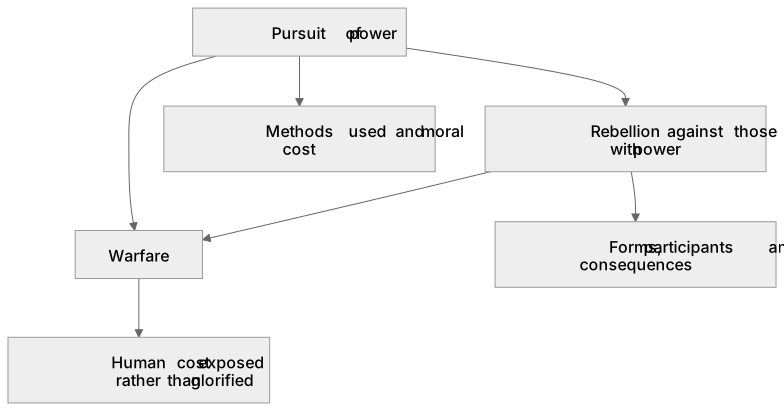
Key words
Say what each word means before you turn the card.
Ambition and power
Try answering aloud or in your head before turning the card.
Rebellion and resistance
Try answering aloud or in your head before turning the card.
War and conflict
Try answering aloud or in your head before turning the card.
See every definition
- Ambition and power
- The pursuit of power itself, whether as individual ambition, dynastic greed or ideological mission, together with the methods used and the moral cost.
- Rebellion and resistance
- Rebellion against those with power, which may be violent, legal, spiritual or linguistic, and which raises questions of who rebels, why and with what consequences.
- War and conflict
- Warfare as literal conflict or as a metaphor for class, gender or colonial struggle, often exposing its human cost rather than glorifying it.
Label the diagram
Some boxes have lost their names. Pick the right name for each number.
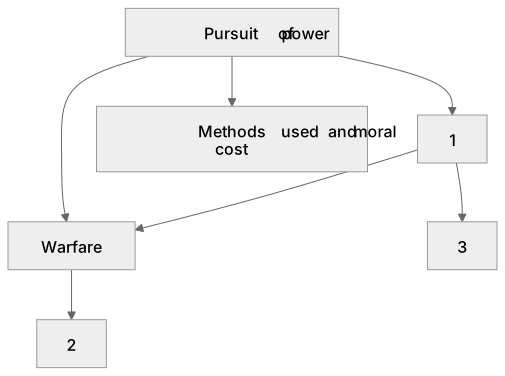
1Box 1
2Box 2
3Box 3
There is more to this lesson
The full lesson goes on to check your understanding and help you earn the marks. Create a free account to carry on, with your progress saved.
A week of Premium from your first lesson · Then the free plan continues · No card, no charge
Test your understanding of Elements of political and social protest writing: the pursuit of power itself, rebellion against those with power, warfare
Active recall beats re-reading. Take an instant quiz now to test what you’ve learned and lock it into long-term memory.
A week of Premium from your first lesson · Then the free plan continues · No card, no charge