AQA · A-Level · English Literature
Course version: 7717 · Version from Sept 2026
Ultimately how political >and social protest writing affects audiences and…
Full specification wording
Elements of political and social protest writing: ultimately how political >and social protest writing affects audiences and readers, inviting reflection on our own world.
This element asks you to analyse how political and social protest writing produces effects on audiences and readers, and how those effects invite reflection on our own world.
Checked against the AQA 7717 specification (opens in a new tab) on .
- Point 17 of 17
Study notes
From the checked teaching notes for this specification point.
The idea
This element asks you to analyse how political and social protest writing produces effects on audiences and readers, and how those effects invite reflection on our own world. You should examine the methods writers use to shape response: narrative voice, imagery, symbolism, structure, setting, and direct address. For example, in dystopian fiction a first-person narrator can create intimacy and complicity, making readers question their own society. You should also consider how different audiences may respond differently depending on context, values, and prior knowledge. Assessment focuses on your ability to make a coherent argument about effects, supported by close textual reference and awareness of the writer's craft. You are not required to prove a single correct response; instead, you should explore how the text positions readers and what it suggests about power, justice, and change.
What earns the marks
- Explains how specific writer's methods (for example narrative perspective, imagery, structure, or setting) create particular effects on audiences and readers.
- Analyses how the text invites reflection on the reader's own world, connecting fictional events or societies to real social and political issues.
- Uses close textual reference to support claims about audience response, rather than making general assertions.
- Considers how different audiences or readers might respond differently because of their own contexts, values, or expectations.
- Explores the relationship between protest writing and its intended or actual effects, including how it may challenge, persuade, or unsettle readers.
Common mistakes and how to put them right
Treating the text as a simple message and ignoring how form and language shape response.
Put it right: Analyse the writer's methods and how they position the reader.
Assuming all readers respond in the same way.
Put it right: Discuss possible variations in audience response and the factors that might cause them.
Making broad claims about society without linking them to specific textual details.
Put it right: Anchor every point about reflection on our own world in close reference to the text.
Exam tips
- Plan your argument around the idea of effects: identify what the text does to readers and how, then support each point with precise evidence.
- Use subject terminology accurately when discussing narrative voice, imagery, and structure, and explain how each choice shapes audience response.
- Connect the text's protest to your own world by exploring parallels, but keep the focus on how the writing itself invites that reflection.
Try the lesson
The start of the Elements of political and social protest writing: ultimately how political >and social protest writing affects audiences and readers, inviting reflection on our own world. lesson, made from checked teaching notes for this specification point.
Have a go first
Which of the following best describes a primary way that political and social protest writing affects its audience?
Listen
This element asks you to analyse how political and social protest writing produces effects on audiences and readers, and how those effects invite reflection on our own world. You should examine the methods writers use to shape response: narrative voice, imagery, symbolism, structure, setting, and direct address. For example, in dystopian fiction a first-person narrator can create intimacy and complicity, making readers question their own society. You should also consider how different audiences may respond differently depending on context, values, and prior knowledge. Assessment focuses on your ability to make a coherent argument about effects, supported by close textual reference and awareness of the writer's craft. You are not required to prove a single correct response; instead, you should explore how the text positions readers and what it suggests about power, justice, and change. A strong answer earns marks for these points. Explains how specific writer's methods (for example narrative perspective, imagery, structure, or setting) create particular effects on audiences and readers. Analyses how the text invites reflection on the reader's own world, connecting fictional events or societies to real social and political issues. Uses close textual reference to support claims about audience response, rather than making general assertions. Considers how different audiences or readers might respond differently because of their own contexts, values, or expectations. A common slip: Treating the text as a simple message and ignoring how form and language shape response. Instead, analyse the writer's methods and how they position the reader. Exam tip: Plan your argument around the idea of effects: identify what the text does to readers and how, then support each point with precise evidence.
See it
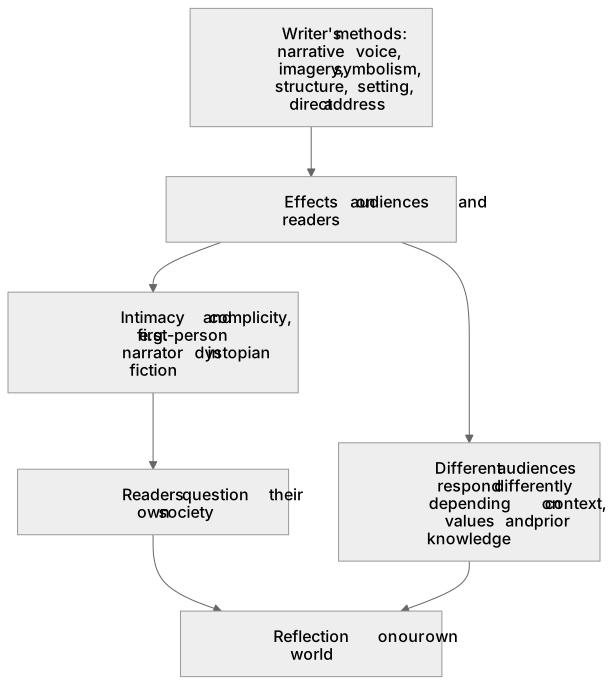
Label the diagram
Some boxes have lost their names. Pick the right name for each number.
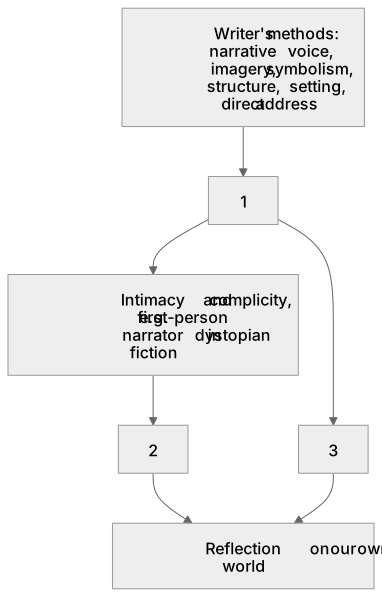
1Box 1
2Box 2
3Box 3
There is more to this lesson
The full lesson goes on to check your understanding and help you earn the marks. Create a free account to carry on, with your progress saved.
A week of Premium from your first lesson · Then the free plan continues · No card, no charge
Test your understanding of Elements of political and social protest writing: ultimately how political >and social protest writing affects audiences and readers, inviting reflection on our own world.
Active recall beats re-reading. Take an instant quiz now to test what you’ve learned and lock it into long-term memory.
A week of Premium from your first lesson · Then the free plan continues · No card, no charge