AQA · A-Level · English Literature
Course version: 7717 · Version from Sept 2026
The study of the Critical anthology supports the exploration of different…
Full specification wording
Theory and independence: The study of the Critical anthology supports the exploration of different meanings in literary texts and offers different ways of reading.
The Critical anthology is a toolkit, not a set of answers.
Checked against the AQA 7717 specification (opens in a new tab) on .
- Point 3 of 3
- 4 key terms
Study notes
From the checked teaching notes for this specification point.
The idea
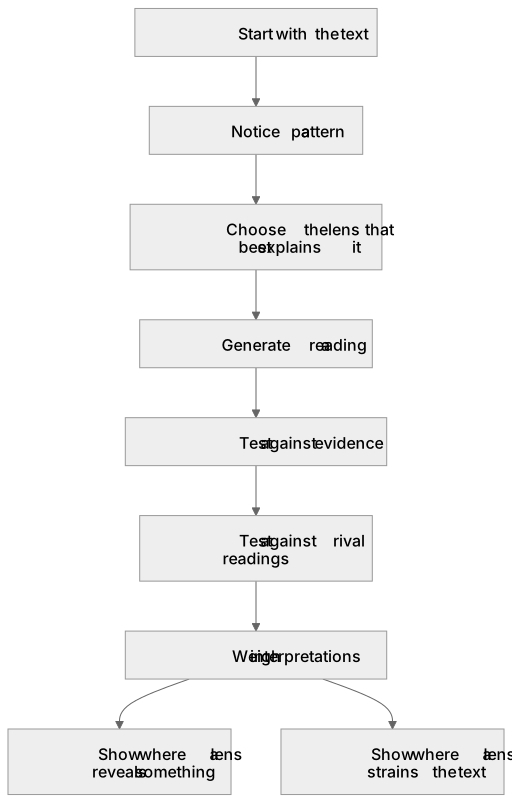
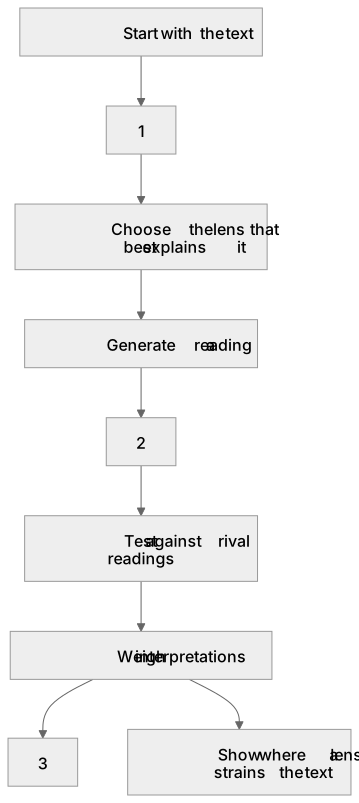
The Critical anthology is a toolkit, not a set of answers. Each critical approach asks different questions of a text, so the same passage can yield several meanings. A Marxist reading may examine power and class; a feminist reading may examine gender and patriarchy; a narrative reading may examine voice and structure. To use the anthology well, start with the text, notice a pattern, then choose the lens that best explains it. Test each reading against evidence and against rival readings. The strongest work weighs interpretations, showing where a lens reveals something and where it strains the text. This habit of testing meanings is what the unit rewards.
What earns the marks
- Explains how a chosen critical approach generates a specific reading of a named text.
- Compares two or more ways of reading the same text or passage and identifies what each reveals.
- Supports each interpretation with precise textual evidence, including quotation and comment on form or structure.
- Evaluates the strengths and limits of a critical approach rather than accepting it uncritically.
- Shows how exploring different meanings deepens understanding of the text as a whole.
- Uses the anthology's terminology accurately and applies it to the primary text rather than paraphrasing theory alone.
Common mistakes and how to put them right
Summarising a critical approach without applying it to the text.
Put it right by linking every theoretical point to a quotation or structural feature.
Assuming one reading is the correct answer.
Put it right by presenting competing interpretations and weighing their persuasiveness.
Using anthology terminology loosely or inaccurately.
Put it right by checking definitions and using terms precisely in context.
Exam tips
- Plan responses around a claim, a counter-reading and a judgement, so different meanings are genuinely explored rather than listed.
- Integrate short quotations into your argument instead of tagging theory onto the end of a paragraph.
- Rehearse applying each anthology approach to one core text so you can move between lenses fluently under time pressure.
Try the lesson
The start of the Theory and independence: The study of the Critical anthology supports the exploration of different meanings in literary texts and offers different ways of reading. lesson, made from checked teaching notes for this specification point.
Have a go first
What is the main purpose of the Critical anthology in A-level English Literature B?
Listen
The Critical anthology is a toolkit, not a set of answers. Each critical approach asks different questions of a text, so the same passage can yield several meanings. A Marxist reading may examine power and class; a feminist reading may examine gender and patriarchy; a narrative reading may examine voice and structure. To use the anthology well, start with the text, notice a pattern, then choose the lens that best explains it. Test each reading against evidence and against rival readings. The strongest work weighs interpretations, showing where a lens reveals something and where it strains the text. This habit of testing meanings is what the unit rewards. A strong answer earns marks for these points. Explains how a chosen critical approach generates a specific reading of a named text. Compares two or more ways of reading the same text or passage and identifies what each reveals. Supports each interpretation with precise textual evidence, including quotation and comment on form or structure. Evaluates the strengths and limits of a critical approach rather than accepting it uncritically. A common slip: Summarising a critical approach without applying it to the text. Instead, linking every theoretical point to a quotation or structural feature. Exam tip: Plan responses around a claim, a counter-reading and a judgement, so different meanings are genuinely explored rather than listed.
See it
Key words
Say what each word means before you turn the card.
Multiple meanings and plural readings
Try answering aloud or in your head before turning the card.
Critical lenses as interpretive tools
Try answering aloud or in your head before turning the card.
Textual evidence and close analysis
Try answering aloud or in your head before turning the card.
Evaluation of critical perspectives
Try answering aloud or in your head before turning the card.
See every definition
- Multiple meanings and plural readings
- The exploration of different meanings in literary texts, supported by the study of the Critical anthology, which offers different ways of reading.
- Critical lenses as interpretive tools
- Each critical approach asks different questions of a text, so the same passage can yield several meanings.
- Textual evidence and close analysis
- Each reading is tested against evidence, with interpretations supported by precise textual evidence, including quotation and comment on form or structure.
- Evaluation of critical perspectives
- The strongest work weighs interpretations, showing where a lens reveals something and where it strains the text, rather than accepting a critical approach uncritically.
Label the diagram
Some boxes have lost their names. Pick the right name for each number.
1Box 1
2Box 2
3Box 3
There is more to this lesson
The full lesson goes on to check your understanding and help you earn the marks. Create a free account to carry on, with your progress saved.
A week of Premium from your first lesson · Then the free plan continues · No card, no charge
Test your understanding of Theory and independence: The study of the Critical anthology supports the exploration of different meanings in literary texts and offers different ways of reading.
Active recall beats re-reading. Take an instant quiz now to test what you’ve learned and lock it into long-term memory.
A week of Premium from your first lesson · Then the free plan continues · No card, no charge