AQA · GCSE · English Literature
Course version: 8702 · Version from Sept 2015
Worlds and Lives: On an Afternoon Train from Purley to Victoria, 1955
Full specification wording
Poetry anthology: Worlds and Lives: On an Afternoon Train from Purley to Victoria, 1955
The poem recounts a conversational encounter on a train journey from Purley to Victoria in 1955 between a Jamaican migrant speaker and a friendly Quaker woman.
Checked against the AQA 8702 specification (opens in a new tab) on .
- Point 10 of 15
- 4 key terms
Study notes
From the checked teaching notes for this specification point.
The idea
The poem recounts a conversational encounter on a train journey from Purley to Victoria in 1955 between a Jamaican migrant speaker and a friendly Quaker woman. Through their dialogue, Berry explores the possibilities and difficulties of forming human connections across cultural and religious differences in 1950s Britain. The woman's well-intentioned but clumsy assumptions about the speaker's life can be read as possible unintentional prejudice, yet the poem does not establish her race or reduce the encounter to a simple verdict. The speaker's internal reflections test the ideal of 'racial brotherhood' against the complex reality of navigating a society shaped by stereotypes. The poem ultimately examines how politeness and a desire for harmony can coexist with cultural misunderstanding.
What earns the marks
- AO1: The poem captures a specific moment of encounter, allowing for a detailed exploration of the speaker's thoughts and feelings during the conversation.
- AO1: The speaker's perspective reveals a mix of amusement, frustration and a desire for connection, showing the complexity of his response to the woman.
- AO1: The title is crucial, grounding the poem in a specific time (1955) and place (a train journey from Purley to Victoria), which frames the social interaction that follows.
- AO2: The use of free verse and conversational language creates a realistic and immediate tone, making the reader feel as if they are overhearing the exchange.
- AO2: The four-stanza structure charts the progression of the conversation, from the opening pleasantries to the more revealing and problematic assumptions made by the woman.
- AO2: Berry uses direct speech to contrast the woman's spoken words with the speaker's internal thoughts, highlighting the gap between her intentions and his perception of her comments.
- AO3: The poem reflects the social context of 1955 Britain, a time of increased immigration from the Caribbean (the 'Windrush generation') and the resulting cultural encounters.
- AO3: James Berry's own experience as a Jamaican migrant who came to Britain in 1948 informs the poem's authentic depiction of the nuances of racial and cultural interaction.
- AO3: The woman's identity as a Quaker is significant, as Quaker beliefs have historically included commitments to equality and social outreach, which may explain her attempt at 'racial brotherhood' even if it is clumsy.
Common mistakes and how to put them right
The woman on the train is deliberately and maliciously racist.
Put it right: Her comments can be read as possible unintentional prejudice or microaggressions shaped by stereotypes rather than malice. The poem does not establish her race or settle her intent, so retain that ambiguity while analysing the gap between good intentions and harmful assumptions.
The speaker is angry and hostile towards the woman.
Put it right: The speaker's internal monologue shows a more nuanced reaction. He is critical of her assumptions but also seems to recognise her friendly intent, choosing not to correct her publicly. His response is one of quiet observation and reflection.
The poem is a straightforward celebration of multicultural friendship.
Put it right: While the encounter is friendly on the surface, the poem is a critique of simplistic ideas like 'racial brotherhood'. It highlights the barriers to genuine understanding, such as stereotypes and patronising attitudes, that can exist even in well-meaning conversations.
Exam tips
- Compare with In a London Drawingroom: Experiences of London. Difference: Berry's poem focuses on a specific, interpersonal connection on a train, suggesting the possibility of communication in the city. In contrast, Eliot's poem presents a panoramic, impersonal view of London as a 'prison-house' where inhabitants are disconnected. Useful when: How poets present individual experiences within a city.
- Compare with Name Journeys: Migration and cultural identity. Difference: Berry's poem explores identity through a direct, verbal interaction with a member of the host culture. Mundair's poem is more internal, focusing on how a migrant's name, language and cultural memory are challenged by being transplanted to 'infertile English soil'. Useful when: How poets explore the challenges of preserving identity in a new country.
- Compare with Thirteen: Race and prejudice. Difference: Berry's poem depicts a seemingly friendly encounter where the prejudice is subtle and possibly unintentional. Femi's poem depicts a hostile encounter with police authority, where the racism is overt, systemic and threatening, leaving the boy 'powerless'. Useful when: How poets present different forms of racism.
- Compare with A Wider View: The migrant experience in Britain. Difference: Berry's poem is set in the present moment of a single train journey in 1955. Seneviratne's poem connects past and present, with a contemporary speaker imagining the life of her 19th-century migrant ancestor, exploring historical continuity and change. Useful when: How poets explore the migrant experience across different time periods.
Try the lesson
The start of the Poetry anthology: Worlds and Lives: On an Afternoon Train from Purley to Victoria, 1955 lesson, made from checked teaching notes for this specification point.
Have a go first
In James Berry's 'On an Afternoon Train from Purley to Victoria, 1955', which phrase does the woman use that reveals her idealistic belief in racial harmony?
Listen
The poem recounts a conversational encounter on a train journey from Purley to Victoria in 1955 between a Jamaican migrant speaker and a friendly Quaker woman. Through their dialogue, Berry explores the possibilities and difficulties of forming human connections across cultural and religious differences in 1950s Britain. The woman's well-intentioned but clumsy assumptions about the speaker's life can be read as possible unintentional prejudice, yet the poem does not establish her race or reduce the encounter to a simple verdict. The speaker's internal reflections test the ideal of 'racial brotherhood' against the complex reality of navigating a society shaped by stereotypes. The poem ultimately examines how politeness and a desire for harmony can coexist with cultural misunderstanding. A strong answer earns marks for these points. The poem captures a specific moment of encounter, allowing for a detailed exploration of the speaker's thoughts and feelings during the conversation. The speaker's perspective reveals a mix of amusement, frustration and a desire for connection, showing the complexity of his response to the woman. The title is crucial, grounding the poem in a specific time (1955) and place (a train journey from Purley to Victoria), which frames the social interaction that follows. The use of free verse and conversational language creates a realistic and immediate tone, making the reader feel as if they are overhearing the exchange. A common slip: The woman on the train is deliberately and maliciously racist. Instead, Her comments can be read as possible unintentional prejudice or microaggressions shaped by stereotypes rather than malice. The poem does not establish her race or settle her intent, so retain that ambiguity while analysing the gap between good intentions and harmful assumptions. Exam tip: Compare with In a London Drawingroom: Experiences of London. Difference: Berry's poem focuses on a specific, interpersonal connection on a train, suggesting the possibility of communication in the city. In contrast, Eliot's poem presents a panoramic, impersonal view of London as a 'prison-house' where inhabitants are disconnected. Useful when: How poets present individual experiences within a city.
See it
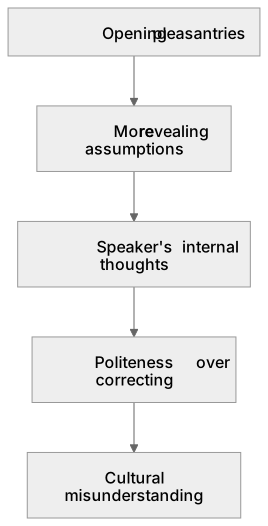
Put it in order
Put these steps in the order they happen.
- 1. More revealing assumptions
- 2. Speaker's internal thoughts
- 3. Opening pleasantries
- 4. Cultural misunderstanding
- 5. Politeness over correcting
Watch it explained
What is the one idea the video explains? Say it in a sentence.
Read the described scene instead
This lesson explores James Berry's 'On an Afternoon Train from Purley to Victoria, 1955'. It recounts a train conversation between a Jamaican migrant speaker and a friendly Quaker woman. Berry examines connection across cultural difference. The title grounds the encounter in a specific journey, and the four-stanza structure charts the conversation from pleasantries to more revealing assumptions. Free verse and conversational language make the exchange feel immediate, as if overheard. The woman begins with 'Nice day', a phatic phrase that acts as a social bridge. She later speaks of 'racial brotherhood', revealing idealistic good intentions but perhaps a naive understanding of prejudice. Her comment about the speaker's 'father's big banana field' reduces his heritage to a stereotype. Consider how the speaker responds when the woman makes assumptions. Pause briefly: what does his reply reveal? He says aloud, 'Ireland is near Lapland', an ironic comment, then answers 'Nothing' when questioned. This shows politeness taking precedence over correcting her, revealing a power dynamic in cross-cultural talk. Avoid calling the woman deliberately racist; her comments can be read as possible unintentional prejudice shaped by stereotypes. Avoid calling the speaker hostile; his response is nuanced, critical but observant. The poem is not a simple celebration of multicultural friendship; it tests 'racial brotherhood' against cultural misunderstanding. Berry's poem examines how politeness and a desire for harmony can coexist with cultural misunderstanding. The speaker's internal reflections test the ideal of racial brotherhood against a society shaped by stereotypes. The encounter suggests both the possibility and difficulty of human connection.
Key words
Say what each word means before you turn the card.
Migration and Identity
Try answering aloud or in your head before turning the card.
Human Connection
Try answering aloud or in your head before turning the card.
Prejudice and Misunderstanding
Try answering aloud or in your head before turning the card.
Cultural Difference
Try answering aloud or in your head before turning the card.
See every definition
- Migration and Identity
- The poem explores this through a Jamaican migrant speaker whose identity is met with clumsy assumptions during a train encounter in 1950s Britain.
- Human Connection
- The poem explores the possibilities and difficulties of forming connections across cultural and religious differences through a conversational encounter on a train journey.
- Prejudice and Misunderstanding
- Well-intentioned but clumsy assumptions can be read as possible unintentional prejudice, while politeness and a desire for harmony coexist with cultural misunderstanding.
- Cultural Difference
- The poem examines forming human connections across cultural and religious differences in 1950s Britain, where stereotypes shape how a society is navigated.
Label the diagram
Some boxes have lost their names. Pick the right name for each number.
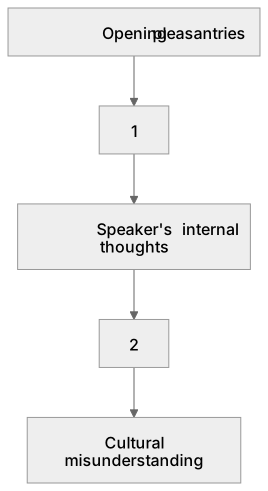
1Box 1
2Box 2
There is more to this lesson
The full lesson goes on to check your understanding and help you earn the marks. Create a free account to carry on, with your progress saved.
A week of Premium from your first lesson · Then the free plan continues · No card, no charge
Test your understanding of Poetry anthology: Worlds and Lives: On an Afternoon Train from Purley to Victoria, 1955
Active recall beats re-reading. Take an instant quiz now to test what you’ve learned and lock it into long-term memory.
A week of Premium from your first lesson · Then the free plan continues · No card, no charge