Pearson Edexcel · A-Level · English Literature
Course version: 9ET0 · Version from Sept 2015
Poetry – Section B: Specified Poetry Pre- or Post-1900 – Post-1900 – The…
Full specification wording
Component 3: Poetry – Section B: Specified Poetry Pre- or Post-1900 – Post-1900 – The Movement – Philip Larkin: The Less Deceived (Faber, 2011): At Grass
Philip Larkin’s ‘At Grass’, from his 1955 collection The Less Deceived, exemplifies the post-1900 aesthetic of The Movement through its understated, empirical observation of retired racehorses.
Checked against the Pearson Edexcel 9ET0 specification (opens in a new tab) on .
- Point 9 of 9
- 4 key terms
Study notes
From the checked teaching notes for this specification point.
The idea
Philip Larkin’s ‘At Grass’, from his 1955 collection The Less Deceived, exemplifies the post-1900 aesthetic of The Movement through its understated, empirical observation of retired racehorses. The poem contrasts the horses' past glory and public spectacle with their present anonymity and peaceful pastoral existence. By examining imagery such as the ‘faint afternoons’ and ‘unmolesting meadows’, learners can evaluate how Larkin explores themes of time, memory, and the transient nature of fame, ultimately suggesting a quiet dignity in withdrawal from the public gaze.
What earns the marks
- Analyse Larkin's use of regular stanza structure and rhyme to reflect the ordered, empirical style of The Movement.
- Evaluate the contrast between the artificial world of the racetrack and the natural, pastoral setting of the horses' retirement.
- Explore the thematic significance of time and transience, noting how the horses' past fame is now forgotten.
- Connect the poem's understated tone and focus on ordinary, observable reality to the broader post-1900 context of The Less Deceived.
Common mistakes and how to put them right
Treating the poem solely as an animal rights critique.
Put it right: Focus on the allegorical exploration of fame, ageing, and the passage of time rather than literal animal welfare.
Ignoring the specific literary context of The Movement.
Put it right: Explicitly link Larkin's anti-romantic, formal, and understated style to the defining characteristics of The Movement.
Misinterpreting the ending as tragic or melancholic.
Put it right: Recognise the peaceful, dignified tone of the conclusion, where the horses are 'at grass' and free from human exploitation.
Exam tips
- Compare the quiet, pastoral imagery of the present with the dynamic, sensory language used to describe the horses' past racing days.
- Use 'At Grass' to discuss Larkin's characteristic blend of melancholy and acceptance regarding the passage of time.
- Always integrate contextual knowledge of The Movement, such as its rejection of modernist obscurity, when analysing Larkin's accessible language.
Try the lesson
The start of the Component 3: Poetry – Section B: Specified Poetry Pre- or Post-1900 – Post-1900 – The Movement – Philip Larkin: The Less Deceived (Faber, 2011): At Grass lesson, made from checked teaching notes for this specification point.
Have a go first
In Philip Larkin's poem 'At Grass', what is the primary setting and subject described in the opening stanzas?
Listen
Philip Larkin’s ‘At Grass’, from his 1955 collection The Less Deceived, exemplifies the post-1900 aesthetic of The Movement through its understated, empirical observation of retired racehorses. The poem contrasts the horses' past glory and public spectacle with their present anonymity and peaceful pastoral existence. By examining imagery such as the ‘faint afternoons’ and ‘unmolesting meadows’, learners can evaluate how Larkin explores themes of time, memory, and the transient nature of fame, ultimately suggesting a quiet dignity in withdrawal from the public gaze. A strong answer earns marks for these points. Analyse Larkin's use of regular stanza structure and rhyme to reflect the ordered, empirical style of The Movement. Evaluate the contrast between the artificial world of the racetrack and the natural, pastoral setting of the horses' retirement. Explore the thematic significance of time and transience, noting how the horses' past fame is now forgotten. Connect the poem's understated tone and focus on ordinary, observable reality to the broader post-1900 context of The Less Deceived. A common slip: Treating the poem solely as an animal rights critique. Instead, Focus on the allegorical exploration of fame, ageing, and the passage of time rather than literal animal welfare. Exam tip: Compare the quiet, pastoral imagery of the present with the dynamic, sensory language used to describe the horses' past racing days.
See it
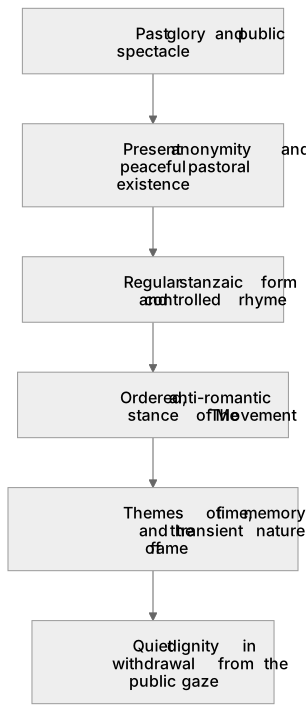
Put it in order
Put these steps in the order they happen.
- 1. Regular stanzaic form and controlled rhyme
- 2. Present anonymity and peaceful pastoral existence
- 3. Past glory and public spectacle
- 4. Quiet dignity in withdrawal from the public gaze
- 5. Themes of time, memory and the transient nature of fame
- 6. Ordered, anti-romantic stance of The Movement
Key words
Say what each word means before you turn the card.
Time and Ageing
Try answering aloud or in your head before turning the card.
Transience of Fame
Try answering aloud or in your head before turning the card.
Nature versus Artifice
Try answering aloud or in your head before turning the card.
Memory and the Past
Try answering aloud or in your head before turning the card.
See every definition
- Time and Ageing
- The poem explores how the horses' past glory gives way to a quiet dignity in withdrawal from the public gaze.
- Transience of Fame
- The horses' past fame is now forgotten, showing the transient nature of public spectacle.
- Nature versus Artifice
- The artificial world of the racetrack is contrasted with the natural, pastoral setting of the horses' retirement.
- Memory and the Past
- The poem contrasts the horses' past glory and public spectacle with their present anonymity and peaceful pastoral existence.
Label the diagram
Some boxes have lost their names. Pick the right name for each number.
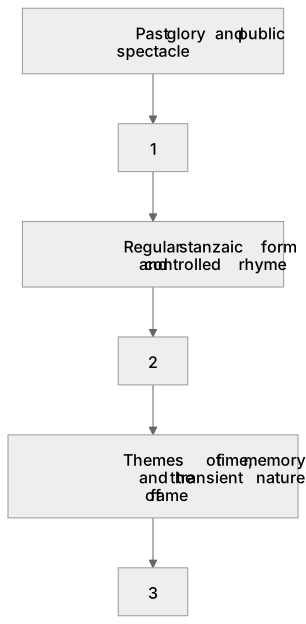
1Box 1
2Box 2
3Box 3
There is more to this lesson
The full lesson goes on to check your understanding and help you earn the marks. Create a free account to carry on, with your progress saved.
A week of Premium from your first lesson · Then the free plan continues · No card, no charge
Test your understanding of Component 3: Poetry – Section B: Specified Poetry Pre- or Post-1900 – Post-1900 – The Movement – Philip Larkin: The Less Deceived (Faber, 2011): At Grass
Active recall beats re-reading. Take an instant quiz now to test what you’ve learned and lock it into long-term memory.
A week of Premium from your first lesson · Then the free plan continues · No card, no charge